AFP reported that blackouts are reducing water deliveries in Cuba, where national water company official Yunior Gonzalez said 2.7 million people have no water reaching their homes.
Gonzalez said 80% to 85% of the country's water supply requires pumping. He also cited equipment failures, leaks and drought as pressures on the system. AFP linked the worsening shortages since January to a U.S. energy blockade and prolonged power outages. The 2.7 million people affected represent nearly 29% of Cuba's 9.4 million residents, according to official figures cited by AFP.
The disruption extends to businesses. In Matanzas province, restaurant owner Kevin Martinez said water shortages had forced him to close temporarily several times. AFP reported that well digger Elizardo Cardoso located water 10 meters below the restaurant. Martinez said drilling was expensive but ended his need to pay for water deliveries three times a week.
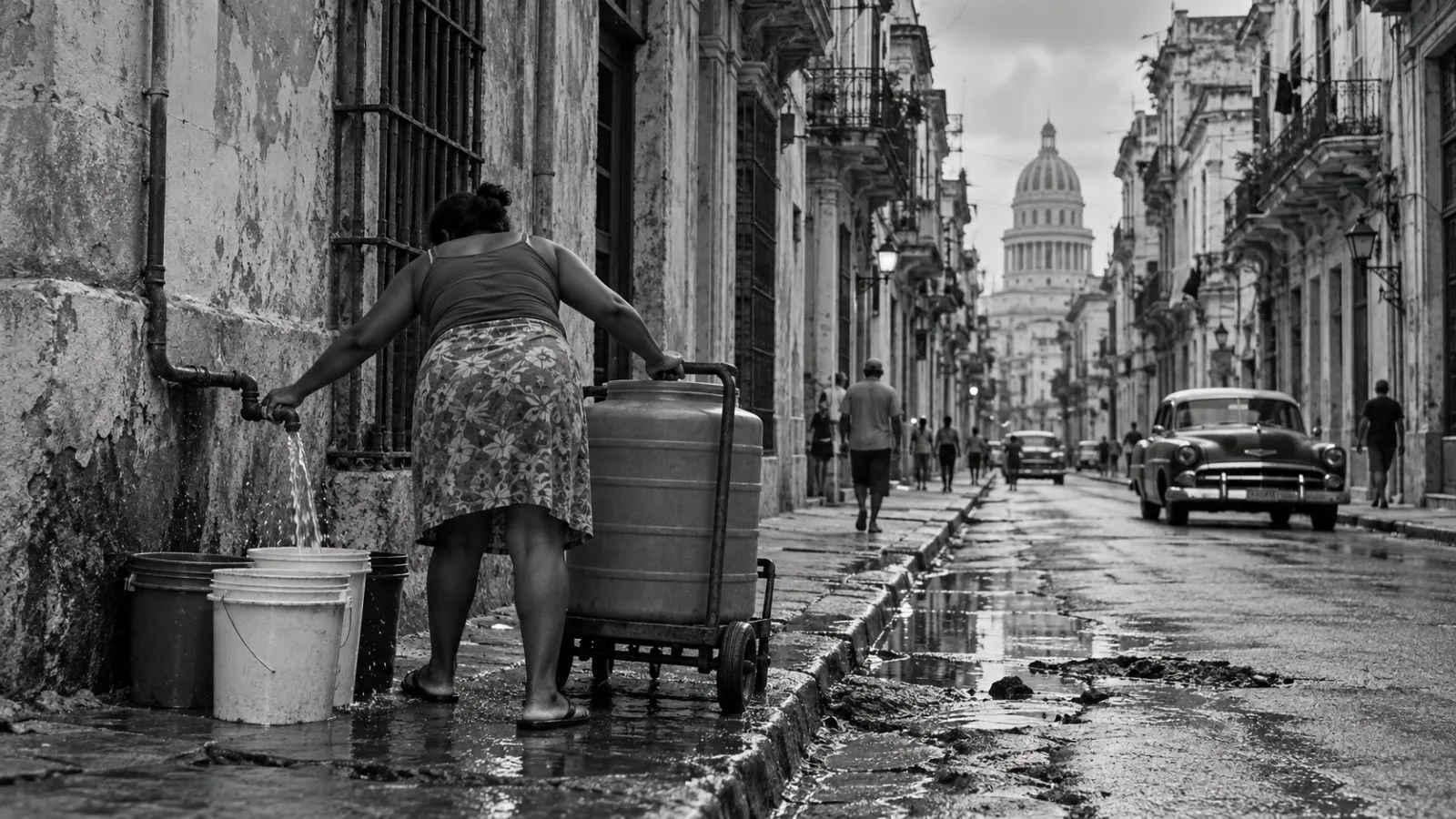
Households are carrying water when it does not reach their homes. In Havana's old town, AFP reported that Maykel Aguilar collected water in a 200-liter tank and buckets from a street pipe connected to a spring. He wheeled it home and carried it upstairs. Aguilar said the amount covered laundry, cleaning and cooking before it ran out.
Some residents use pumps to draw water from the mains. AFP reported that several such pumps operating in one neighborhood can reduce pressure, making it harder for other homes to receive water. The dispatch also reported women-led protests over water shortages in Havana municipalities in recent months.
Officials are installing solar-powered pumps to reduce the water system's dependence on the national power grid. Gonzalez said more than 870 have been installed toward a goal of 1,300, benefiting about 500,000 people. AFP reported that Havana's Albear Aqueduct recently gained two diesel backup generators. Gonzalez said such programs are costly.