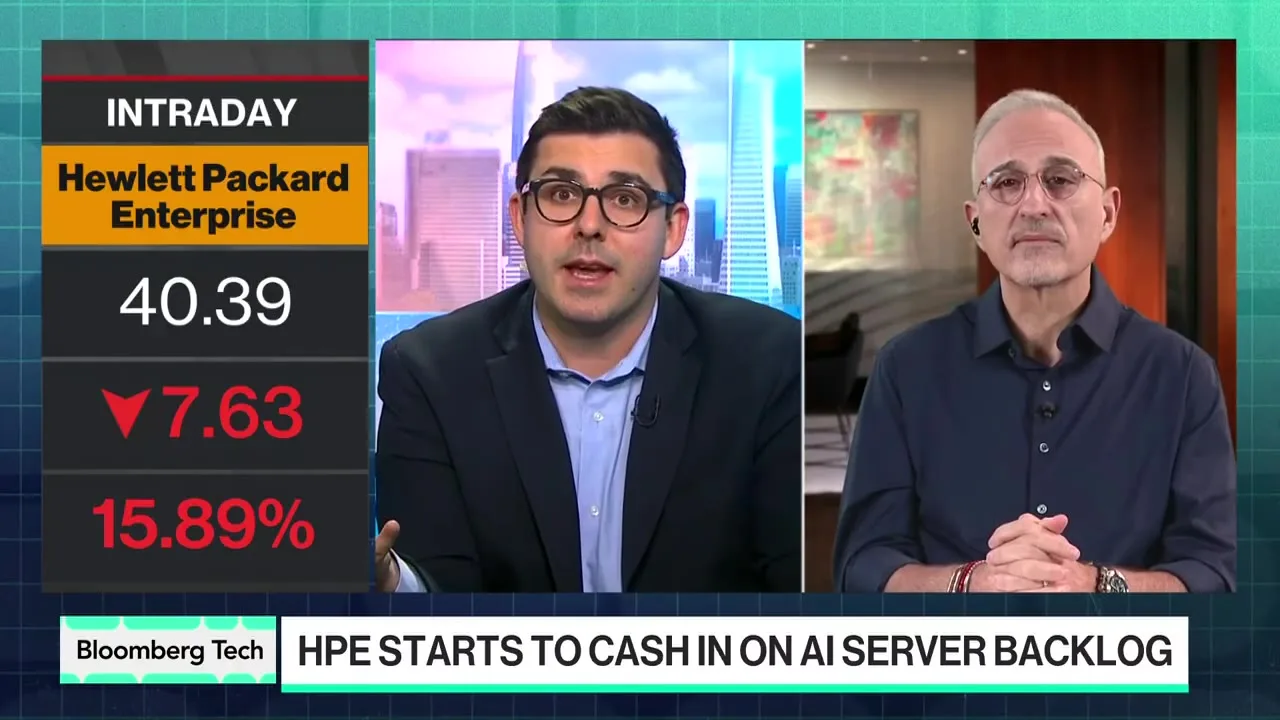
Demand for artificial intelligence exceeds supply by 10 to 1 even without China, Dan Ives of Yorkville Advisors said in an interview published Nov. 27 by Bloomberg Television.
Ives said investors were pricing in concerns about financing costs, data center construction and potential cuts to semiconductor earnings. His assessment drew on checks in Taiwan and elsewhere in Asia, along with enterprise data on demand and supply.
He said estimates could rise 10% to 15% over the next 12 to 18 months. He did not make clear which estimates he meant or give a starting figure.
Ives said his team's work showed capital spending peaking next year, although the transcript did not make clear the year with which he was comparing that peak.
He said 800 to 1,000 data centers were being built and 75% already had permits, including projects in Texas. He did not specify the geographic scope of the count.
Only 2% to 3% of enterprises had completed a process he described in the interview, though the automatic transcript did not make the process clear.
Ives said the industry was closer to the mid-1990s than to 1999, comparing the current period with earlier stages of the internet era. He said concerns about growth and financing had contributed to nervousness, but underlying demand was much bigger than markets were pricing in.
He drew a distinction between speculative companies and larger technology businesses. At Microsoft, he cited 40% growth in demand for Azure, the company's cloud computing service, and an about 18-month backlog for deployment.
The interview did not establish the period for the Azure growth figure or define the scope of the deployment backlog.
Ives said investors were reducing risk across their holdings and described Anthropic as a longer-term proposition of three, five or seven years.
His colleagues who work on debt expected capital to remain available despite wider credit spreads, he said. Credit spreads are the extra yield borrowers pay over a benchmark.
Asked whether Nvidia's financing arrangements would change, Ives said he did not expect a change. He said the company had helped finance the artificial intelligence industry.
He said his team planned to speak with 15 to 20 enterprise customers over the following three days about their technology plans. He did not identify the customers.