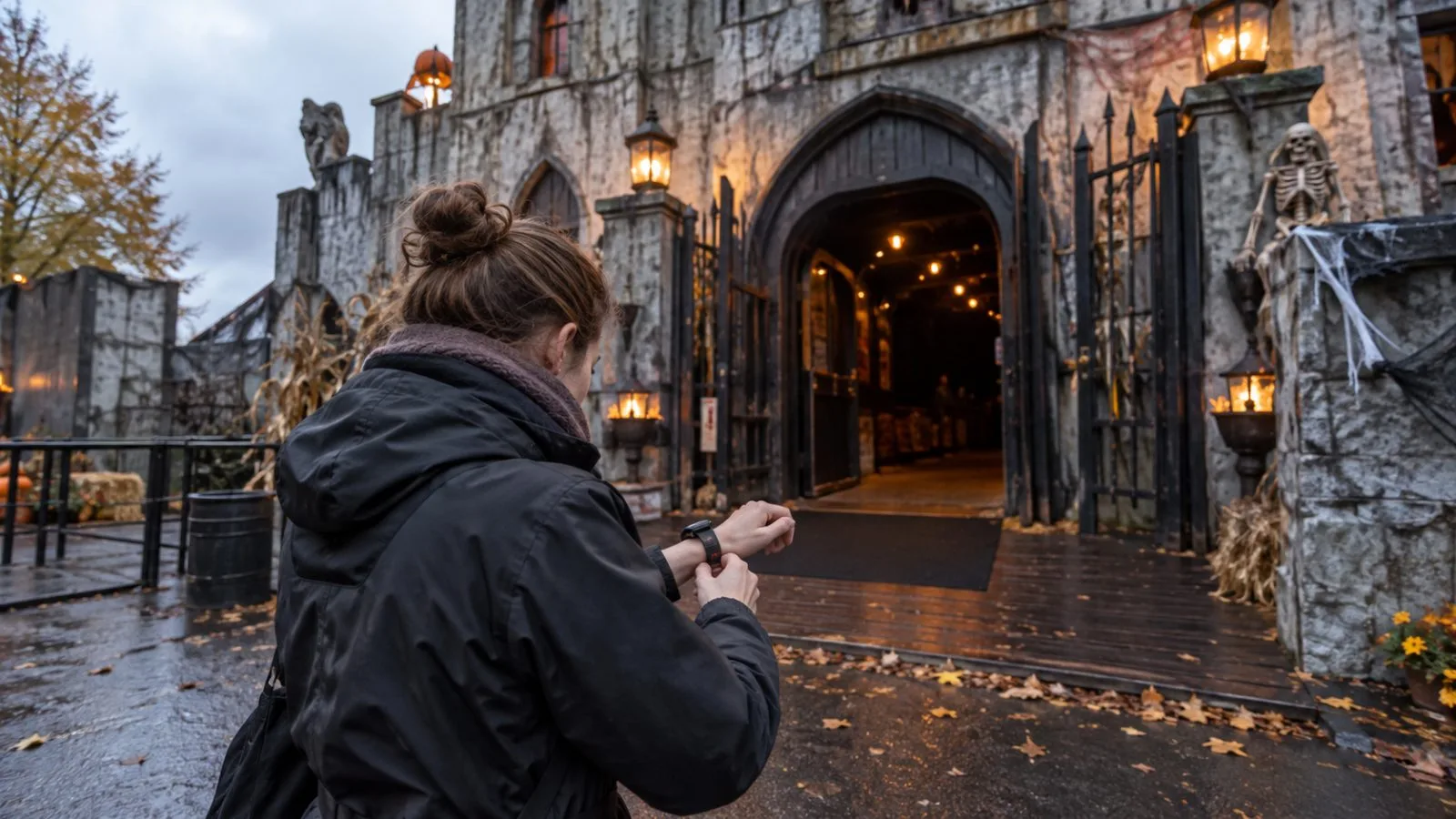
A 2020 study of a Danish haunted house found that visitors enjoyed individual scares most when their fear was moderate, offering a clue to the appeal of staged fright.
Researchers followed 110 visitors ages 12 to 57 at Dystopia Haunted House in Denmark. They recorded heart rates and filmed reactions at three jump-scare locations. After leaving the attraction, visitors rated their fear and enjoyment at those locations. The analysis included 92 people; 10 lacked usable heart-rate readings, four did not complete the main questionnaire, and four did not finish the attraction.
The study, first published online Nov. 2, 2020, in Psychological Science, found that enjoyment at the three locations was highest at intermediate levels of reported fear. Lower and higher levels of fear were associated with less enjoyment. The researchers described the relationship as an inverted U, with the highest enjoyment in the middle of the range.
The finding had a limit. Visitors’ ratings of the attraction as a whole did not show the same significant relationship between fear and enjoyment. The pattern came from their recalled ratings of particular scares, rather than ratings given during the encounters.
Florida International University cognitive neuroscientist Matthew Sutherland offered a related explanation in an Oct. 23, 2025, university article. He said people can recognize that a threat on screen or in a staged attraction is not real while still experiencing a physical fear response. That combination can help explain why a controlled scare feels exciting.
Choice also figured in the study. Visitors who said they had decided to attend reported more enjoyment than those who came mainly because of other people. The researchers examined a live attraction partly because earlier horror research had often used short film clips in laboratories.
The study did not test movie audiences. Its authors said they could not determine whether the relationship they found at individual haunted-house scares also applies to horror films.