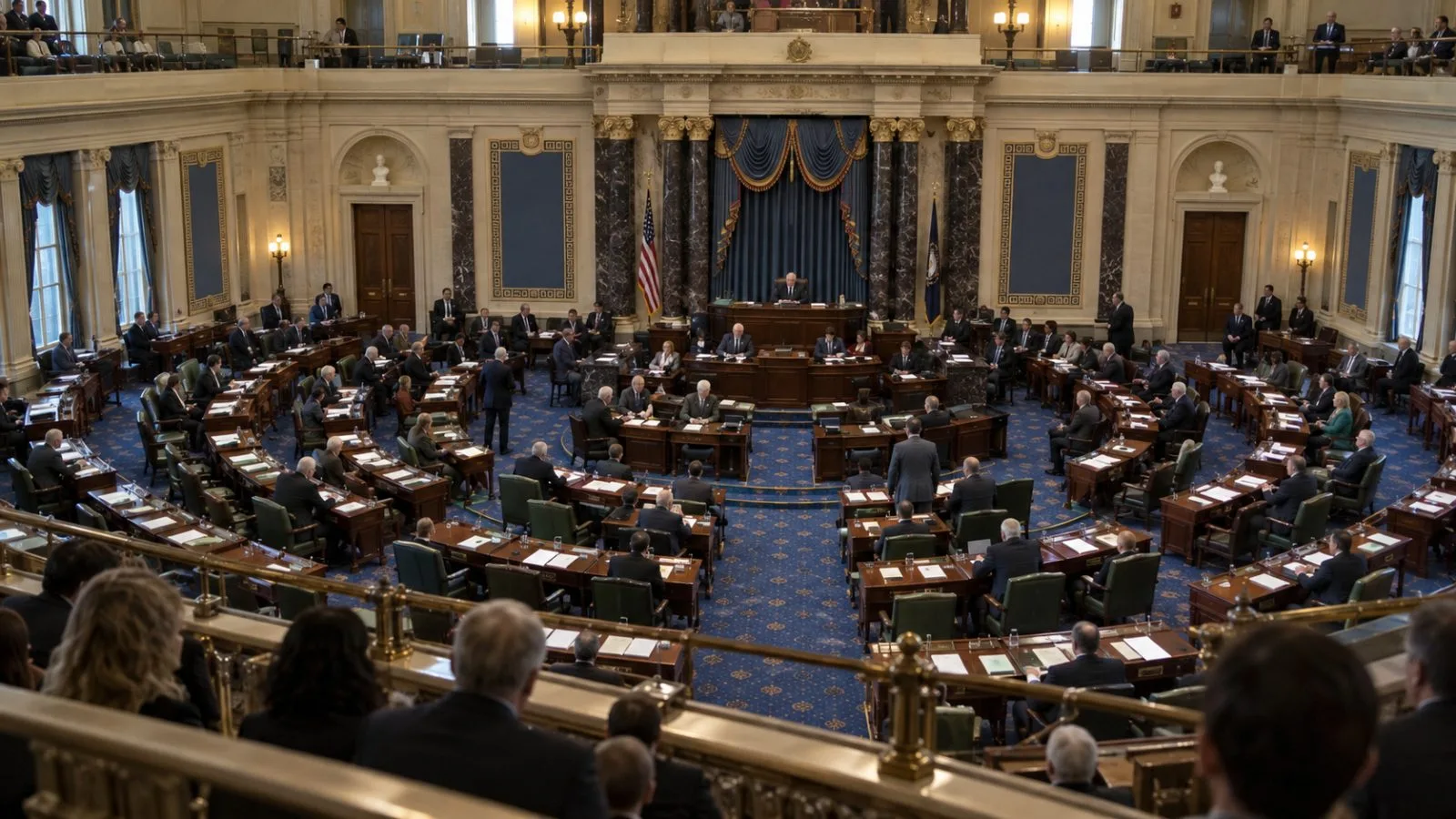
Democrats need a net gain of four seats to control the U.S. Senate after Nov. 3, as voters weigh economic concerns and the party contests several Republican-held seats.
Republicans hold 53 of the chamber’s 100 seats. Democrats hold 45, and two independents caucus with them, giving that bloc 47 seats. Four net gains would raise its total to 51.
Among voters in an Oct. 8-12 AP-NORC survey, 85% placed the economy among their most important election issues. The cost of living drew 84%, and the war with Iran drew 64%. The national survey interviewed 1,119 adults and had an overall sampling margin of ±3.9 percentage points; it does not predict results in individual Senate races.
The AP-NORC survey also found that 36% of voters approved of President Donald Trump’s job performance and 64% disapproved.
Inside Elections rated Republican-held seats in Alaska, Maine, Ohio and Texas as toss-ups on Oct. 15. The forecaster assessed Iowa and Kansas as tilting Republican and North Carolina as leaning Democratic. Those ratings are campaign assessments, not vote counts.
In Maine, Republican Sen. Susan Collins faces Democrat Troy Jackson. Alaska Republican Sen. Dan Sullivan faces former Rep. Mary Peltola. Ohio Republican Sen. Jon Husted, appointed by Gov. Mike DeWine after JD Vance left the Senate, faces former Democratic Sen. Sherrod Brown in a special election.
Texas Republican Attorney General Ken Paxton faces Democrat James Talarico. Republican Ashley Hinson and Democrat Josh Turek are competing in Iowa, while Kansas Republican Sen. Roger Marshall faces Democrat Adam Hamilton. Former Democratic Gov. Roy Cooper and Republican Michael Whatley are contesting North Carolina’s open seat. Federal Election Commission results show Trump won Texas, Iowa and Kansas in 2024.
Democrats also have seats to defend. Democratic Sen. Jon Ossoff faces Republican Mike Collins in Georgia, and Michigan’s open seat is contested by Democrat Abdul El-Sayed and Republican Mike Rogers. New Hampshire has another open seat. Inside Elections rated Georgia as leaning Democratic and Michigan and New Hampshire as tilting Democratic.
For every seat Democrats lose in a state they now hold, they would need to capture one more Republican-held seat. Voters decide the races on Nov. 3.