Reuters put the U.S. dollar index 0.77% higher at 102.26 at 2:43 p.m. EST Friday, contrasting with FXStreet’s pre-release account of a weaker market backdrop for the dollar. The two readings came from different sources and times, so they are separate observations rather than a single comparable series.
The U.S. Bureau of Labor Statistics (BLS) said employers added 165,000 jobs in October and the unemployment rate was 4.1%. The agency revised September’s gain to 60,000 from 29,000 and August’s to 186,000 from 133,000. Together, the revisions raised the two months’ combined payroll total by 84,000.
In a summary published at 7:15 a.m. EST, FXStreet attributed a 70,000 payroll forecast to a DBS Group Research view from analyst Philip Wee. The outlet also reported that the dollar index was little changed at 101.6 during the technology-led sell-off, while December rate-hike odds had fallen to 68.4% from 81.8% in one session. These were figures in FXStreet’s account of the pre-release view.
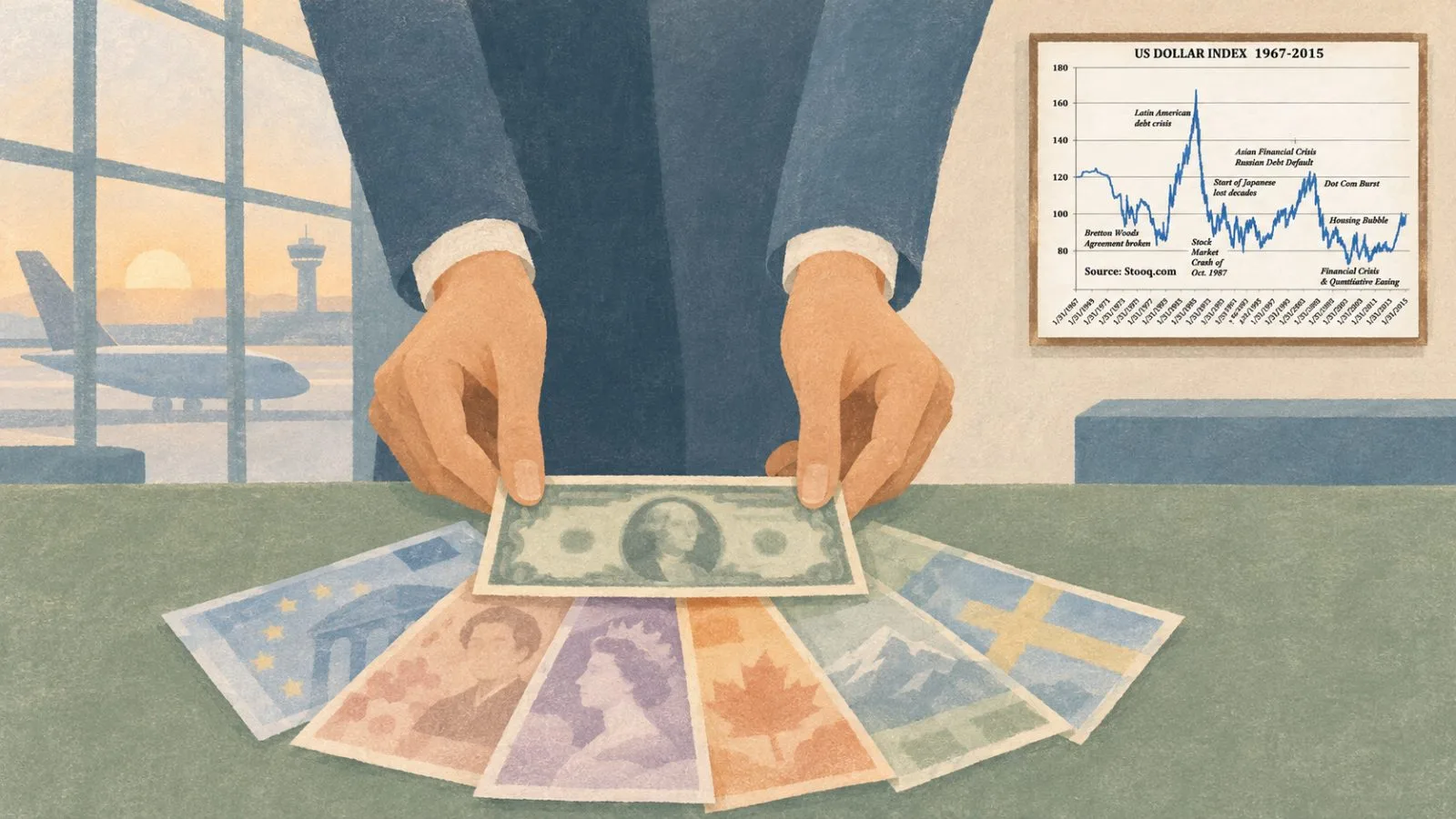
The Nasdaq Composite closed at 24,315 on Nov. 5, down 5.52%, according to Nasdaq. FXStreet said Wee linked the dollar’s limited appeal to falling Treasury yields and lower expectations for a Federal Reserve rate increase. The same account said the yen drew more haven demand during the risk-off period. ICE says the dollar index combines six currencies using geometric weights.
U.S. Treasury data showed the 2-year yield at 4.51% on Nov. 6, up from 4.46% the previous day, and the 10-year yield at 4.86%, compared with 4.84%. The University of Michigan’s preliminary consumer sentiment reading rose 6.3% to 51.0 in November 2026 from 48.0 in October.
The next scheduled inflation release is the October Consumer Price Index (CPI), due Tuesday, Nov. 10, at 8:30 a.m. EST. The Federal Reserve’s next meeting is scheduled for Dec. 8-9.