


 Trump Announces Massive Oil and Mineral Exploration Plans in Greenland
  DeFi Development Adds 22,070 SOL to Solana Treasury
  Bitcoin Price Drops as US Dollar Hits 18-Month High
  US Supreme Court Denies Release of Anti-ICE Activist Kyle Wagner
  China Resumes US Soybean Purchases After Trump-Xi Summit
  Morgan Stanley Predicts $10 Trillion RWA Market by 2030
  Most Americans Oppose Election Betting on Prediction Markets, Poll Finds
  Ripple Partners With DriveWealth to Expand RLUSD Settlements
  NEAR Price Surges 11% as Trading Volume Doubles
  US Recalls Nicaragua Envoy After Ambassador Rejection
  UNCX Network Hack Drains $86K From Ethereum Token Pool
  Trump Warns Houthis Over Attacks, Considers Erdogan Intervention
  Ripple-Backed Evernorth Set for Nasdaq Debut With 473 Million XRP
  Cardano Price Drops 15% as Whales Sell 110 Million ADA
  Jordan Bardella Antisemitism Allegations Threaten Le Pen’s Campaign
  Zelenskiy Says Ukraine Received No Warning Before Russian Missile Attack
  Elon Musk Donates $366 Million to 2026 US Midterms


 Add as a preferred source on Google
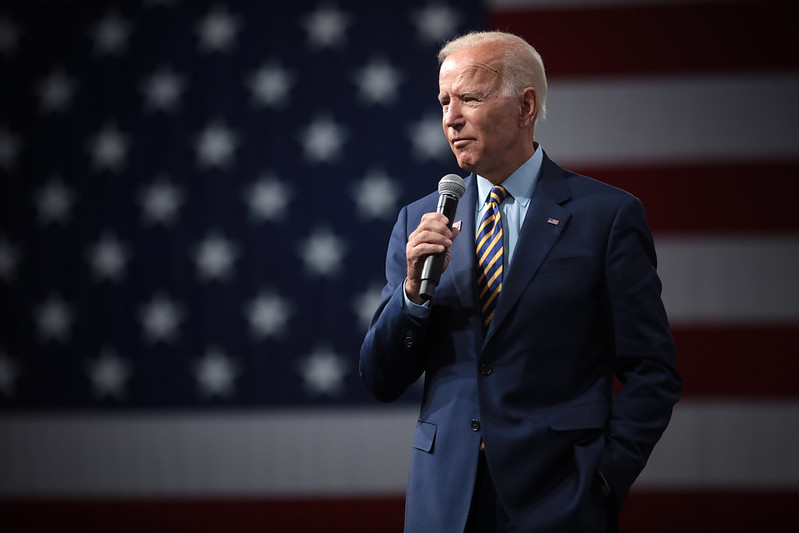

As presumptive Democratic presidential nominee Joe Biden gets set to pick his vice presidential candidate, here’s a reality check: Running mates have very little direct effect on voters. When people go to the polls, they are primarily expressing a preference for the presidential candidate, not the second person on the ticket.
In our new book, “Do Running Mates Matter?,” my collaborator Kyle Kopko and I analyze half a century of political science survey data to examine what effect a running mate has on the success of presidential candidates.
In general, voters are very unlikely to choose a presidential ticket simply because they like or dislike the second-in-command.
On rare occasions, voters can be swayed by running mates who are much more – or less – popular than their party’s main candidate. For instance, John Kerry’s vice presidential candidate in 2004, former North Carolina Sen. John Edwards, was relatively popular with voters early in the campaign. And, as our research shows, Edwards’ popularity made voters more likely to vote for Kerry, at least in the short term.
Some political analysts believe a vice presidential selection could draw key voters from that person’s own demographic group or their home state. We found that rarely happens, either.
[Deep knowledge, daily. Sign up for The Conversation’s newsletter.]
However, we found that voters view vice presidential choices as new information about the main candidate – and that information can shift voters’ views and change votes. The candidate’s choice gives voters insight into who the candidate really is, what he or she stands for and how the person might operate once in office.
Take the 2008 presidential election, for example, when Democrat Barack Obama ran against Republican John McCain with Joe Biden and Sarah Palin as their respective vice presidential nominees.
In our book, we demonstrate that voters who doubted Palin’s qualifications also were more likely to doubt McCain’s judgment and think he was too old to be president. As a result, they were less likely to vote for McCain.

John McCain, right, picked Sarah Palin, second from left, as his running mate in 2008. Rachael Dickson/Wikimedia Commons, CC BY
Conversely, our analysis also showed that voters who believed Biden was well qualified for office were more likely to approve of Obama’s judgment – and less likely to think he was too young to be president. As a result, they were more likely to vote for Obama.
In 2020, Joe Biden is already well known as an experienced former vice president, so it’s unlikely his running mate will outshine him on her own. But with this choice, Biden has a valuable opportunity to define himself as a candidate – and a potential president – in his own right.
What does he really stand for? What are his political priorities? And does he have the good judgment to be president?
Biden’s selection will help voters to answer these questions – and to decide whether he deserves their support in November.
Editor’s note: This is an adapted version of an earlier article by Christopher Devine and Kyle Kopko originally published on May 7, 2020.








