The drug poisoning crisis in Canada is at its worst in British Columbia, with over 10,000 lives lost since 2016. A key setting for overdoses in B.C. is bathrooms, though this information has not always been readily available.
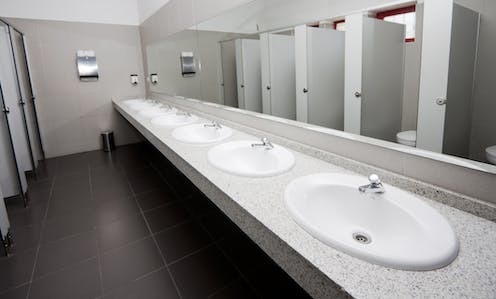
Every month in B.C., more than 50 overdoses happen in bathrooms. This statistic is based on 911 calls where overdose was specifically documented to have occurred in bathrooms. As such, it is likely an undercount of all drug poisonings that take place in bathrooms across the province.
More must be done to prevent and improve how we respond to overdoses in these settings.
There are many reasons for substance use and overdose in bathrooms.
Bathrooms can be private, seemingly safe spaces for people to use substances, especially when they are unable to access supervised consumption or overdose prevention sites. Even when these services are available, some people will continue to use substances in bathrooms. This is often due to stigma as well safety and privacy concerns, including the fear of others knowing about one’s substance use.
There can be serious risks to using substances in bathrooms. Chief among these is the risk of overdosing alone and not receiving lifesaving help in time. Fortunately, there are many ways to make bathrooms safer for people who use substances.
The Safer Bathroom toolkit
Our team of substance use and harm reduction researchers has spent the last year identifying best practices and developing a range of tools that people and organizations can use to make bathrooms safer.
Together, we launched a provincewide consultation to ask community members, service providers, city staff and other stakeholders about overdose in bathrooms.
Almost half (44 per cent) of the 237 people surveyed felt their organizations’ bathrooms were not safe for people who use substances, and many others (27 per cent) weren’t sure. They shared common barriers to bathroom safety and highlighted resources they needed to better prevent and respond to overdose in these settings.
We developed the Safer Bathroom toolkit based on this consultation. The toolkit provides practical resources related to overdose and bathroom safety, all of which can be adapted to suit individual and organizational needs.
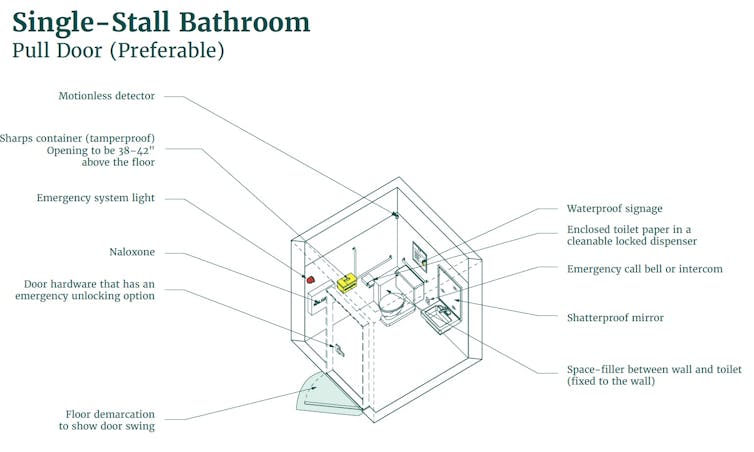
The Safer Bathroom toolkit includes an architectural design fact sheet, which identifies safety and overdose prevention features to consider when building or modifying bathrooms. Marilou Gagnon
These tools include a checklist for evaluating and improving bathroom safety, a guide to inform policy and protocol development, mock overdose scenarios to help with training and support, and examples of signs that convey non-judgmental information to bathroom users. We also created a bathroom design and remodelling fact sheet, working in close collaboration with architects who specialize in harm reduction.
Some of the best practices we share in the toolkit are for organizations to have policies and protocols in place about when and how often to do bathroom safety checks, for staff to complete a monthly mock overdose response exercise, and for bathrooms to be designed in such a way that people can easily and safely respond to overdoses, if they occur.
Incorporating these practices while raising awareness about overdose is one way that communities can come together to save lives.
Is bathroom safety really the answer?
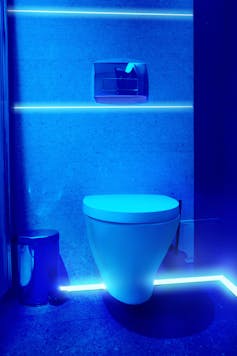
Neon-blue lights in bathrooms are used to deter injection drug use by making it more difficult for people to see their veins. (Shutterstock)
Existing public health measures are not doing enough to respond to the drug poisoning crisis. What we urgently need is a safer, regulated and accessible drug supply, an improved system of voluntary substance use treatment and care and scaled up harm reduction services. As we continue the work of filling gaps in access to these essential supports, making bathrooms safer should be a priority.
This is important because designated, supervised spaces for safer substance use are scarcely available in many regions in B.C. and across Canada. When these aren’t accessible, public and private bathrooms in our communities can function as “de facto” drug consumption sites.
What we must not do is try to prevent or deter access to bathrooms for people who use substances. Some may try measures like installing neon-blue lights that make it more difficult to see veins. However, doing so is ineffective at preventing substance use in bathrooms and actually increases risks.
From our perspective, making bathrooms safer is part of the solution and one that benefits all bathrooms users. Our hope is that the Safer Bathroom toolkit will offer concrete tools to achieve this.
Access to (safer) bathrooms is a human rights issue
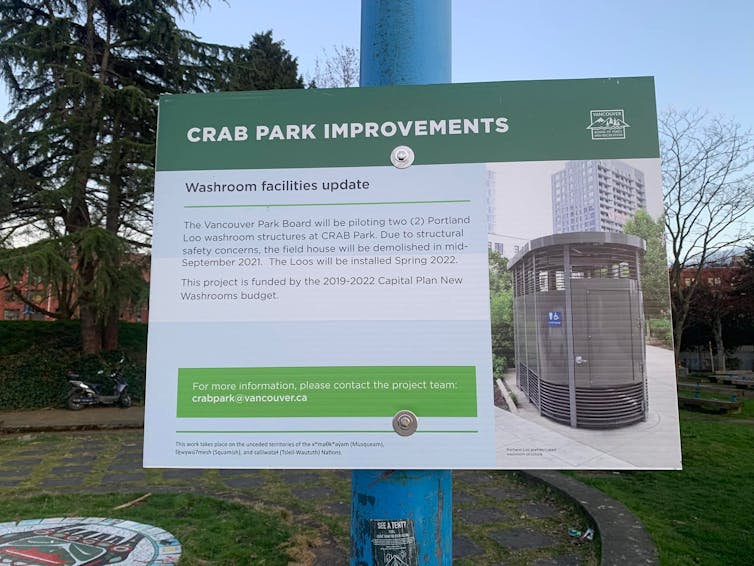
The Vancouver Park Board pilots new public bathrooms in CRAB Park, in the heart of Vancouver’s Downtown Eastside neighbourhood. Shannon Riley
The COVID-19 pandemic and safety measures have renewed calls for more public bathrooms, especially as people are spending more time outdoors. This is even more so in B.C. and other areas that are hard hit by housing and climate crises. For many people, especially our communities’ most vulnerable, finding a bathroom to use can be a very difficult task.
In our view, the safer bathroom conversation ties into the broader conversation about access to bathrooms being a human right. As our communities strive to improve bathroom access, we must invest in making these spaces safe and accessible for all, including people who use substances.