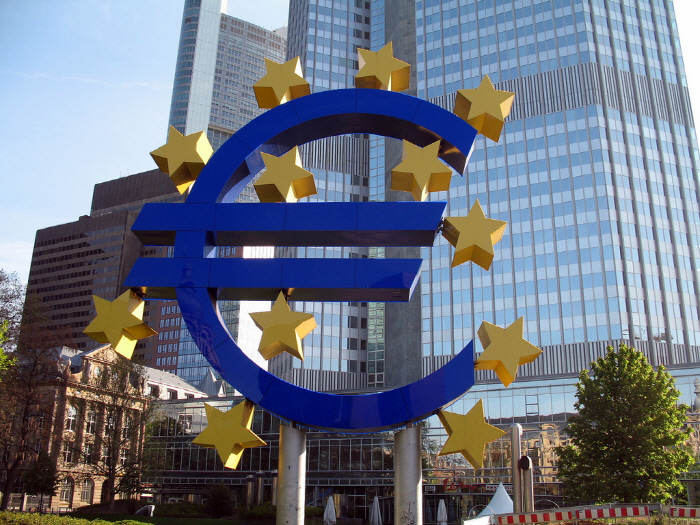
The European Central Bank is widely expected to raise interest rates by 25 basis points on Thursday as elevated oil and gas prices revive inflation concerns across the euro zone.
Brent crude has climbed over the past month as the U.S.-Iran war continues, while European natural gas prices have reached their highest levels since early 2023. The energy surge helped push euro zone inflation back above 3% in August, strengthening expectations that the ECB will lift its key rate to 2.5%.
Markets have essentially fully priced in the September ECB rate hike. Reuters sources and minutes from the central bank’s July meeting have also indicated policymakers are prepared to tighten monetary policy again.
ING global head of macro Carsten Brzeski expects a 25-basis-point increase, describing it as an “insurance” move that could ultimately prove relatively dovish.
The outlook beyond September is less certain. Traders see a strong possibility of another increase by December and potentially an additional hike next year. However, economists generally believe the ECB has limited room for further tightening because higher borrowing costs could weaken economic growth.
So far, there is little evidence that energy-driven inflation is spreading broadly through the economy. Services inflation declined in August, while the labor market remains soft and wage growth continues to slow. Investors will therefore watch closely for ECB comments about whether expensive energy could eventually push up underlying inflation.
The ECB’s latest economic projections will also attract attention. Inflation and growth forecasts are expected to remain broadly stable, although stronger-than-anticipated business activity could lead to a modest upgrade to the 2026 growth outlook.
Meanwhile, recent U.S. intervention involving euro sales to support the Japanese yen is unlikely to directly influence ECB monetary policy, though European officials have reportedly been frustrated by Washington’s approach.
Rising government bond yields present another challenge. Ten-year borrowing costs in France and Italy have increased about 65 basis points this year, while German yields are roughly 50 basis points higher.
Higher global yields are already tightening financial conditions, potentially reducing the need for aggressive ECB rate hikes. Policymakers are therefore likely to emphasize that intervention would only become necessary if bond-market moves diverge significantly from economic fundamentals.