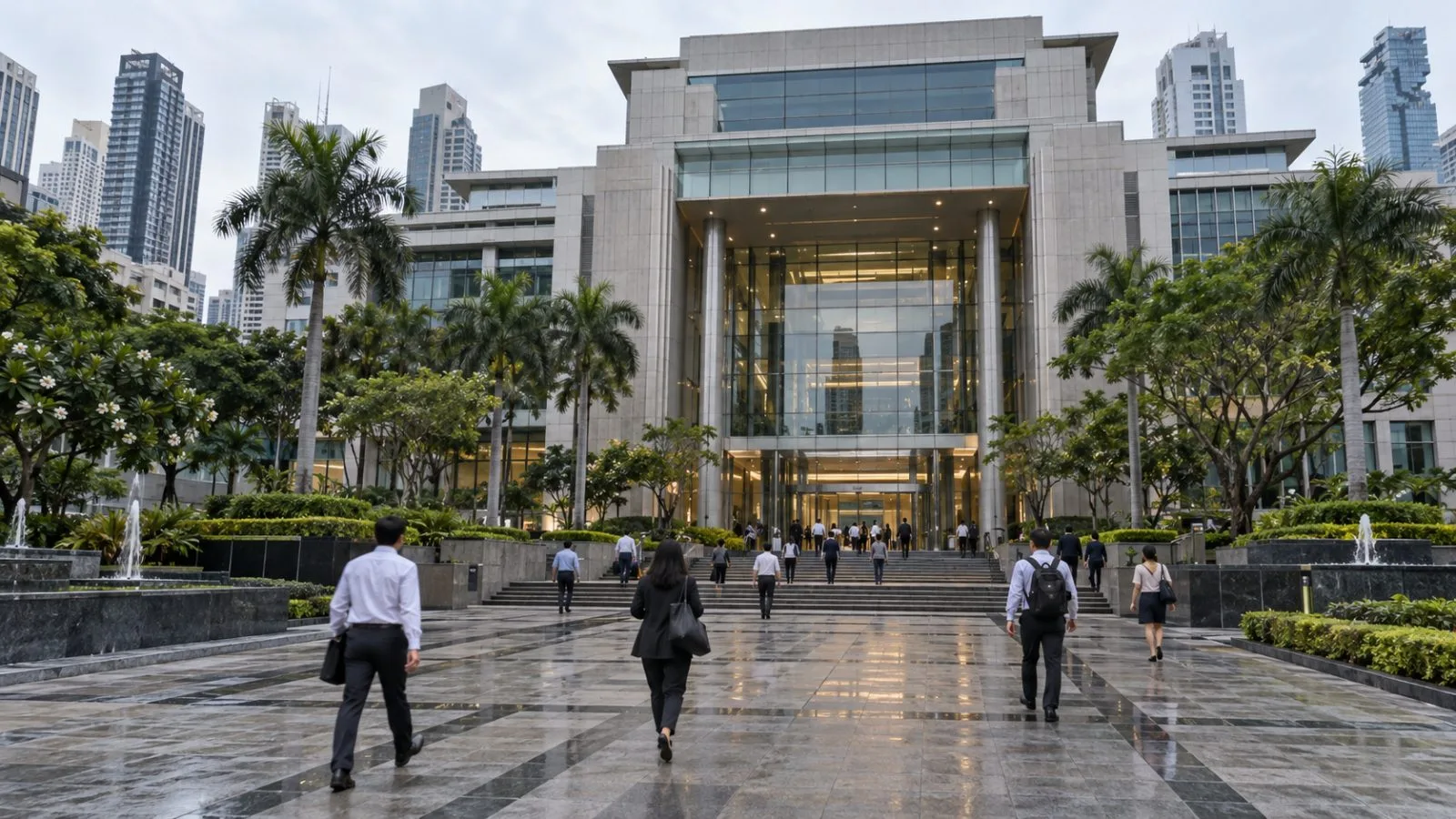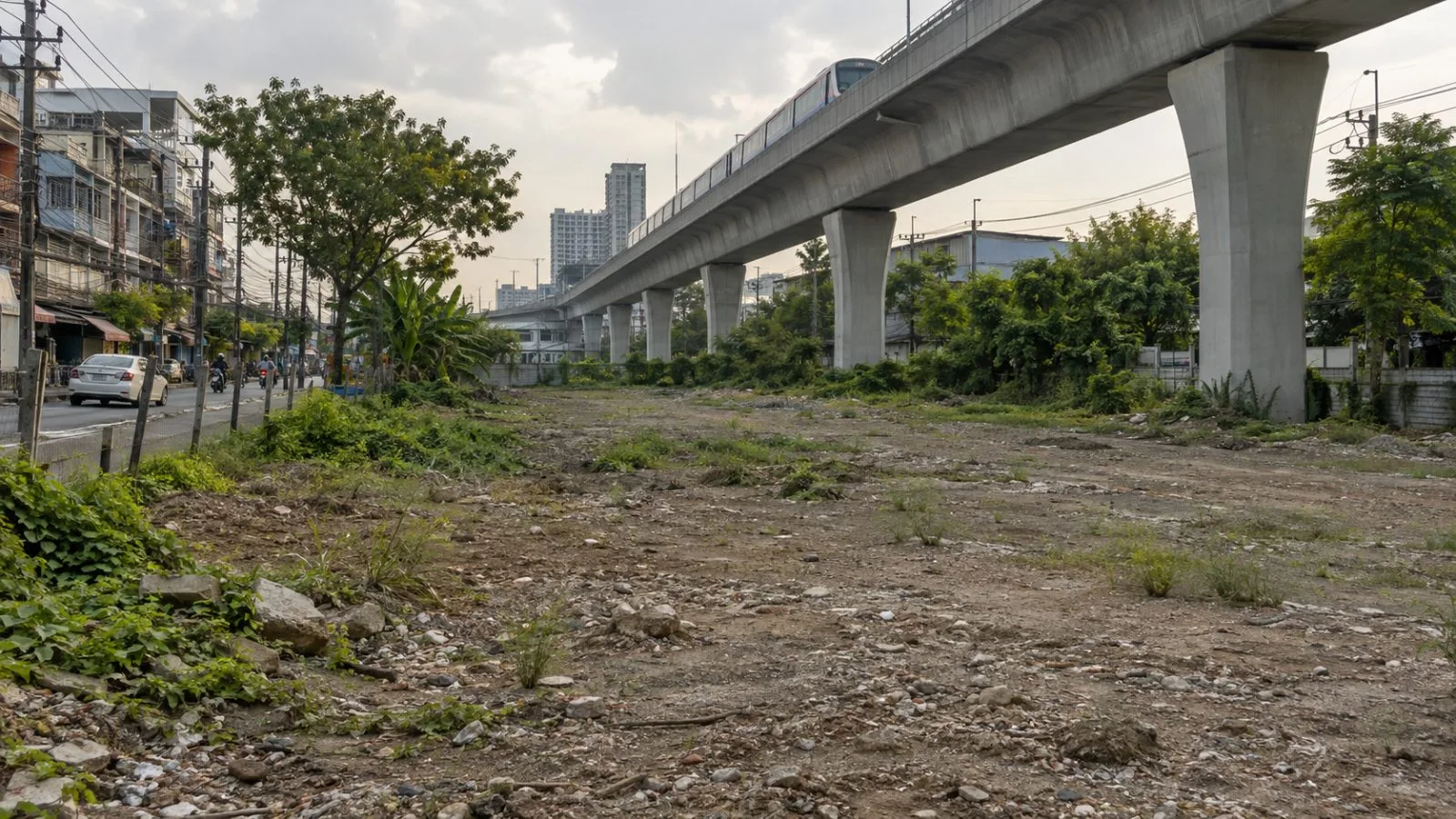
The undeveloped-land index for eastern Bangkok’s Phra Khanong–Bang Na–Suan Luang–Prawet corridor rose 39% year over year in Q3 2026, the biggest increase among locations tracked in Bangkok and nearby provinces, the Real Estate Information Center (REIC) said.
Across Greater Bangkok, the index reached 459.0 points, up 2.6% from Q3 2025 and 4.1% from Q2 2026. The earlier readings were 447.2 points and 440.9 points, respectively. REIC uses 2012 as the index’s base year.
The eastern corridor topped REIC’s Q3 list. Inner Bangkok recorded 12.7% annual growth, followed by Samut Sakhon at 11.4%, the Mueang Pathum Thani–Lat Lum Kaeo–Sam Khok area at 10.9%, and the Rat Burana–Bang Khun Thian–Thung Khru–Bang Bon–Chom Thong area at 7.5%.
REIC cited transport links and development as factors supporting the eastern corridor. Its list included the BTS Sukhumvit Line, Yellow Line, Airport Rail Link, expressways and Bangkok–Chonburi Motorway, along with the planned Bang Na–Suvarnabhumi light rail. The center also pointed to urban expansion from inner Sukhumvit and Bangkok Mall. It did not quantify the contribution of any individual project or transport link.
The corridor’s annual index change was positive for five consecutive quarters, REIC’s chart shows. The rate rose from 6.2% in Q3 2025 to 15.9% in Q4 2025, 29.8% in Q1 2026, 36.3% in Q2 and 39% in Q3 2026.
The 39% figure measures a change in REIC’s undeveloped-land index, not a stated sale price per unit of land. The release gives no absolute land price or transaction count for the combined corridor, and it does not break out separate rates for its four districts.