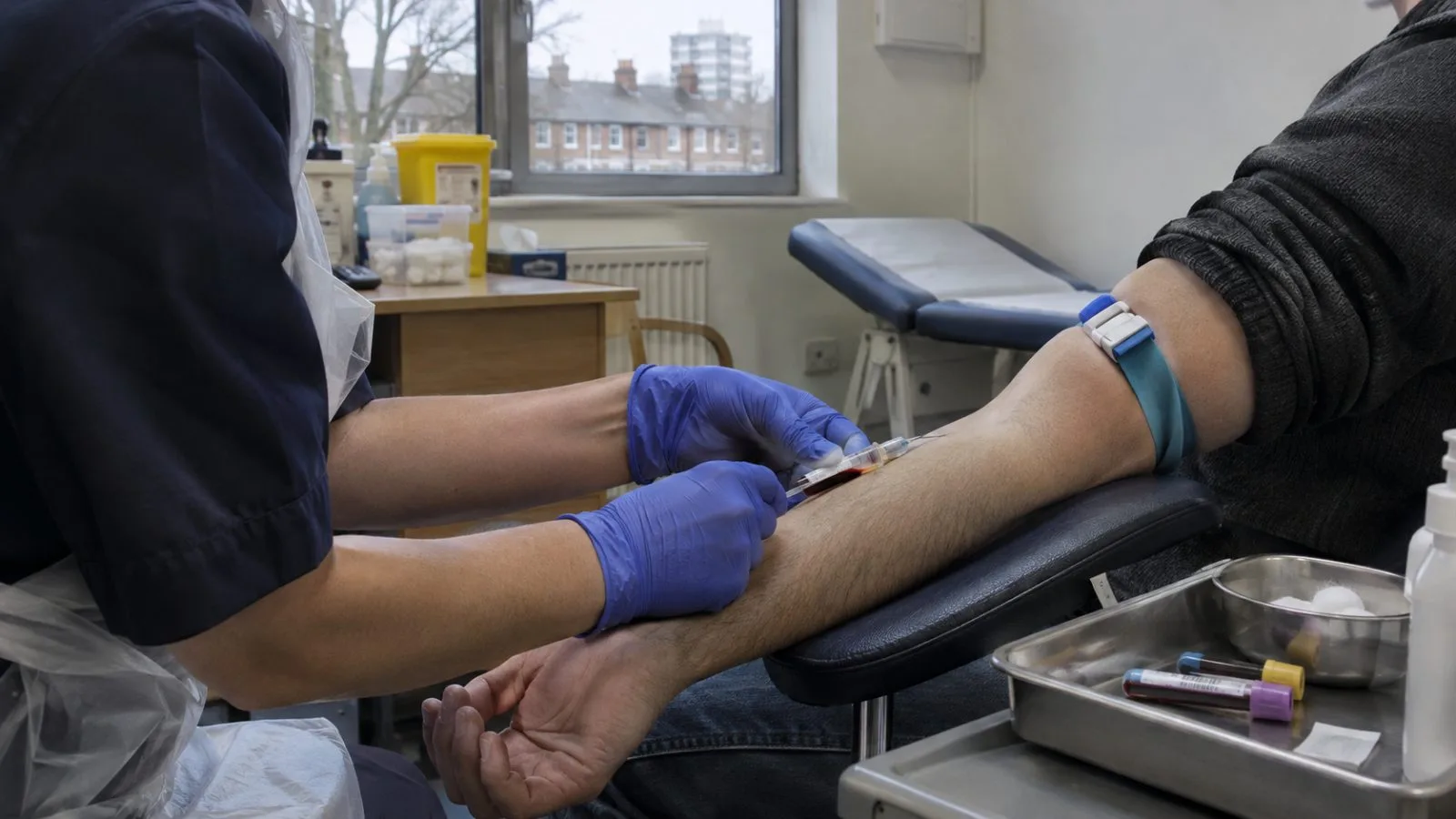
England has started a five-year trial of blood tests in primary care to see whether they can help general practitioners (GPs) decide which patients with abdominal symptoms need cancer investigations.
The Department of Health and Social Care said the STRIDE-RCT study could involve more than 20,000 National Health Service (NHS) patients aged 45 or older at 200 or more GP practices. Patients consulting a GP about symptoms such as persistent bloating or abdominal discomfort may be invited to take part.
The tests will examine blood for signals linked to 13 cancers and aim to indicate where in the body a signal may have originated. The cancers named are bowel, small bowel, stomach, esophageal, pancreatic, liver, bile duct, gallbladder, ovarian, endometrial, kidney, bladder and prostate. Researchers will assess methods that include artificial intelligence and blood-protein measurement. Most tests are expected to require one or two blood tubes, collected alongside routine testing.
The government said a positive result could help a GP and patient weigh whether an urgent referral is appropriate, but would not establish a cancer diagnosis. Professor Aneel Bhangu, a co-chief investigator at the University of Birmingham, said blood tests might help GPs distinguish cancer symptoms from less serious conditions, adding, “we need to know for certain.”
The government estimates that about 71,000 people in England are diagnosed each year with pancreatic, stomach, liver, ovarian or bowel cancer. It is providing up to £8.49 million for the study through the Office for Life Sciences and the National Institute for Health and Care Research.
A separate NHS study tested the Galleri blood test in a screening setting. It did not significantly reduce combined stage III and stage IV diagnoses across the 12 cancer types specified in the study. That study used a different test and design, so its findings do not show how STRIDE-RCT will perform among symptomatic patients seeking primary care.
The University of Birmingham’s project record lists the study period as Nov. 1, 2026, to Oct. 31, 2031. The government said it would consider whether evidence from the trial supports a possible nationwide rollout; it has not given a date for that decision.