Enterprise Singapore’s executive director for China, Kow Juan Tiang, urged Singapore firms to explore technology and green-economy opportunities in China, while warning of regulatory and competitive risks, Channel NewsAsia reported.
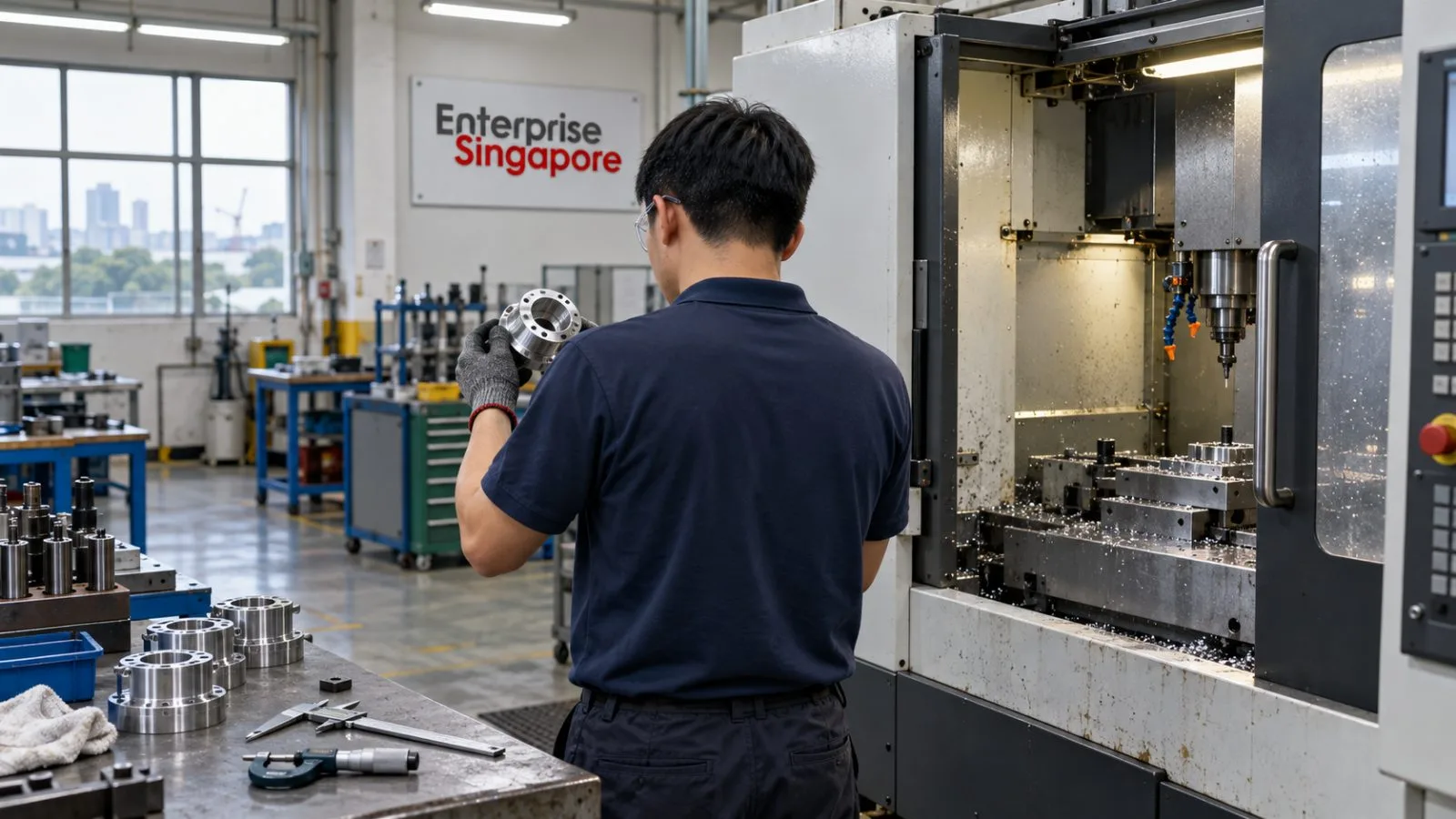
China installed 354,000 industrial robots in 2025, 20% more than in 2024 and 59% of installations worldwide, the International Federation of Robotics said. CNA reported Kow’s view that China’s customers, supply networks and technology could help Singapore companies develop products and expand overseas.
Xnergy’s website lists wireless charging products for factory robots and other autonomous mobility applications. CNA reported that the Singapore company is seeking new capital, with a goal of scaling annual output to as much as 100 times its current level in the coming years. Xnergy entered China in 2021 and produces several thousand chargers per year, the outlet said.
CNA named smart technology, advanced manufacturing and the green economy as fields Kow urged firms to explore. The Straits Times described his priority sectors as technology and innovation, healthcare and biomedicine, and green products and services. The two outlets gave different sector lists. CNA quoted Kow saying, “It’s very important for us to know our core capabilities and the value proposition that we have.”
SP Group said in 2020 it had agreed to form a joint venture with a local partner in Guangzhou Knowledge City. The planned project covered district cooling and heating alongside integrated energy solutions.
CNA reported Kow advised companies to learn China’s local rules and account for operating risks. The outlet also cited intense competition, cautious consumer spending and a prolonged property downturn as challenges.
China’s State Council action plan for 2026-2030 sets a 2030 goal of reducing carbon dioxide emissions per unit of GDP by 17% from 2025 levels. It also targets a 25% share for non-fossil energy consumption. CNA reported Kow identified renewable energy, power efficiency and carbon services as possible areas for Singapore firms. The policy targets are set for 2030.