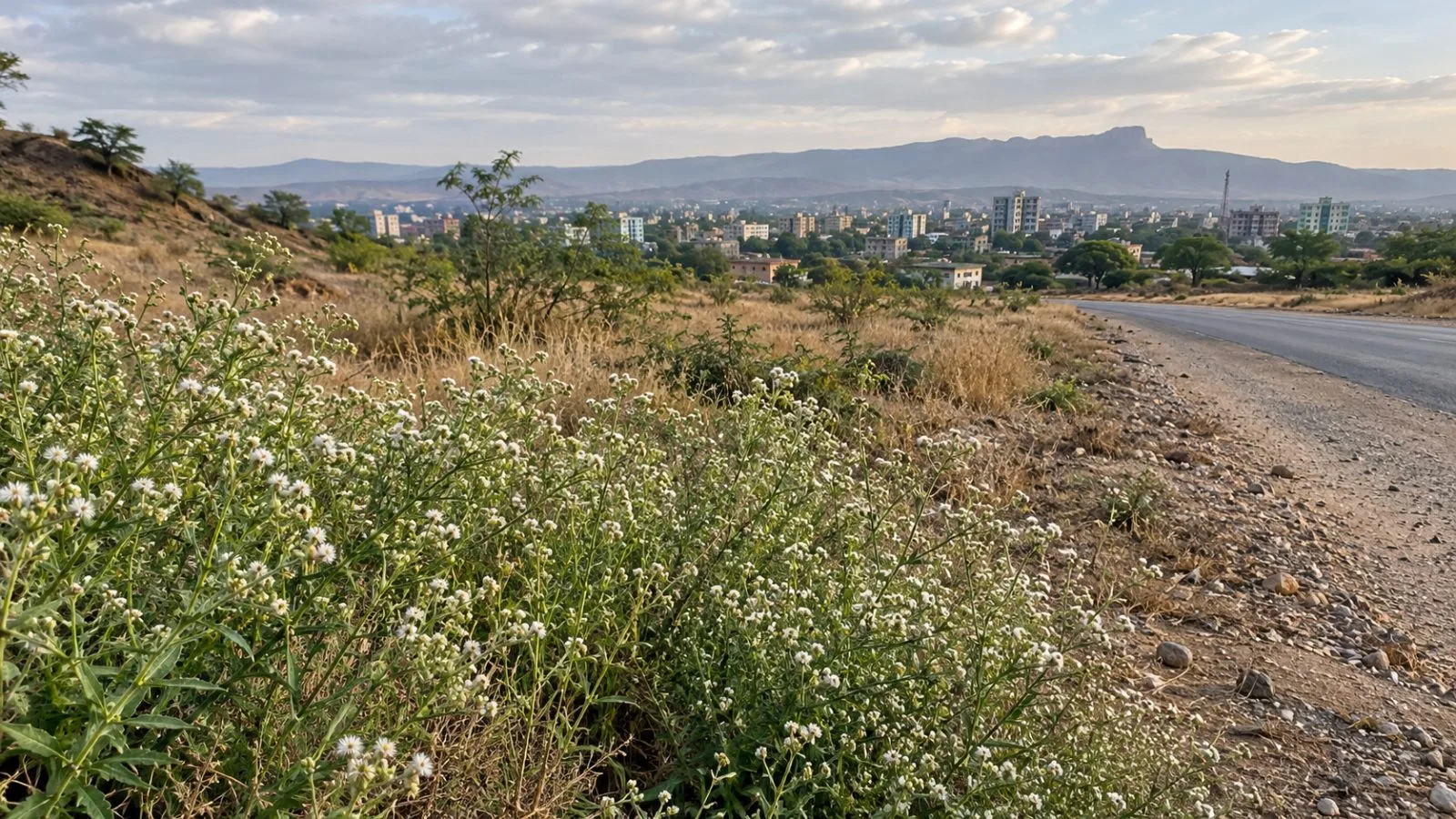
The Ethiopian Biodiversity Institute identifies parthenium weed as one of Ethiopia’s leading invasive threats and says food-aid shipments may have carried it into the country, but the proposed route is not tied to a particular delivery.
On its invasive-species page, the institute says the weed is believed to have been introduced accidentally through food aid. It reports that parthenium can reduce forage production by as much as 90% in some places, but does not name those locations or describe the figure as a national average.
The institute also says the weed’s impact in natural habitats has not been assessed. Its stated loss figure therefore concerns forage production in unspecified places; the page gives no measured impact for natural habitats.
Research accounts differ on when parthenium was recorded in Ethiopia. A paper by Haramaya University researchers, “Parthenium Weed Invasion and Biodiversity Loss in Ethiopia,” cites a first record in 1968 and says the route of introduction is uncertain. The review “Status of Parthenium Weed and Its Control Options in Ethiopia” says it was first reported in Dire Dawa in 1988 and lists relief wheat and wartime transport as possible routes. Neither account establishes when or how the weed arrived.
A U.S. Agency for International Development (USAID) paper prepared in Washington on Oct. 30, 1987, described relief planning for calendar year 1988. It said the Ethiopian government and the United Nations estimated about five million people would need emergency assistance, involving approximately 950,000 metric tons of imported relief food.
U.S. approval covered 115,000 metric tons of emergency food worth $37 million, including internal transport, storage and handling, with four American private and voluntary organizations set to distribute it. It does not mention parthenium or connect those shipments to the weed’s arrival. The figures document relief planning in the period covered by the accounts, but do not identify the donor or shipment behind the institute’s proposed food-aid route.