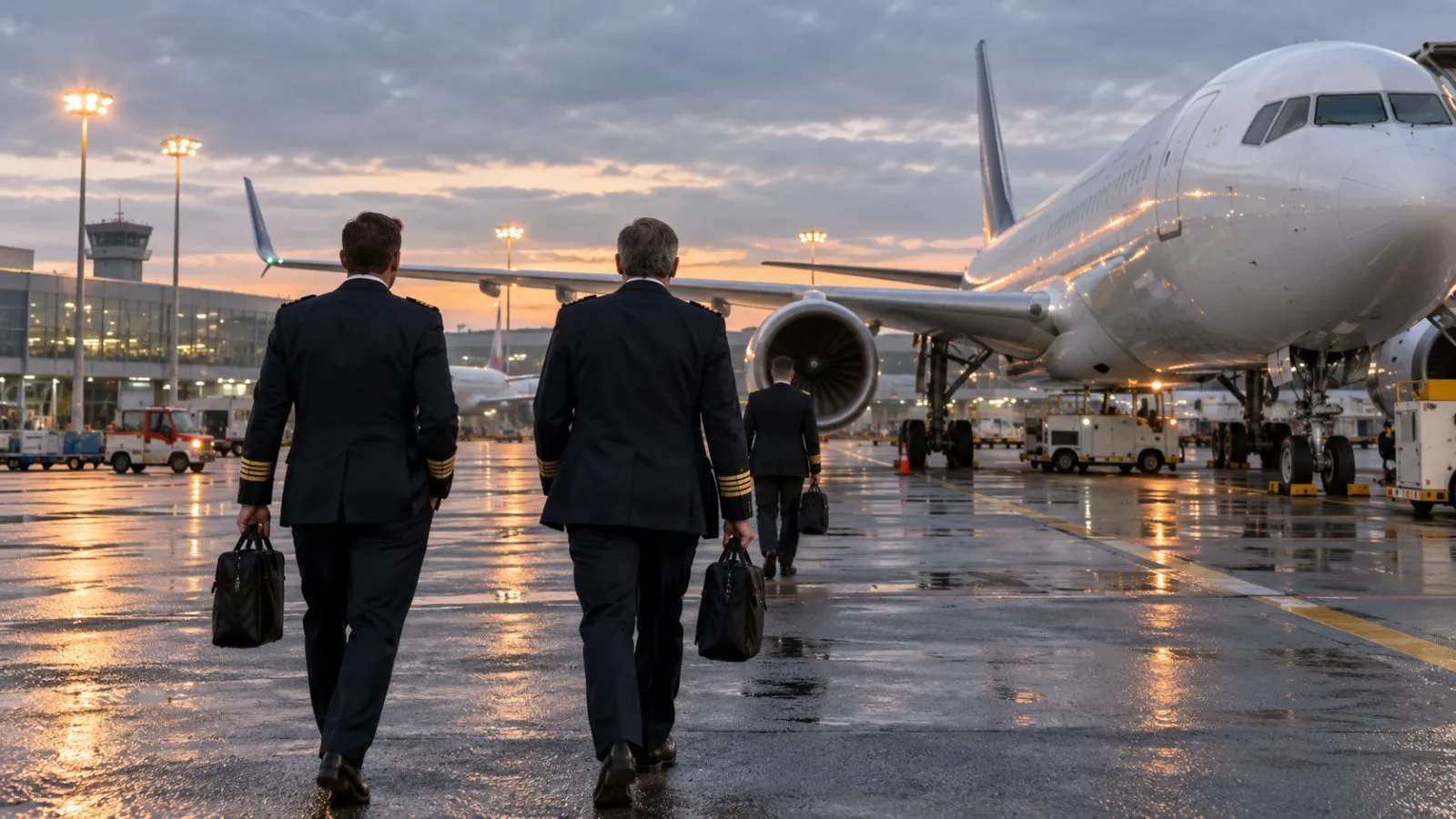
A voluntary survey of European pilots found that 24.2% usually continue flying without reporting fatigue when unfit for duty, leaving airlines with less data to identify recurring scheduling problems.
The European Cockpit Association (ECA) commissioned aviation consultancy Baines Simmons to analyze 7,198 responses to central questions in its online poll. The survey ran from Aug. 4 to Sept. 7, 2026.
Asked what they usually did when fatigue made them unfit for duty, 24.2% said they flew without reporting the fatigue. Another 37.2% usually reported themselves unfit because of fatigue, while 16.8% said they usually reported sick.
Separately, 52% said they had flown while too fatigued to work at least once in the three months before answering. During the four weeks before replying, 76.8% selected at least one flight-deck experience from a combined list: brief unintended sleep, head nodding or difficulty staying alert. The grouped answers do not show how many pilots experienced sleep specifically.
On recovery time, 38.8% said they usually or always lacked enough time off between duties, while 11.9% said they trusted their airline’s fatigue reporting system.
Commander’s discretion allows a flight duty to extend beyond its maximum in exceptional circumstances. In the four weeks before answering, 38.3% said they had used it at least once. Some 69.1% were at least slightly concerned about negative consequences if they refused an extension.
EU aviation rules, as published by the European Union Aviation Safety Agency (EASA), require operators to plan duties and rest so crews can recover. They also bar crew members from working when fatigue could endanger a flight and require a nonpunitive process for commander’s discretion.
“When pilots fear career consequences, fatigue goes unreported and the risk returns to the cockpit,” said Capt. Coen George, an ECA board director.
Because participants opted in, the findings describe respondents’ experiences; they do not establish fatigue rates across Europe’s pilot workforce or measure safety outcomes. ECA has urged stronger reporting safeguards and oversight as EASA develops its aircrew fatigue strategy. The association gave no date for a next decision.