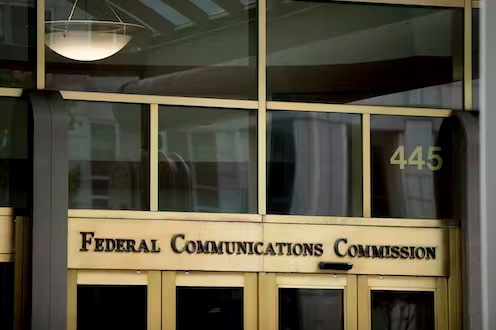
The U.S. Federal Communications Commission (FCC) has emerged as a key force in the Trump administration’s technology and national security strategy toward China, expanding its role far beyond traditional oversight of telecommunications and broadcasting.
Under FCC Chairman Brendan Carr, the agency has spent the past nine months tightening restrictions on technology considered a potential threat to U.S. supply chains. Measures include blocking imports of new models of Chinese drones, routers, power inverters and robots, while moving to prevent Chinese laboratories from testing electronic products such as smartphones, computers and cameras for the U.S. market.
The FCC is also preparing restrictions on imports of certain Chinese data center components, according to Reuters. The initiative is designed to protect infrastructure supporting the rapid expansion of artificial intelligence in the United States while encouraging domestic manufacturing.
Although the measures disproportionately affect Chinese suppliers, U.S. officials say FCC policies are structured globally rather than explicitly targeting China. In some cases, restrictions cover foreign-made technologies before exemptions are granted to companies outside China. Officials believe this approach has allowed Washington to increase pressure on Chinese technology companies without unnecessarily escalating tensions with Beijing.
China, however, has begun responding. Beijing recently announced tighter export controls covering U.S.-bound drones and technology and imposed sanctions on an American testing and certification company. Chinese authorities have criticized FCC measures as discriminatory and warned that they could disrupt global supply chains.
The growing dispute comes ahead of an expected September meeting between President Donald Trump and Chinese President Xi Jinping, where stabilizing U.S.-China relations is likely to be a priority.
Carr, who became FCC chairman in January 2025, has pushed the regulator toward a broader national security role focused on cybersecurity, supply chain vulnerabilities and technologies linked to foreign adversaries.
U.S. officials and analysts increasingly view the FCC as a central tool in Washington’s China technology policy. Despite Beijing’s countermeasures and ongoing efforts to stabilize trade relations, national security experts expect the agency’s pressure on Chinese technology and supply chains to continue.