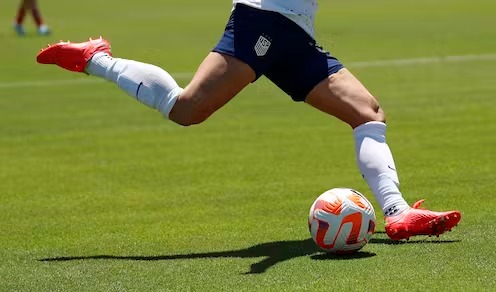
FIFA President Gianni Infantino defended the organization's disciplinary process after U.S. President Donald Trump praised the decision to suspend U.S. striker Folarin Balogun’s World Cup red-card ban, a move that has triggered widespread criticism over the governing body's independence.
Trump publicly called FIFA’s decision “brilliant” after personally urging Infantino to review Balogun’s suspension. The Arsenal forward was cleared to play against Belgium but failed to make an impact as the United States suffered a 4-1 defeat and exited the FIFA World Cup.
Infantino said FIFA’s judicial bodies acted independently and insisted he informed Trump that the Balogun case was subject to an ongoing legal process. FIFA later confirmed its disciplinary committee had the authority under Article 27 to suspend the automatic one-match ban while keeping the red card on Balogun’s record. The striker was also fined $40,000 for entering the field to celebrate after his dismissal.
The ruling has drawn sharp criticism from UEFA, the Royal Belgian Football Association, and several national football federations, which argued the decision undermines the integrity and consistency of FIFA’s disciplinary system. Belgium unsuccessfully challenged Balogun’s eligibility before kickoff, with FIFA rejecting the appeal on procedural grounds.
The controversy has also influenced other teams. England is reportedly evaluating whether to appeal defender Jarell Quansah’s recent red card following Balogun’s reinstatement, while British lawmakers have called on FIFA to apply disciplinary rules consistently.
Trump defended Balogun, saying the striker “didn’t do anything wrong” and suggesting excluding the U.S. star would have damaged the tournament. He also questioned the officiating of Brazilian referee Raphael Claus, whose integrity was defended by the Brazilian Football Confederation.
Prominent football figures also criticized FIFA. Former Liverpool manager Jürgen Klopp called the situation “madness,” while former FIFA President Sepp Blatter warned that disciplinary decisions should be based on rules and evidence—not political influence. The dispute has intensified scrutiny over FIFA’s governance and raised fresh concerns about the separation of politics and football ahead of the latter stages of the World Cup.