Official assessments across Spain, Northern Ireland and France link nutrient pollution to algal problems, while record July sea temperatures in the Mediterranean add heat stress to already pressured waters.
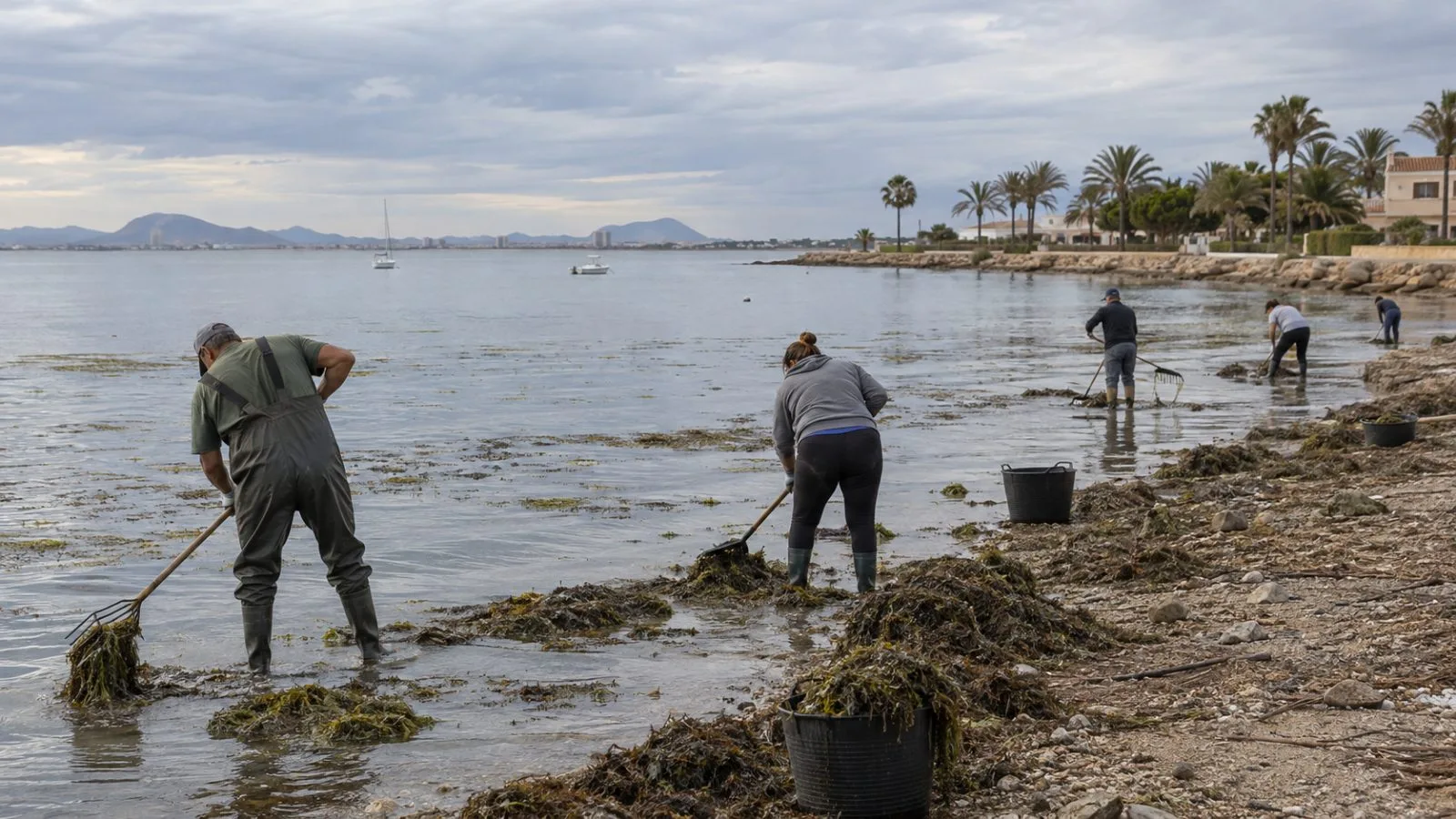
Murcia’s regional government said crews had removed 3,514 tonnes of biomass from the Mar Menor shoreline between Jan. 1 and March 20, 2026. It forecast about 4,000 tonnes by the end of March and linked the cleanup to freshwater and nutrient flows into the lagoon. The release reports a biomass-removal total but does not identify how much, if any, was toxic algae.
Spain’s Ministry for Ecological Transition says excess nitrates and phosphates have severely disrupted the lagoon, mainly through intensive agriculture and other human activity. The ministry traces the damage through a 2016 event that eliminated most of the lagoon’s macroalgal and seagrass beds, followed by mass marine-life deaths in 2019 and 2021. Euronews reported that Fina, an 84-year-old Mar Menor resident, said: “This used to be paradise.”
For Lough Neagh, Northern Ireland’s Department of Agriculture, Environment and Rural Affairs (DAERA) links the 2023 blue-green algae bloom to nutrient pollution built up over decades, with sources including farms, wastewater, septic tanks and industry. The department also points to warmer water and invasive zebra mussels, which made the water clearer and allowed more light to reach algae. DAERA says some blooms can produce toxins that may cause rashes, nausea or vomiting after exposure. It also identifies fishing and water-based businesses as potentially affected.
Brittany’s green tides are stranded seaweed, not cyanobacteria. France’s Cour des comptes found uneven progress: most monitored mudflat areas saw more strandings even as the eight bays covered by a regional plan had an overall decline. River nitrate readings have decreased over 15 years, though the decline slowed in the latest decade; the court says further reductions are needed for lasting control.
Mercator Ocean International reported a Mediterranean mean sea-surface temperature of 27.07 ± 0.27°C in July 2026, the highest July average in its record. Strong or more intense marine heatwave conditions affected 79% of the basin for at least one day. World Weather Attribution estimates human-caused warming added about 2°C to the annual warmest 14-day sea-temperature event in the Mediterranean regions it studied and 1.4°C in its Bay of Biscay and Iberian Peninsula region. The analysis concerns temperature extremes and does not establish the cause of any particular local bloom.
Spain’s €675.05 million Mar Menor recovery framework runs through 2027 and includes measures to reduce nutrient inputs and improve wastewater management. For Brittany, the Cour des comptes calls for further nitrate reductions and closer monitoring of strandings, especially in mudflat areas.