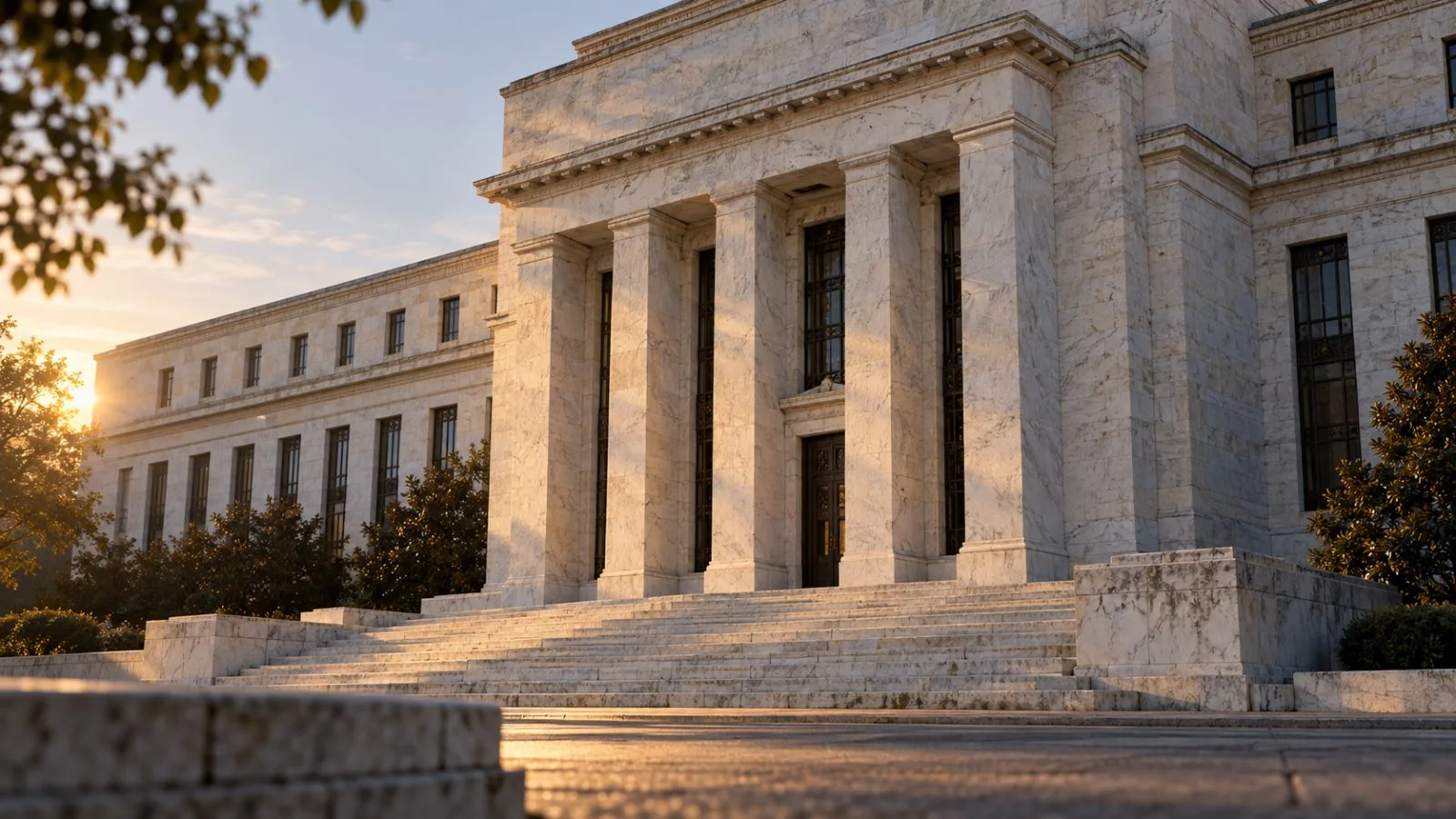
The Federal Reserve kept its federal funds target range at 3.75% to 4% on Oct. 28, as Fed Chair Kevin Warsh said officials needed more evidence before deciding their next move.
The Federal Open Market Committee (FOMC) voted 10-2 to keep rates steady. Lisa D. Cook and Cleveland Fed President Beth M. Hammack favored a quarter-point increase.
Warsh said policymakers had not reached a firm view on whether the current rate was appropriate, although most officials thought their approach was beginning to work. He argued that restoring price stability depended on a consistent policy approach, rather than a deadline or one economic report.
First-half gross domestic product growth was revised up to 2.4% from 1.8%, and third-quarter expansion appeared faster. Warsh put consumer spending growth above 3% and business investment gains in double digits, led by high-tech outlays. Investment gains were broadening beyond high tech, while capital spending represented a historically large share of GDP.
Warsh described employment as favorable: unemployment was below its level a year earlier, while payroll growth had improved from last year. Inflation, however, had exceeded the Fed’s 2% objective for close to six years. He said energy and related price increases could spread more broadly, and that the Fed aimed to limit that risk and keep inflation expectations anchored.
The September policy action had tightened financial and credit conditions for some businesses and households, Warsh said, broadly as officials had anticipated. Investors were also taking a more selective approach to capital allocation. He did not describe overall financial conditions as tight.
The Fed plans to retain eight FOMC meetings a year. Starting in fall 2027, one meeting will focus exclusively on long-term monetary strategy, with no rate vote or policy statement expected. Warsh said the plan for 2028 includes two strategy meetings and six policy-setting sessions. The next scheduled FOMC meeting is Dec. 8-9.