Business demand still appeared solid during a South Carolina factory visit, while companies questioned how much of their rising costs they could pass to customers, Richmond Fed President Tom Barkin said.
Businesses generally reported strong earnings and steady margins but remained uncomfortable with the broader economy. “Uncertainty is something you hear a lot about, a call for stability,” Barkin said.
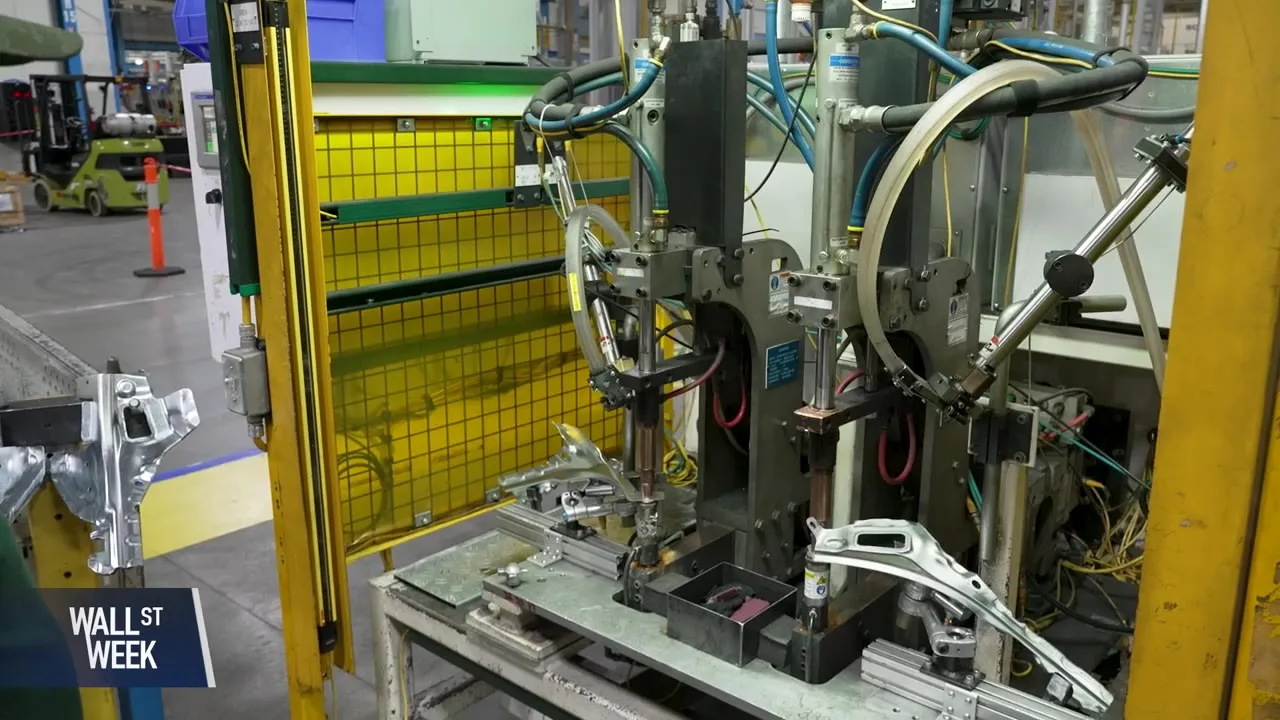
Barkin spoke during a visit to auto parts maker Gestamp in Union, South Carolina, featured in Bloomberg Television’s “What America’s Factories Reveal About the Economy,” published Nov. 8.
Gestamp installs equipment intended to last 30 years, said Brian Brunzell, who helps oversee the company’s U.S. operations. The company sees finding and developing workers as essential to keeping those investments running.
Robots need employees to program and maintain them, Brunzell said. He described artificial intelligence as support for workers, with automation creating opportunities for more skilled, better-paid positions.
The Union plant employs about 600 people, Bloomberg Television reported. Brunzell said it had undergone three or four major expansions and was starting an apprenticeship programme for toolmaking and maintenance alongside job shadowing with local high schools.
Barkin said conversations with businesses helped him understand economic figures and sometimes identify changes sooner. Companies can describe current hiring, prices, costs and demand before those developments appear in monthly data.
Conditions differ across his district. Washington and Maryland face a more difficult environment because of their ties to government spending, while the Carolinas benefit from people and companies moving in.
The Carolinas have annual workforce growth of 2%, Barkin said. Housing construction also contributes to the stronger conditions there.
Manufacturers’ views on tariffs depend on their businesses. Pharmaceutical investments in North Carolina and Virginia reflect deals connected with pharmaceutical tariffs, while foreign manufacturers assembling products in South Carolina dislike duties on imported parts.
Barkin described manufacturing across his district as positive on balance, despite those differences. He said conversations alone offered limited visibility into the future.
He asks companies about next year’s staffing, pay and pricing budgets, along with any plans to cut jobs. Preparing layoffs takes months, potentially giving him advance information about employment changes.
After the visit, Barkin said his focus was whether companies could still pass higher costs to customers. He compared current conditions with 2016 and 2023 without explaining those benchmarks further.
“I don’t think we’re in 2023 anymore, but I also don’t think we’re back in 2016,” he said.
Brunzell said some core customers maintained strong sales, although automakers faced uneven conditions following a shift away from battery electric vehicles. He expected U.S. vehicle sales of about 16 million in coming years.
He expected most customers to maintain or slightly expand their market positions. Customers were concentrating on cutting costs while directing more development toward internal combustion engines, creating opportunities for Gestamp.
A rapid return to electric vehicles would be difficult given the investment required, Brunzell said. “Stability is our friend.” He said continued car buying was central to the business, but gave no specific timetable for another change in vehicle technology.