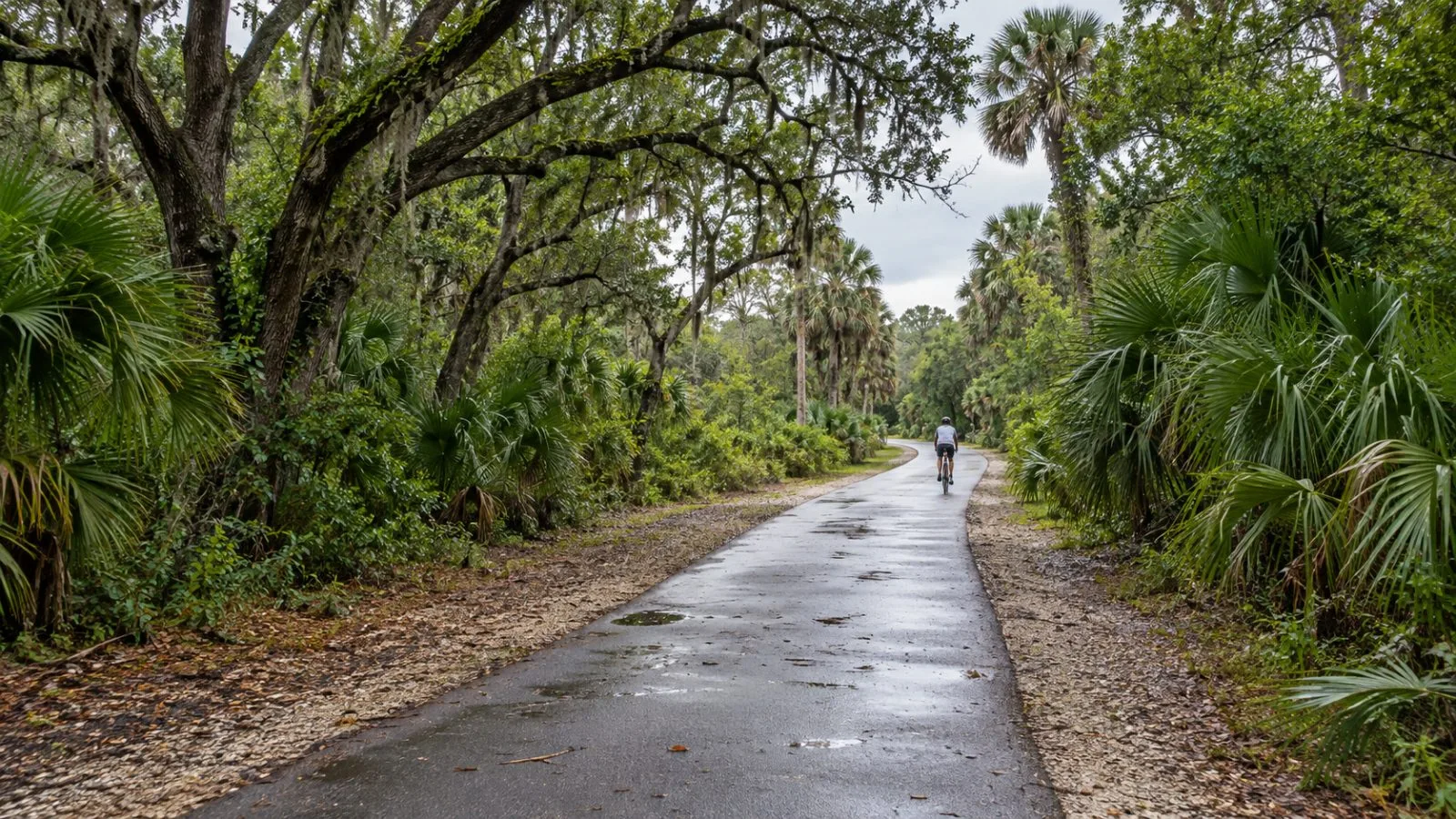
The U.S. Court of Appeals for the Federal Circuit on Oct. 22 rejected compensation claims tied to a Florida rail trail, finding the landowners had no reversionary interests in the properties at issue.
The dispute covers appeals 2025-1179 and 2025-1459, involving a 7.68-mile stretch of the Venice Branch in Sarasota County, Florida. The Federal Circuit affirmed judgments the U.S. Court of Federal Claims entered in 2024 and 2025.
The landowners argued that their predecessors granted the railroad easements for rail operations. They said neighboring owners would have regained the land when rail use ended, but a federal trail-use order prevented that reversion from taking effect.
The panel reviewed seven deeds and a 1926 condemnation judgment. It read the deeds as transferring fee-simple title without limiting the grant to railroad use or reserving a right of reversion. The judgment’s reference to a “right of way” was unclear, the judges said. After examining filings from the condemnation case, they concluded the railroad had acquired the land itself.
The Surface Transportation Board (STB) issued an interim trail-use notice in May 2019 after Sarasota County requested trail use for the corridor. Under the National Trails System Act, interim recreational use does not legally end a rail line’s status, leaving open the possibility of future rail service.
The landowners also asked the panel to certify a Florida-law question to the Florida Supreme Court. The judges declined, finding certification unwarranted; the opinion also considered Florida’s Rogers cases when assessing the deeds.
The panel found no compensable taking in the claims before it because the landowners had no reversionary property interest in the appealed interests. The ruling addresses those specific claims and records. A related 2025 Court of Federal Claims opinion described other properties along the corridor as involving both fee-simple ownership and easements.