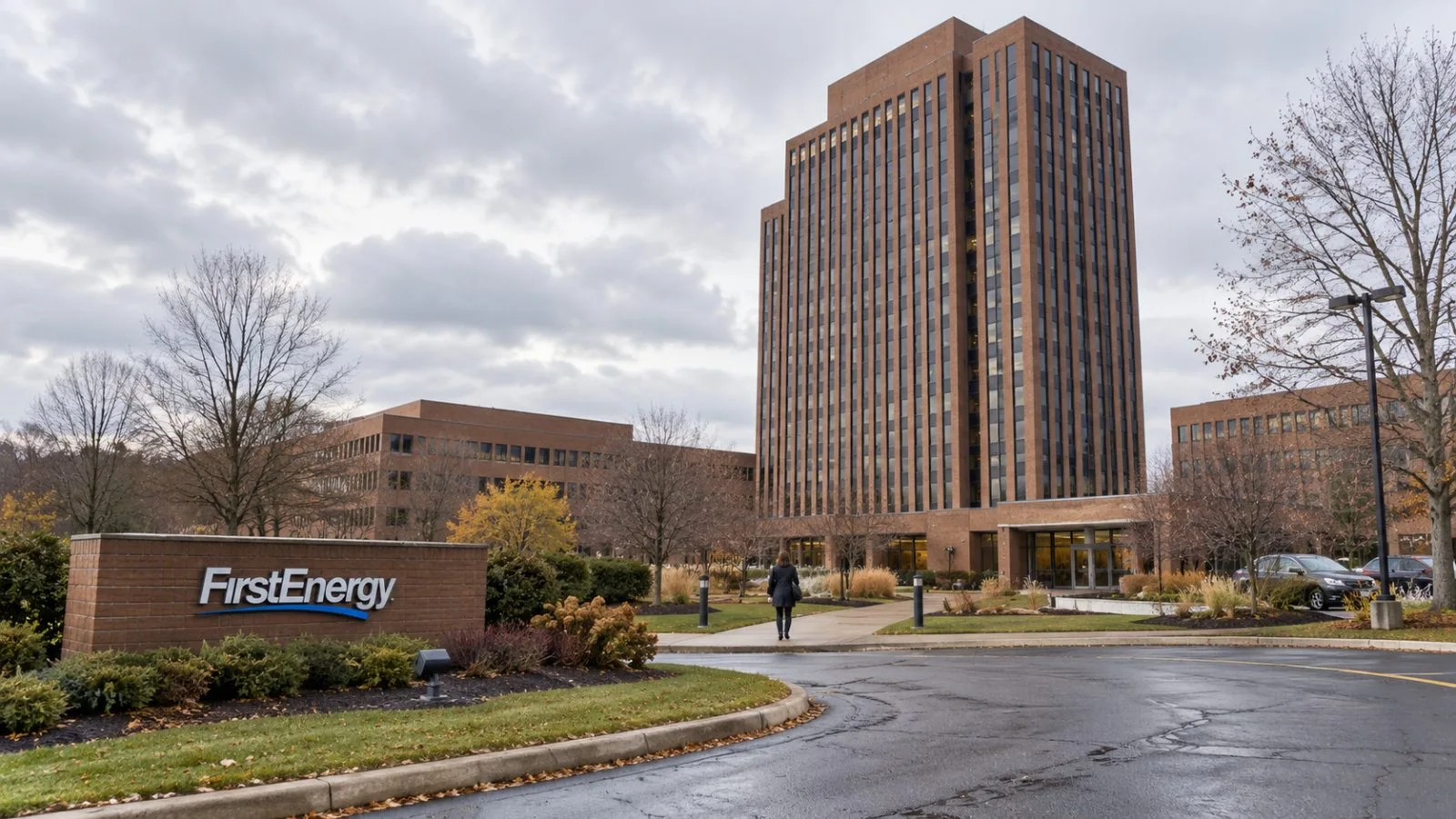
FirstEnergy plans to test two grid technologies on a western Pennsylvania transmission line as electricity demand grows, assessing how existing infrastructure can serve future needs and inform later investment.
FirstEnergy said Oct. 28 that its Keystone Appalachian Transmission Company (KATCo) subsidiary was selected for a project led by EPRI under the U.S. Department of Energy (DOE) SPARK program. The trial is planned for an existing line between Butler and Karns City.
The project will evaluate dynamic line ratings, which FirstEnergy says use sensors and real-time information to assess line performance. It will also test advanced power flow controllers, which the company says can steer electricity toward routes with less congestion.
FirstEnergy said operating conditions in northern Pennsylvania can raise flows on local lines, and that it chose the Butler County area to examine how existing infrastructure could meet future needs. The company lists better reliability and added capacity as possible benefits, but has not estimated how much capacity the trial could add or how much customers might save.
DOE's selected applications list identifies ATREES by the name “Advanced Transmission Technologies for Reliable and Efficient Energy Supply.” It names EPRI as the prime applicant and records a request for $20,852,041 in federal funds, with a total project value of $41,704,082. The application includes work on FirstEnergy and Salt River Project transmission systems. DOE said the application figures may change before funding agreements are finalized.
The funding figures differ from FirstEnergy's announcement, which calls the effort both a $20.8 million initiative and an approximately $20.2 million investment shared by KATCo and DOE. The announcement does not explain the difference.
DOE said Sept. 24 that it intended to support 31 SPARK projects in 26 states, with $1.9 billion in federal funding and $3.35 billion in recipient cost-share funding. Across the program, the selected projects were expected to make more than 23 gigawatts of additional electricity capacity available; DOE gave no separate capacity estimate for the Pennsylvania trial.
John Hawkins, president of FirstEnergy Pennsylvania, said, “Customers count on us to provide reliable electric service at a reasonable cost, and that's what makes this project so important.” FirstEnergy expects work to start in early 2027 and continue for multiple years.