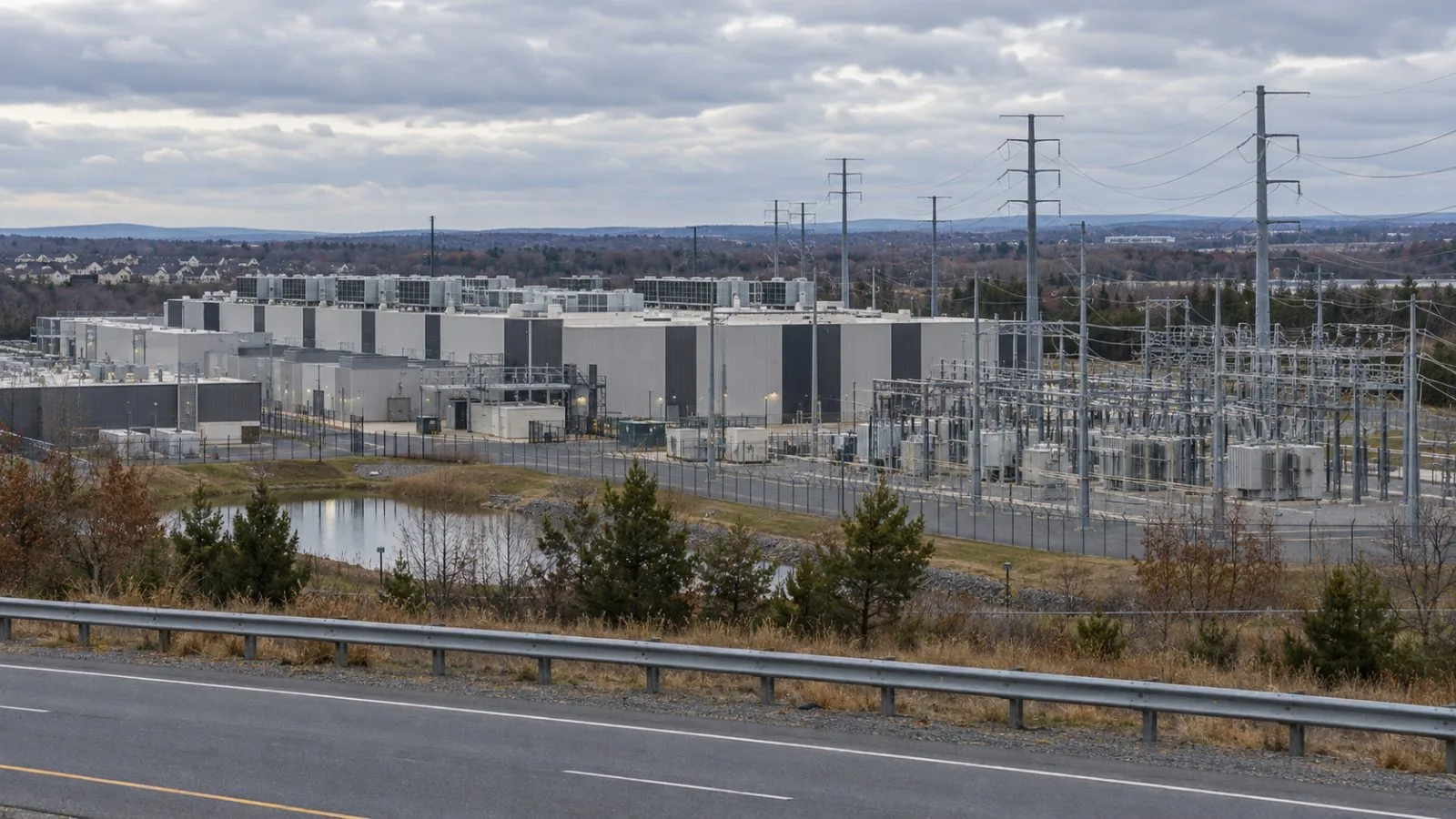
Five U.S. cloud companies are projected to spend $93.4 billion more than they generate in operating cash flow in 2026, a gap that highlights financing needs in the AI infrastructure buildout, a Columbia paper estimates.
Stijn Van Nieuwerburgh, a real estate professor at Columbia Business School, presents the estimates in “Financing the AI Buildout,” a September 2026 conference draft in the Brookings Papers on Economic Activity series. The companies’ projected capital spending totals $800.5 billion, against $707.1 billion in estimated operating cash flow. In the paper’s year-by-year figures, 2026 is the first year the five firms’ projected capital outlays surpass cash from operations.
The estimates combine reported company results, management guidance and Wall Street estimates. They cover each company’s total capital spending, including non-AI projects, and exclude data centers the firms lease, so they are not a measure of AI spending alone.
For 2025 through 2032, Van Nieuwerburgh’s model puts U.S. AI infrastructure investment at $10.3 trillion, covering data-center buildings, power, networking and specialized computing equipment. The model also counts costs tied to some projects scheduled to become operational after 2032. Starting from a planned pipeline of 509 gigawatts, it estimates that an additional 182.8 gigawatts of U.S. capacity will be operational during 2025 through 2032, including some capacity already operating in 2025 or 2026. This is a modeled scenario, not an estimate that every planned project will be completed.
Under a 50% operating cash-flow margin assumption, Van Nieuwerburgh calculates that the modeled capacity would need about $3.7 trillion in annual revenue at maturity to deliver a 10% unlevered return. Across other margin and return assumptions, the required annual revenue ranges from $2.29 trillion to $6.72 trillion. These are model outputs, not forecasts of realized sales.
Financing through leases, joint ventures, project debt and private credit can bring in outside capital and shift some ownership and leverage. Tenant leases, commitments and guarantees can still link risk to a relatively small group of customers. Van Nieuwerburgh says equity holders could face larger losses, while creditors could also be impaired.
The draft draws comparisons with earlier rail and telecommunications expansions, citing demand shortfalls and financing conditions as risks. It identifies AI demand, pricing power, electricity access and key tenants’ credit quality as factors affecting the outcome; grid access, transmission and permitting can take years. The paper asks whether demand and pricing power can support the additional capacity and how financing structures could transmit losses as capacity comes online.