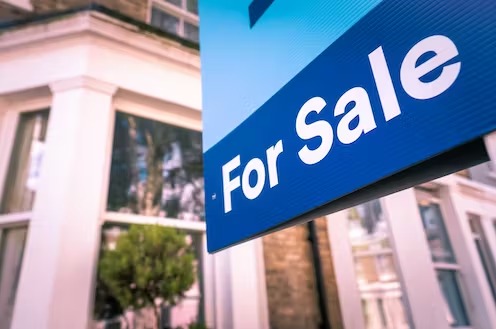
UK house price growth is slowing. While prices rose 1.2% compared to last year, this is down on May’s 1.9% growth, according to property website Zoopla. Its house price index – which forecasts a 5% fall in house prices this year – also shows that 42% of sellers are now accepting offers of more than 5% below asking price, the highest level since 2018.
This may be seen as a positive for first-time buyers who have been subject to steadily rising prices in recent years. But the Bank of England’s decision to crank up interest rates to combat inflation over the past year means that mortgage costs have been rising. This is squeezing people’s affordability and offsetting some of the relief over falling prices. Indeed, mortgage borrowing has reached the lowest level on record (excluding the period since the onset of the COVID pandemic), according to Bank of England data.
And still, inflation remains “sticky”. Although UK consumer price inflation slowed in April, it was higher than expected at 8.7% and it remained at this rate in May. More interest rate increases are expected to curb price growth and many lenders have been raising their mortgage interest rates in anticipation, which drags down demand for housing.
As long as inflation remains high, financial markets will expect more base rate increases. This would almost certainly force further declines in UK house prices, with significant implications for all of our finances, because the health of the housing market affects the wider economy and financial stability.
Here are five ways falling house prices affect the economy:
1. Homeowners, borrowers and mortgage lenders
The most obvious victims of falling house prices are homeowners, but particularly those with mortgages. If the value of your property decreases, it reduces your equity. This is the amount of your mortgage that you’ve paid off – or the portion of your house that you now own, versus the loan amount you have left to repay.
This could potentially leave you in a negative equity situation, meaning you owe more to your mortgage lender than the value of your home. This was a particular problem after the global financial crisis and some people – called mortgage prisoners – are still struggling to sell or refinance their property.
For first-time buyers, lower house prices may make homes more affordable, of course. But rapid price falls can create uncertainty and discourage potential buyers from entering the market, if they expect further declines in the future.
Mortgage lenders also face higher risks when house prices fall because the collateral for their loans – peoples’ homes – becomes less valuable. They may decide to enforce stricter lending criteria and higher interest rates to compensate for the increased risk they are taking on as a result. When this happens, borrowers can find it harder to secure favourable mortgage terms or even to obtain loans, because lenders have become more cautious.
2. The construction industry
A decline in house prices can also affect the construction industry because developers may slow down or postpone new construction projects due to reduced demand.
In March, the sharpest decline in the construction purchasing managers’ index (PMI) since May 2020 indicated a decrease in house building. Builders attributed this decline to a decrease in new housing projects due to caution about rising interest rates.
Associated sectors, such as suppliers of building materials, real estate agents and architects may also experience knock on effects of less building activity, which in turn affects their revenues.

Falling house prices can cause a slowdown in the construction industry, as well as related sectors. sculpies/Shutterstock
3. Consumer spending
It’s a complex relationship, but broadly speaking falling house prices can dent consumer confidence and spending because homeowners may feel less wealthy and so reduce their discretionary spending. When people spend less it has a knock-on effect for the wider economy.
And, of course, this is the exact situation that the Bank of England is trying to bring about by raising interest rates. If people have less money to spend, demand for goods and services will come down and prices should follow, slowing price inflation.
Additionally, a slowdown in the housing market can lead to decreased economic activity, affecting industries such as home improvements, furniture and appliances. A decline in house prices during both 1990 and 2007 coincided with significant economic recessions: the 1991 recession and the 2007/2008 recession, respectively.
4. Financial markets
Financial institutions that invest in real estate may face losses if house prices decline. This is because they have exposure to real estate markets through funds such as real estate investment trusts (REITs) or if they hold mortgage-backed securities. This is an investment product that derives its value from a mortgage or a pool of mortgages.
If financial institutions see the value of such holdings drop, it could affect their ability to make other investments, affecting the amount of credit available to businesses and also to homeowners via banks.
5. Public finances
A decline in house prices can affect government revenue because of the property and transaction taxes it collects are based on less valuable properties. Stamp duty, for example, is based on a property’s value and so would bring in less money for the government in a housing downturn.
The extent and duration of the effects of house price drops will depend on factors including the magnitude of the price decline and the overall health of the economy before and while prices are falling. While falling house prices present challenges, they may also create opportunities for first-time buyers or those looking to move up the property ladder, for example. Overall, a balanced and sustainable housing market is key to protecting the health of the economy.