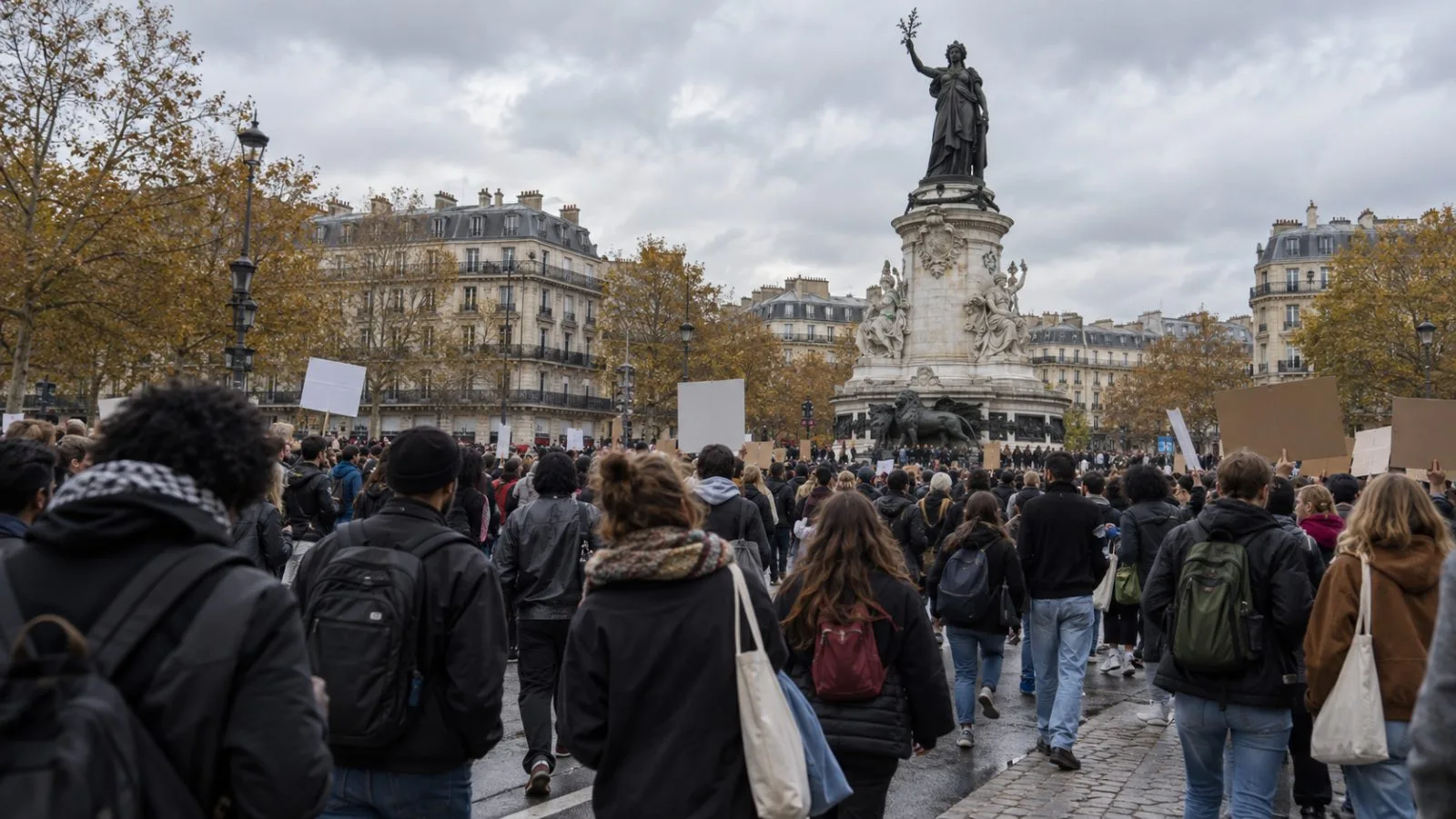
France’s Oct. 17 demonstrations put school conditions and living costs in the same protest wave, with officials counting 550,000 marchers as a government consultation nears its deadline.
Interior Minister Laurent Nuñez told lawmakers that authorities had expected 220,000 demonstrators and counted 550,000 nationwide. Organizers, including the General Confederation of Labour (CGT) and student groups, estimated turnout at 800,000.
The Associated Press reported that some demonstrations were followed by clashes, fires and looting. Shops and public institutions were among those affected by property damage, AP reported. Prime Minister Sébastien Lecornu told lawmakers Oct. 20 that 1,000 police and gendarmes had been injured over the preceding weekend.
The Ministry of National Education said students raised concerns about unfilled classes, deteriorating school buildings, long days, career guidance and their role in school decisions. Separately, the government’s plan addresses missed class time. The ministry said 2,000 of 3,000 planned substitute-teacher assignments had been made as of Oct. 14.
The Irish Times described Europe’s protests as largely unconnected, with housing central to demonstrations in Spain and Portugal and students joining anti-government protests in Albania. Reuters reported that Albanian demonstrators called for Prime Minister Edi Rama to resign.
President Emmanuel Macron said, “I think we need to hear what is being said about the anxiety that exists.” The French presidency said local curfews and bans on gatherings had been imposed after the unrest. The CGT said it would help enable peaceful demonstrations on Oct. 24 where conditions allow and called for a general strike on Nov. 5. A national consultation for high school students closes Oct. 23, with the government due to publish a summary by Oct. 31.