Participation in France’s organized breast-screening program fell to 45.7% in 2024–25, Santé publique France said, leaving uptake well below a European benchmark as broader data show gaps by education and residence.
The standardized rate was 46.6% in 2022–23. France invites women ages 50 to 74 every two years for a mammogram and clinical exam.
That measure covers screenings within the organized program, not every route. A separate Santé publique France study estimated total breast-screening coverage in mainland France at 60% in 2021–22 and found that 18% of screenings took place outside the organized program.
The French National Cancer Institute (INCa) cites 70% as the European recommendation for participation. A separate goal in the EU’s cancer plan called for offering breast, cervical and colorectal screening to 90% of eligible people by 2025. That target measured offers, not completed screenings.
An analysis by the Organisation for Economic Co-operation and Development (OECD) of 2021–22 survey data found that 54% of women ages 50 to 74 with low education had received a mammogram, compared with 64% of women with high education. Rural residents were also less likely than urban residents to report screening, even after socioeconomic factors were taken into account.
A report by the OECD and European Commission says earlier diagnosis can improve survival and quality of life while often reducing treatment complexity and cost. For women in the EU diagnosed in 2010–14, average five-year net survival was 96% for early or localized breast cancer and 38% for advanced disease, the report said.
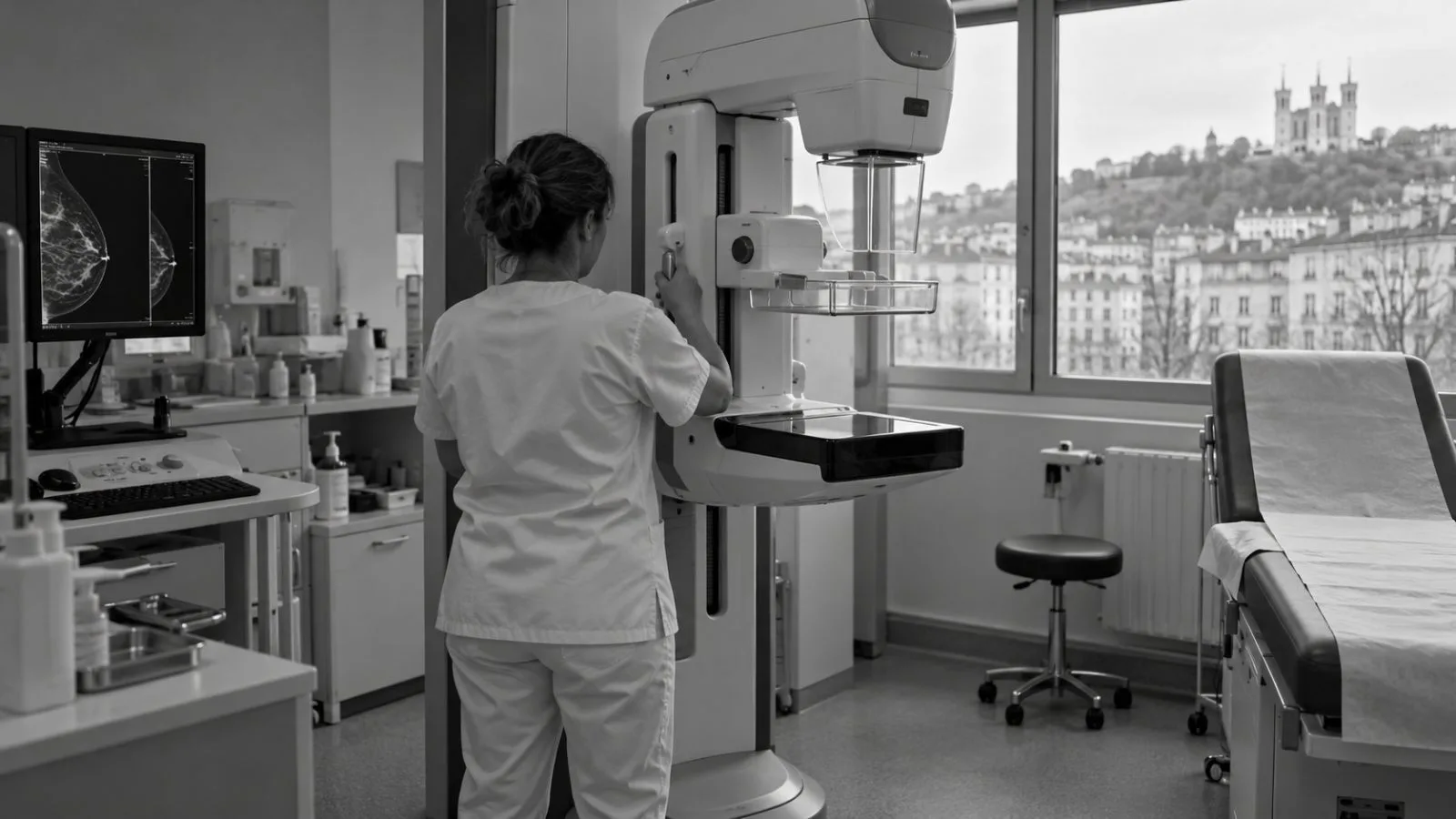
In a personal essay published Oct. 31, Euronews journalist Monica Pinna recounted that follow-up imaging in Lyon led to a breast biopsy, whose result she received a week later.
Santé publique France said some invitation records remain incomplete. The agency has not yet assessed how the January 2024 reorganization affected participation, including whether it changed the use of screening outside the organized program.