


 Big AI wants to slow down AI research. Is it a safety pause or a strategic retreat?
  Europe can’t achieve space sovereignty alone. Here’s why
  China’s robots can run faster than Usain Bolt – now they are being prepared for war
  Gold Slides to $4,262 as Hawkish Fed Rate Hike Triggers Technical Breakdown
  Who should own the knowledge that underpins AI technology?
  Banking scandal rocks Brazil’s politics and the country’s presidential election in October
  Physicists zoom into the birth of cosmic rainstorms with new CERN study
  Synthetic data could ease people’s concerns about privacy breaches. But who gets to create it?


 Add as a preferred source on Google
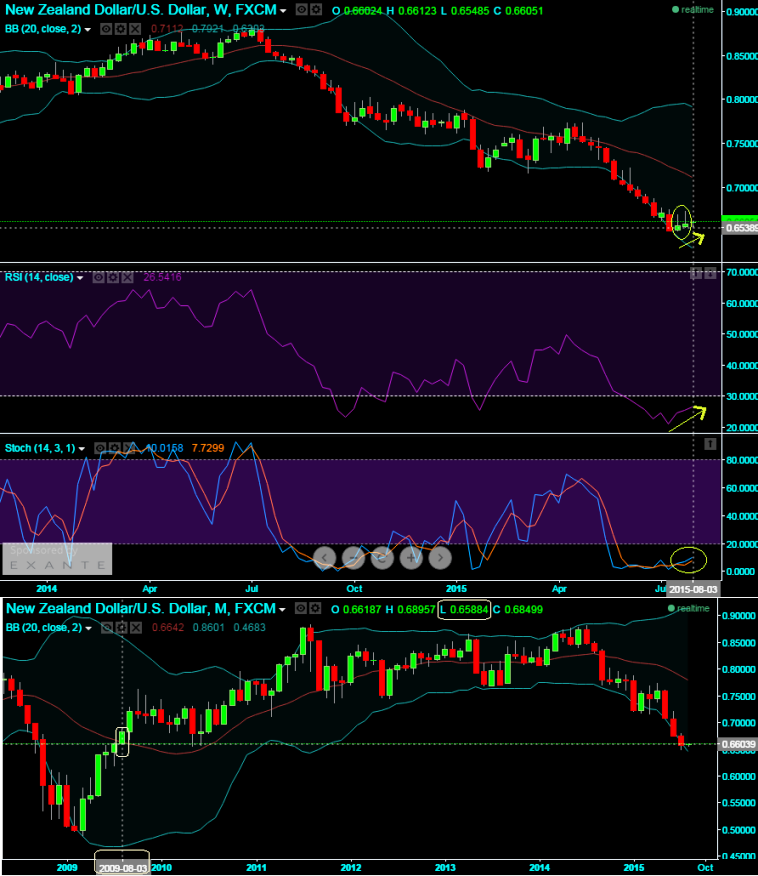
Technical glimpse:
Inverted hammer pattern candle occurred exactly at 6 years lows of 0.6587, the pair at this psychological juncture testing supports as 14 weeks RSI shows positive convergence with spiking pricess as it crossed below 30 levels which is oversold zone. To substantiate this view on weekly charts slow stochastic curves are also acting in sync with standpoint offered by RSI. Currently, RSI (14) is trending at 26.2389 and %K line crossover below 20 signifies a certain short term price recoveries if not long term bull sentiments.
Currency option framework:
When all eyes tend to drag this currency towards further slumps, on a long term perspective, contemplating the above critical support we build neutral calendar spread on this pair.
As the IV of NZD/USD ATM contracts is perceived at 13.52% which is quite on higher sides deploying customized calendar spreads using ATM call options at current juncture is more suitable considering above technical reasoning. The options trader constructs this strategy being bullish in the short term and is shorting the near month OTM put contracts with the intention to ride the short term calls for free. So buying 1M (1.5%) ATM delta call would be reduced its cost while shorting 7D (1%) OTM puts.
Once the near month options expire worthless, this strategy turns into a discounted long call strategy and so the upside profit potential for the bull calendar combination becomes unlimited. The maximum loss happens when the NZDUSD dips continues and stays down until expiration.

- News

- Economy

- Central Banks
- Investing
- Research
- Roundups
- Digital Currency
- Insights
- Technical Analysis
- Technology
- Business
- Law
- Health
- Nature
- Fintech
- Science
- Topic
- Opinions
- ©Econometrics LLC . All Rights Reserved.
FxWirePro: Can inverted hammer hold 6 years lows of NZD/USD – calendar combination for hedging on 1M HY vols
Tuesday, August 4, 2015 11:41 AM UTC
Editor's Picks



- Market Data
Most Popular




