


 Stellar Leads RWA Tokenization Growth With $36.4M Inflow
  Kalshi Wins CFTC Approval for S&P 500 Perpetual Futures
  Zcash Mining Profits Surge as Liquidity Risks Grow
  Securitize, LG CNS Partner on South Korea Tokenization
  Meta and Microsoft Cut Internal Claude AI Use
  Clearpool Expands to XRP Ledger, Plans CLEAR Token Migration
  BofA Raises Coinbase Stock Target to $203 on Stablecoin Growth
  Weekly Crypto Pulse: $528M ETF Inflows Meet a Cooling US Economy
  Bitcoin Nears $87K as Crypto Market Gains
  OKXICE Files for 24/7 Tokenized US Stock Trading
  Cardano ADA Jumps 10% as RealFi and Dijkstra Upgrade Fuel Rally
  NEAR Price Rally Cools as $4.60 Support Takes Focus
  Samsung, SK Hynix Shares Fall Ahead of Q3 Earnings
  Strategy’s STRC Nears $100, Raising Prospects for Major Bitcoin Buys
  Founders Fund Leads $5M Anvil Token Purchase
  Zcash NU7 Testnet Cuts Block Time to 25 Seconds


 Add as a preferred source on Google
Pharmaceutical companies typically develop new drugs with thousands of staff and budgets that run into the billions of dollars. One estimate puts the cost of bringing a new drug to market at $2.6 billion with others suggesting that it could be double that cost at $5 billion.
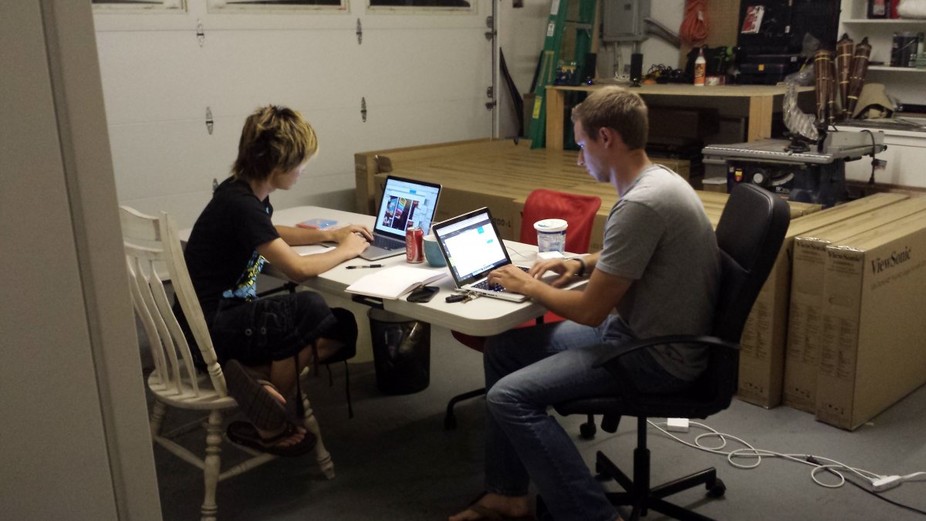
One man, Professor Atul Butte director of the University of California Institute of Computational Health Sciences, believes that like other Silicon Valley startups, almost anyone can bring a drug to market from their garage with just a computer, the internet, and freely available data.
In a talk given at the Science on the Swan conference held in Perth this week, Professor Butte outlined the process for an audience of local and international scientists and medics.
The starting point is the genetic data from thousands of studies on humans, mice and other animals, that is now freely available on sites from the National Institute of Health and the European Molecular Biology Laboratory. The proliferation of genetic data from experiments has been driven by the ever decreasing cost of sequencing genetic information using gene chip technologies.
Professor Butte, students, and research staff have found a range of different ways of using this data to look for new drugs. In one approach, they have constructed a map of how the genetic profiles of people with particular diseases are related to each other. In particular, to look for diseases with very similar genetic profiles. Having done that, they noticed that the genetic profile of people with heart conditions were very closely related to that of the much rarer condition of muscular dystrophy. What this potentially suggested was that drugs that work for one condition could potentially work in the other. This process of discovering other uses of drugs, called “drug repositioning”, is not new. Drugs like Viagra were originally used for treatment of cardiovascular conditions. The difference is that Viagra’s repositioned use resulted from the observation of side-effects in patients taking the drug for its original intended purpose.
Professor Butte on the other hand is using “Big Data” and computers to show that given the close relationship in the genetic profile of two diseases, the potential cross-over effect of drugs working for one condition working in another.
Still in the garage, the next step from discovering a potential drug is to test if it actually works in an experimental setting on animals. Here again, Professor Butte has turned to the internet and sites like Assay Depot. This is a site, structured like Amazon, from which a researcher can order an experiment to be carried out to test a drug on a range of animal models. It is literally a case of choosing the experiment type you want, adding it to a shopping cart, paying by credit card and getting the experimental results mailed back in a few weeks time. “Shoppers” are given the choice of laboratory they want to use, including a choice of which country the lab is based.
Once a new use for a drug has been shown to work in an animal model, the next step would be to test the drug in humans, get approval for the use of the drug for that condition and then finally take the drug to market.
In California where Professor Butte works, this has involved spinning out companies with money from investors, a process that he and his students have done after the discovery of new uses for several drugs.
As with cloud computing and cloud labour, “cloud research” works because services can be sourced inexpensively from laboratories that have expertise in particular areas. In one case, Professor Butte related a story of needing to see if a drug would cure inflammatory bowel diseases in rats which involved performing colonoscopies on the animals. This expertise and equipment was available somewhere in the world, made accessible through a simple online shopping interface.
The entire process outlined for this type of drug discovery, testing and commercialisation, radically changes the nature of how quickly and cheaply, new drugs can be brought to market to treat conditions for which there would still be few options.
None of this would be possible without the sharing of data and it highlights how the growth of availability of open research data will be able to fuel a range of uses that would not have been foreseen when the individual experiments were being carried out.
 David Glance, Director of UWA Centre for Software Practice, University of Western Australia
This article was originally published on The Conversation. Read the original article.







