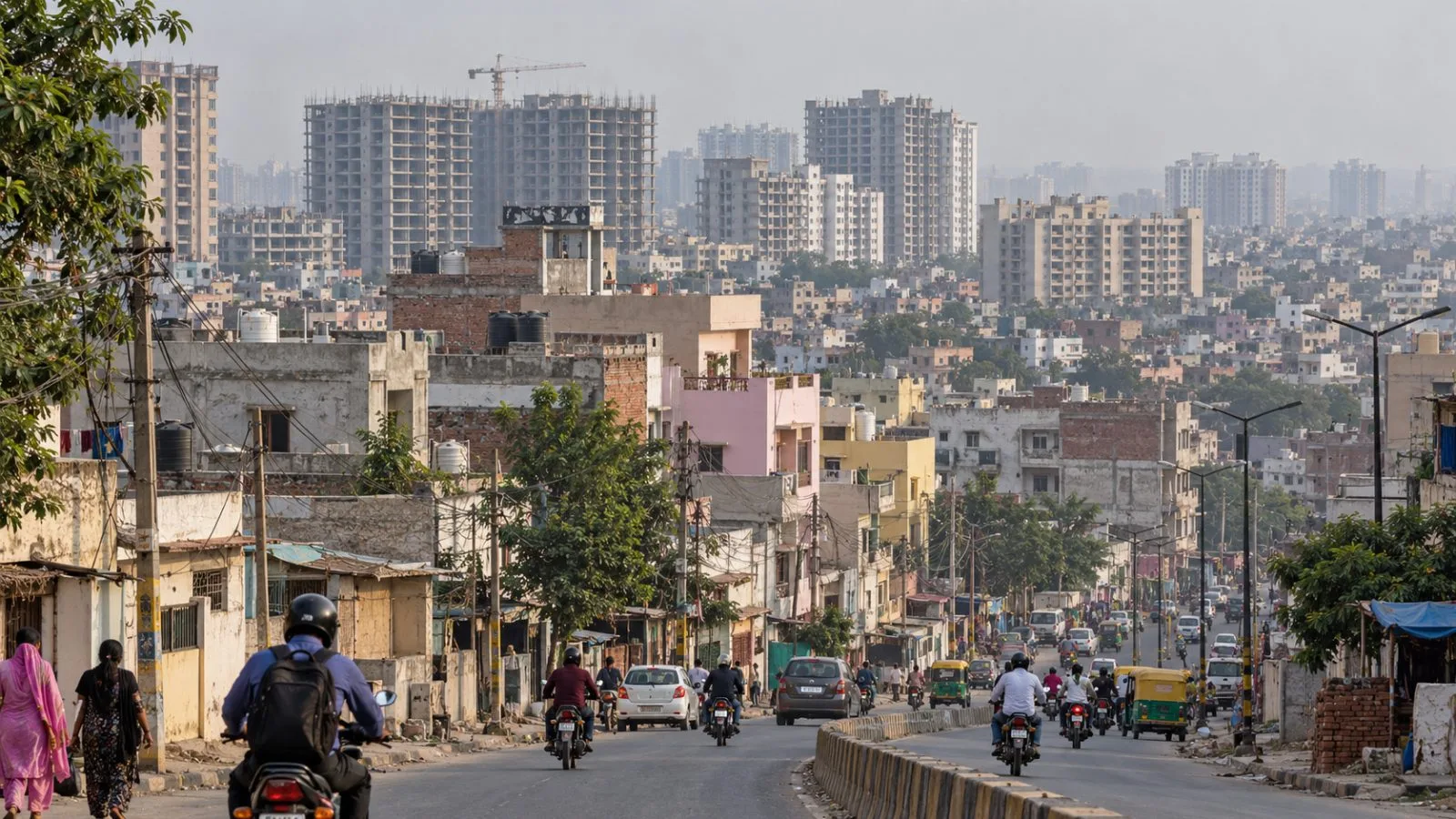
Ghaziabad’s 5.2% annual population growth rate led World Population Review’s 2026 city ranking, while separate measures show rapid five-year gains elsewhere and pressure on Lagos’ basic services.
Surat, in Gujarat, followed at 4.99%, with Kabul at 4.74%, Lagos at 4.44% and Toluca, Mexico, at 4.25%. Delhi’s rate was 3%, while Kampala posted 4.03% and Nairobi 4%, the ranking shows. World Population Review says its ranking uses City Mayors Foundation growth rates alongside United Nations (UN) estimates covering different periods.
A five-year comparison measures cumulative change rather than annual pace. Malappuram, in Kerala, grew 44% over five years. Can Tho in Vietnam and Suqian in China each recorded 37%; Kozhikode, also in Kerala, rose 35%, followed by Abuja at 34%.
The ranking also tracks total population, a measure distinct from growth. Jakarta had 41.9 million people, Dhaka 36.6 million and Tokyo 33.4 million. Dhaka rose from ninth to second among the largest cities over the past decade, and the UN projects it will become the largest city by 2050.
The ranking puts Delhi at the top for estimated hourly population additions, with Shanghai and Dhaka behind it. From the other end of the list, the remaining cities are Beijing, Cairo, Lagos, Bengaluru, Lahore, Chongqing and Kinshasa in the Democratic Republic of Congo.
World Population Review estimates urban areas are home to about 55% of the world’s population and projects that share will reach 68% by 2050. It points to larger job markets, higher wages, schools and services as factors drawing people to cities. The UN forecasts India, China and Nigeria together will account for 35% of global urban population growth between 2018 and 2050.
In Lagos, World Population Review points to service shortages: fewer than one in 10 residents live in homes with sewer connections, while fewer than one in five have access to tap water. It also says many homes are in slums and informal settlements on the city’s edge.