


 Samsung, SK Hynix Shares Fall as China's CXMT Advances DRAM Technology
  Arthur Hayes Announces FLOP Testnet Launch Within Weeks
  Jameson Lopp Downplays AI Threat to Bitcoin Cryptography
  Zcash Plans Quantum-Resistant Security Upgrade for January
  TSMC Profit Set to Surge 65% as AI Chip Demand Drives Record Earnings
  Apple Supplier Luxshare Faces US Patent Probe, Sees Limited Impact
  Samsung, SK Hynix Shares Plunge as China Chip Competition Grows
  Amazon Cuts More Jobs as AI Investment Expands
  TSMC Q3 Revenue Beats Estimates as AI Chip Demand Surges
  Elon Musk Accuses Indian Telecom Giants of Blocking Starlink Launch
  Apple Names Steve Smith M&A Chief in Leadership Shakeup
  Trump Buys Up to $25M in Meta Stock, Invests in SpaceX Debt
  US Suspends Microsoft, Adobe From Green Card Program
  Anthropic Launches Claude Dashboards and Motion AI Tools
  Tencent Shares Fall as $5 Billion AI Bond Sale Weighed
  Meta Launches Muse Wonder AI Models, Shares Rise 3.7%


 Add as a preferred source on Google
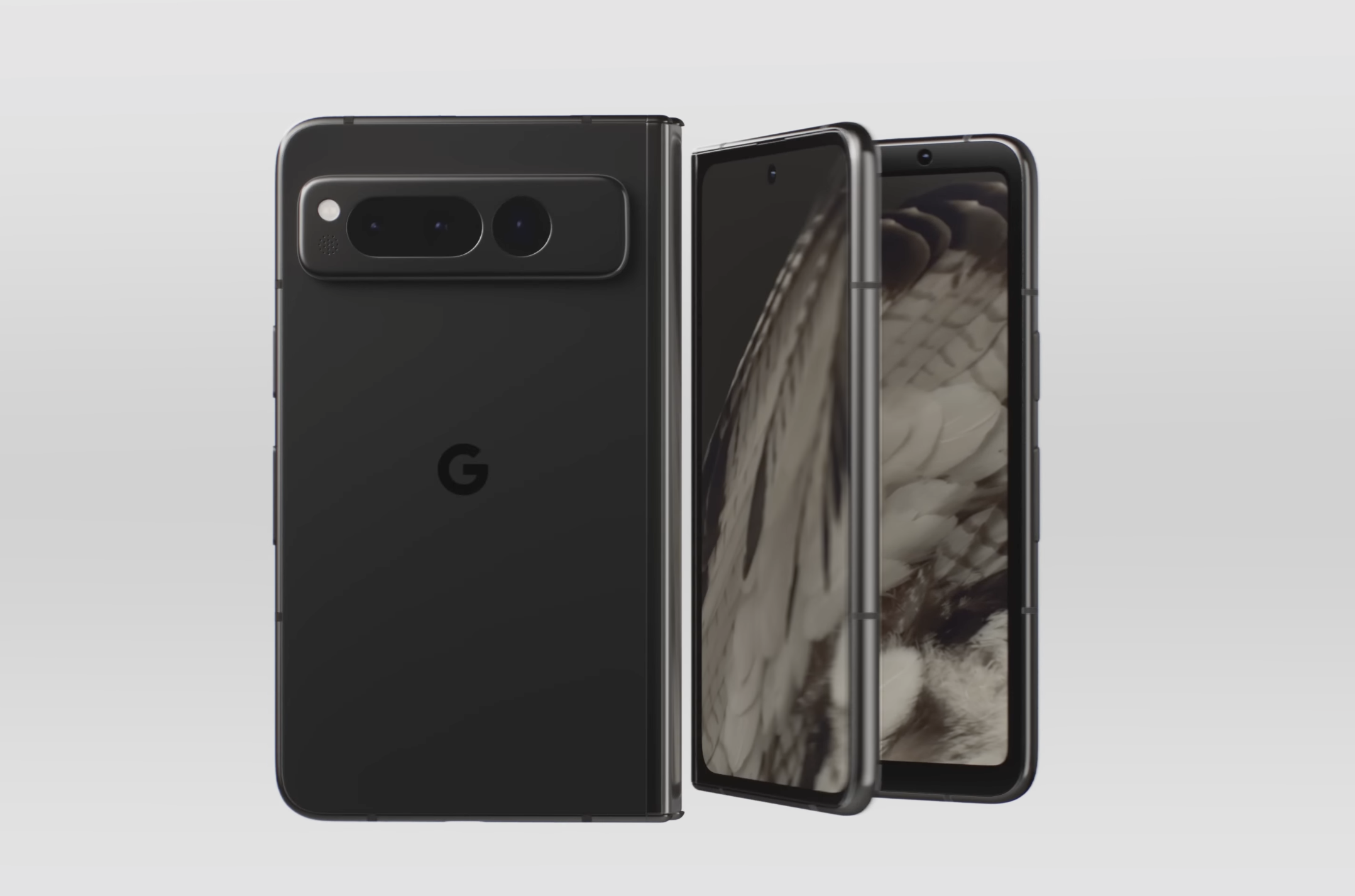
Tech enthusiasts are now thrilled for the arrival of the Google Pixel Fold 2. An important turning point for foldable phones came with Google's release of the Pixel Fold last year, demonstrating the company's commitment to improving Android on foldable devices.
It was highly appreciated that Google chose to employ a broader form factor than previous foldables, as this enhanced multitasking and increased the utility of the cover screen. However, it remains to be seen if Google will continue to use the same form factor in 2024.
To provide our readers with a solution to this query, Android Authority received a leaked video of the Google Pixel Fold 2, which shows some unexpected design elements that may be coming soon.
Design Leaks for the Google Pixel Fold 2
Android Authority was approached by a source who knew the Google Pixel Fold 2's specifications. The source, who would like to stay anonymous, provided a video featuring design leaks.
Google's upcoming foldable phone has a thinner cover screen, even though the publication was only given one grainy, extremely redacted image of the Pixel Fold 2. Although the precise measurements were not revealed, the outlet obtained them at a similar angle to the original Pixel Fold.
Not only is the inner screen's aspect ratio closer to a square, but a source also stated that the cover screen is narrower. The OnePlus Open, whose screens fall somewhere between the sizes of the Pixel Fold and the Samsung Galaxy Z Fold 5, may share some similarities with the Fold 2's overall form factor.
While some may be surprised by the Pixel Fold 2's tighter form factor, there's a good reason why most other folding phones are more miniature than Google's first-generation model: many Android apps still need to be tablet optimized.
Due to the comprehensive design of the first-generation Pixel Fold, Google was forced to apply software workarounds to address apps that wouldn't launch in landscape mode. With Android 14 QPR1, the firm created an entirely new operating system capability that allows users to compel full-screen apps like Instagram.
If Google had opted to make the first-generation Pixel Fold narrower, it wouldn't have needed to apply these ploys because most apps would display their standard phone-optimized user interface (UI) rather than their tablet-optimized user interface (if one even existed).
Other changes are seen besides the new form factor. The image also suggests that the rear camera bulge may be redesigned. A solitary camera island on the upper left corner of the Pixel Fold 2 seems to comprise four sensors: a primary wide-angle lens, a secondary ultra wide-angle lens, a tertiary periscopic telephoto lens, and an unidentified quaternary lens.
In the video, it doesn't make evident whether the fourth sensor is a far-infrared (FIR) sensor—like the one on the Pixel 8 Pro—that can detect the temperature of an item or your skin or if it's a whole different kind of sensor, like a ToF or spectral/flicker sensor. The island also has a microphone, an LED flash, and four camera sensors.
Does Google Plan to Make Significant Changes to the Pixel Fold 2 Camera Design?
Compared to earlier Tensor-powered Pixel phones, which all had a recognizable camera bar resembling a visor, the Google Pixel Fold 2's camera island appears to be designed differently. However, it resembles the leaked Google Pixel 9 design, which does not feature an edge-to-edge camera bar.
According to a source, the Google Pixel Fold 2 and the future Pixel 9 series also have similar design elements, such as a more contoured inner and outer display and a more expensive-looking frame made of what appears to be aluminum. The phone feels and is made of similar material to the first-generation Pixel.
Although no images of the inside screen have been made public as of yet, a source claims that the Google Pixel Fold 2 now has an internal screen camera display cutout in the upper right corner of the screen. On the other hand, the original Pixel Fold concealed its internal camera within the upper bezel. According to a source, the Pixel Fold 2 is still relatively thin, but the crease is still apparent.
Considering everything, it's important to remember that the gadget we're looking at is still in the early stages of the product cycle—the Engineering Validation Test (EVT) phase. The design could be altered since the device won't go into mass production for months.
Therefore, before making any judgments, we highly suggest waiting for additional leaks of this phone since what we see here may alter dramatically over the coming months.







