
Signs are all over that Eurozone economies are gaining traction. Latest PMI suggests that Growth acceleration is highest in four years.
Nevertheless, two structural issues remain yet to be solved.
Solidarity -
- Fear of various exits have rattled Euro zone since 2011 crisis for the first time in in its history. At different points rumors have hit the market for, Greek exit, German exit, Finland exit.
- These doubts against solidarity in Euro zone have not been tackled successfully and efficiently.
- Officials themselves raised possibilities for a Greek Exit, after Syriza party was selected in Greece.
- These suggestion add pressures to governments' to continue reforms, but keep the doubts elevated, which is a dent on investor confidence as a whole which keeps coming back to haunt the region.
Imbalance -
- Structural imbalances and uneven recovery in the region is a concern over longer time horizon.
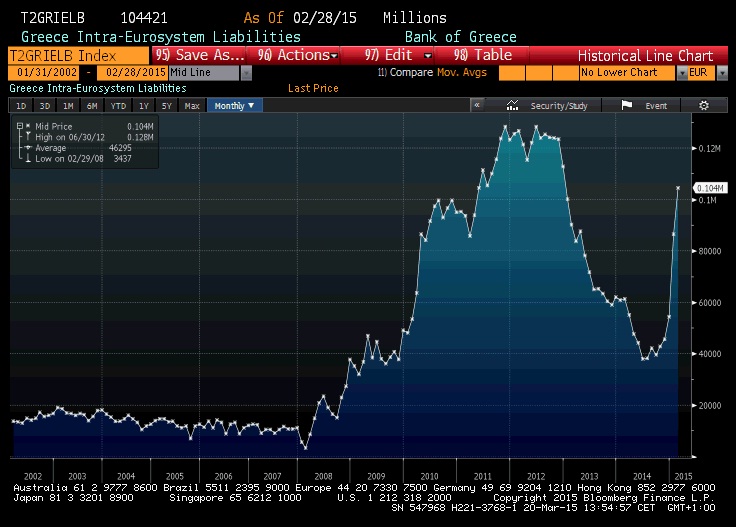
- As shown in chart, since 2009 Greek Target 2 imbalance rose from just a few thousand euros to more than 0.12 million Euros by 2011. Deterioration was sharp.
- Austerity and bailout registered drop in imbalances from that level to € 40,000 by 2014. However in recent times it just shot above 0.1 million within months. This is a question mark over longer term success of the austerity policies in reducing imbalances.
Unless these issues remain solved, longer term investors will keep posing doubts over the region from time to time.


