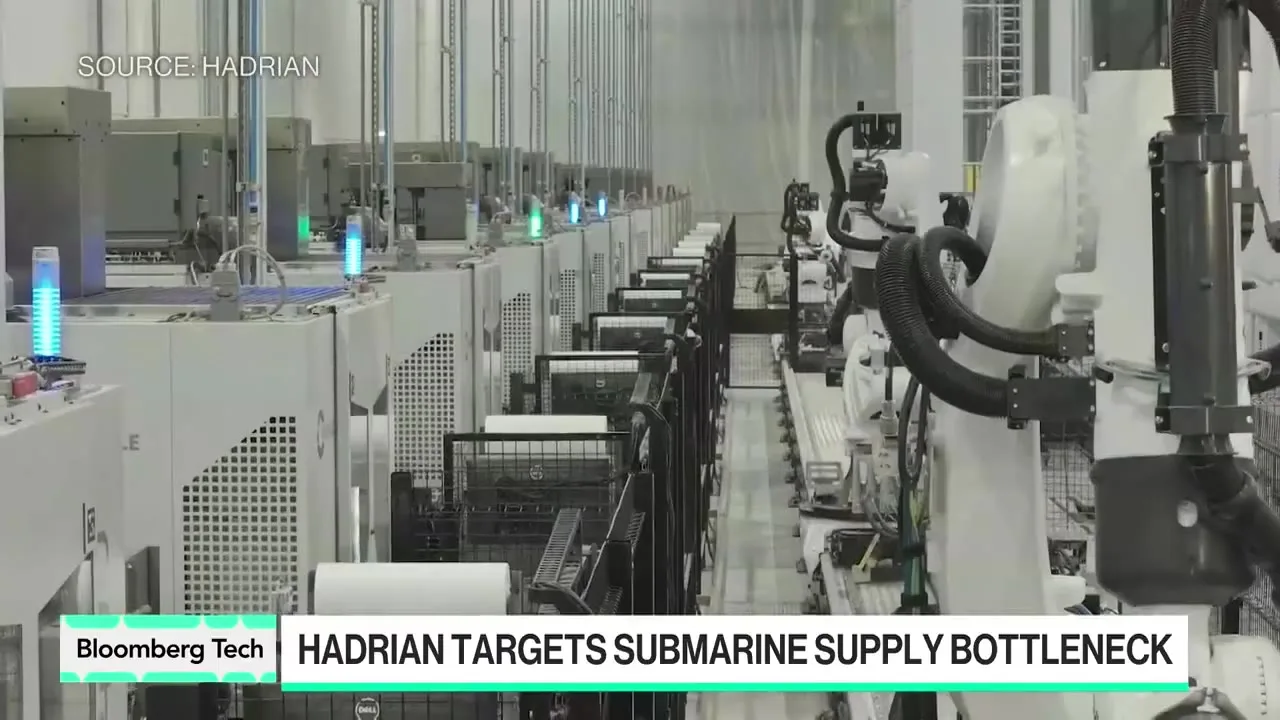
Hadrian plans to invest $300 million in a Pennsylvania foundry it acquired to expand production of submarine components and hire hundreds of workers, Chief Executive Chris Power said.
US foundry capacity has declined over the past 30 to 40 years as production moved overseas, creating the biggest bottleneck for submarines and munitions, Power said. He spoke on Bloomberg Technology, published Nov. 16.
The company had planned to build a new foundry before acquiring the existing operation. Power described demand as long term and said restoring casting capacity would address a constraint on military production.
The plant already produces Navy-grade steel, ingots and components for destroyers and submarines. Its first priority is large submarine castings, metal parts formed by pouring molten material into molds, some the size of a bus.
Castings for engines and munitions would come next. The site has land and power available for expansion, along with an experienced workforce.
The foundry has operated since 1890 and nearly closed in 2018 after years of production moving overseas. Power described it as one of the country's last remaining foundries capable of producing Navy-grade steel.
The surrounding area has generations of industrial workers and support from local Republicans and Democrats for rebuilding manufacturing. Power said Hadrian intended to build on that history through the expansion.
Hadrian will fund the project entirely with private money. Power linked that decision to demand for the plant's output and said the company wanted to establish a business that could last 100 years.
Customers were asking the plant to “produce as much steel as humanly possible, and we will take all of it,” he said.
Power also linked the project's economics to employee benefits and ownership. He said the workforce receives advanced health care and that every employee at the acquired foundry became a Hadrian shareholder two weeks earlier.
He argued that the economy does not work for 50% of the population and that foundry workers should share financially in rebuilding US industry. He did not specify the size of employees' stakes.
Artificial intelligence could help with mold making, quality checks, faster inspections and worker safety. Power described the ambition as making skilled employees 10 times more efficient, helping US production compete globally and increasing workers' wealth.
For foundries, the technology involves less robotics and more digital engineering. It also includes additive manufacturing, which builds objects layer by layer, to make better molds for castings.
Asked whether Hadrian would need to raise more money, Power said it would keep seeking capital as opportunities emerged. He described support for American workers and rebuilding industry as priorities shared by both political parties.
“We'll be constantly out in the market,” he said, adding that he hoped to discuss more opportunities early next year.
Power said Hadrian planned to hire several hundred people rapidly and make them owners in the business. He gave no completion date for the expansion, production target or amount and timing for further fundraising.