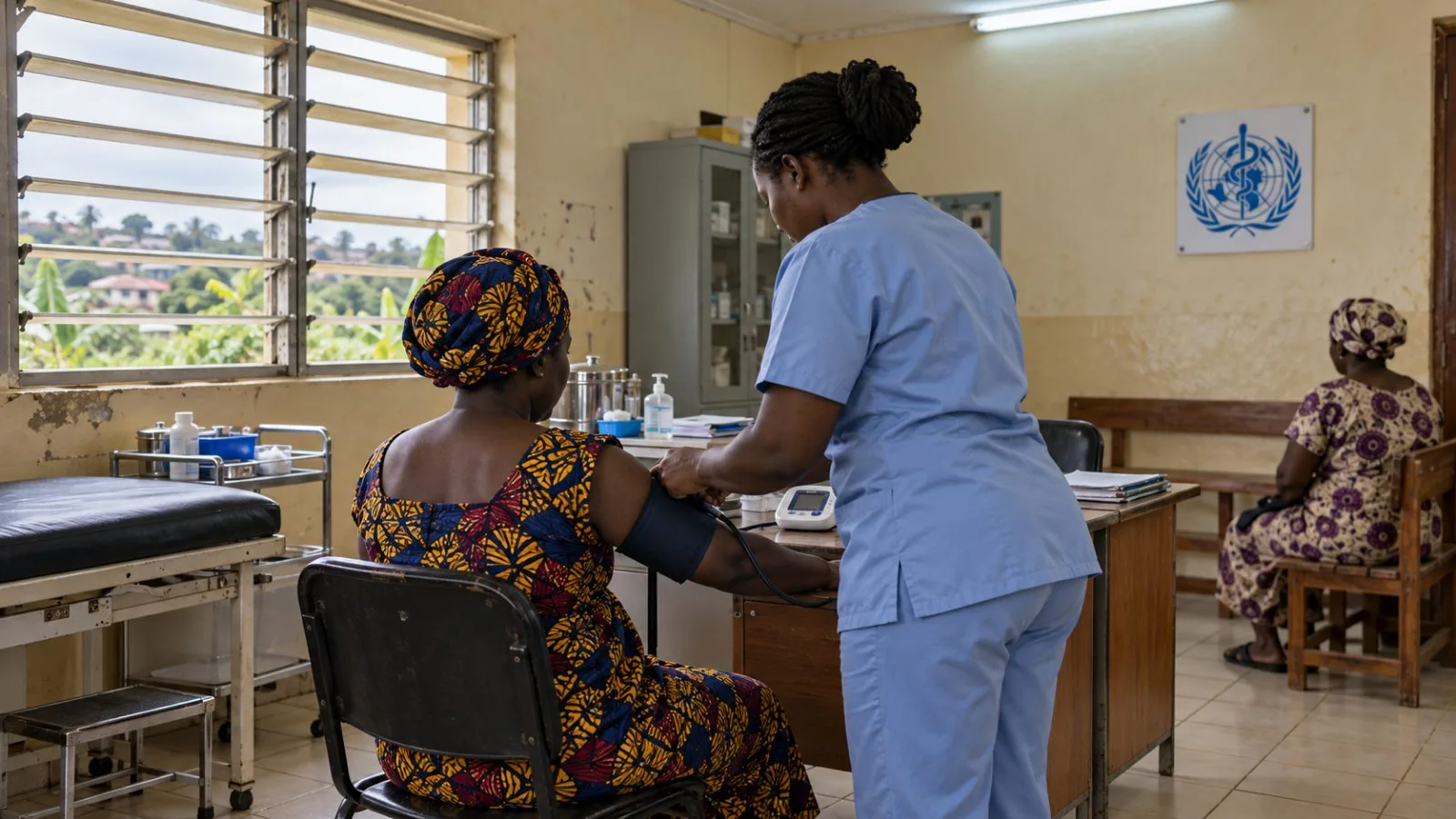
National climate plans often cite health but rarely specify how the health sector will cut emissions or how much funding health-related climate work needs, according to a World Health Organization (WHO) review.
Published Oct. 19, the review examined 114 national climate plans representing 140 Parties. WHO found health references in plans from 91% of those Parties. Only 11% included measures or targets to reduce emissions from the health sector, and 23% estimated resources for health-related climate action.
In a separate assessment released Oct. 14, the Global Climate and Health Alliance (GCHA) scored 117 nationally determined contributions (NDCs) covering 132 countries. Its 2026 scorecard assessed eight areas, including health impacts, air pollution, health-sector action, finance and implementation. GCHA said protecting health requires action across sectors as well as funding to carry out climate plans. The alliance said its earlier scorecards were published in 2021 and 2023.
Colombia earned 29 of 32 points, ahead of Nigeria at 25 and Cambodia at 24. Nineteen of the 20 top-scoring countries were low- and middle-income economies. GCHA said the health scores for the European Union (EU), Canada, Türkiye, South Africa and Indonesia were not matched by emissions-reduction ambition sufficient to protect health.
GCHA identified five plans with black-carbon reduction targets: Cambodia, Chile, Colombia, Costa Rica and Paraguay. It described the EU’s hydrofluorocarbon (HFC) phaseout as the only specific air-pollution target among its mid-range, high-emitter group. EU rules require a complete HFC phaseout by 2050, while the bloc’s joint NDC sets an indicative target to cut net greenhouse gas emissions between 66.25% and 72.5% from 1990 levels by 2035.
“Governments must grasp that air quality action is a vital part of effective climate action, and that people’s health and lives are at stake with both,” GCHA Executive Director Jeni Miller said.
The United Nations Framework Convention on Climate Change says countries submit NDCs every five years, with each plan expected to advance on earlier commitments. GCHA says high historical and present emitters should cut emissions fastest, and that developed countries should provide a significant share of NDC implementation finance in developing countries. It identified COP31 as an opportunity to elevate national priorities; separately, it said the second global stocktake could translate national advances into global policies.