


 BRICS Calls for Restraint as Middle East War Escalates
  ‘Buy now, pay later’ doesn’t feel like debt. For young people, that can be a big problem
  China to Push Global Security Vision at Xiangshan Forum
  US Immigration Arrests Surge as Deportations Lag Behind
  Synthetic data could ease people’s concerns about privacy breaches. But who gets to create it?
  Iran-Oman Talks Lay Groundwork for Hormuz Reopening
  What is Zionism? The different meanings of a contested term
  Trump Downplays Report Iran Obtained Chinese Satellite Images Before Jordan Attack
  Banking scandal rocks Brazil’s politics and the country’s presidential election in October
  Kim Jong Un Pledges Deeper Russia Cooperation
  JPMorgan Sees ECB Raising Rates to 2.75% in December
  Lula, Flavio Bolsonaro Deadlocked in Brazil Election Polls
  China’s Global Times Slams Anthropic CEO’s AI Slowdown Plan as ‘Cold War’ Strategy
  Mahmoud Khalil Sues Columbia Over Alleged Pro-Palestinian Harassment


 Add as a preferred source on Google
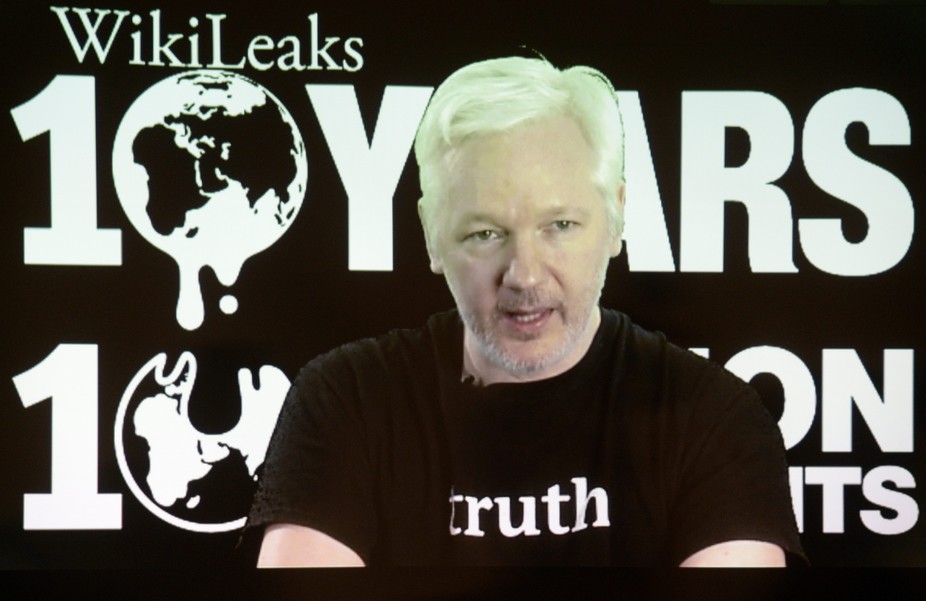
The following field note will shortly appear in Germany’s Die Zeit. It is a brief commentary on the factual errors and misjudgements of numerous journalists when reporting the role recently played by Julian Assange and WikiLeaks in revealing inside details of Hillary Clinton’s now-embattled presidential campaign.
The past few months have been a rough roller coaster for Julian Assange. Trapped in his Ecuador Embassy prison, hopes for his release after the UN Working Group on Arbitrary Detention ruled in his favour were dashed. Then came a long spiky string of accusations by government officials, journalists and pundits. He is now being called everything under the sun. A one-sentence summary of the main accusations would run: Julian Assange is a rotten rapist Russian government agent whose wild document dumps and dislike of redaction stems from his narcissistic paranoia and unshakeable revolutionary arrogance.
Australian journalist Martin McKenzie-Murray repeats these misreckonings, more or less verbatim, but with less brevity, and less wisdom. Writing in last weekend’s The Saturday Paper, McKenzie-Murray is a self-confessed “former speechwriter and Labor hack” who likes verbally “to masturbate”. There’s no shortage of that in a lead piece that not only contains a howler typo (Assange is referred to as “Julian garret”) but variously claims that Assange suffers “zealotry” and foolishly regards “redaction as a form of cowardice”. While the world has changed, whatever that means, the WikiLeaks founder “has not changed”. That’s because (writes McKenzie-Murray) Assange has lost the plot. He has become unhinged from reality. “It appears to have rarely occurred to Assange’s supporters that his chilling remoteness from actual people [Assange is regularly visited by dozens of visitors each week JK] might disqualify him from possession of life-altering secrets”.
The most fanciful charge made by McKenzie-Murray is that Assange carries “Putin’s water”. The founder of WikiLeaks is trapped in “a very serious contradiction”. He preaches transparency yet practises “counterespionage”. He peddles the “tactical mistruths” of the Kremlin. With more than a touch of McCarthyism, McKenzie-Murray berates the decision of WikiLeaks to release previously hidden details of Hillary Clinton’s campaign strategy. He makes much as well of the reported decision of Assange’s protectors briefly to cut his internet connection a fortnight ago. McKenzie-Murray quotes approvingly the official diplomatic statement. “The Government of Ecuador respects the principle of nonintervention in the internal affairs of other states”, it read. “It does not interfere in external electoral processes, nor does it favour any particular candidate.”

Julian Assange Les Wilson/Sydney Democracy Network
The reasons why the Ecuador Government temporarily did what they did remain controversial, but its decision no doubt made Julian Assange chuckle, then sigh. The statement overlooked a simple fact, one that is well understood by Assange: this American presidential election campaign is a global affair whose outcome will have global consequences. The point is that we are now living in times when democracy is no longer confined to state barracks. Thanks to cross-border communication networks, elections in every country produce butterfly effects and feedback loops. Local elections have gone global. What happens in one country can have grave consequences for other countries, and for whole regions.
Presidential elections in the United States are the embodiment of this trend, but you’d never know this when reading McKenzie-Murray’s wild diatribe against Assange for meddling in American politics. “One suspects that like the Kremlin he [Assange] favours Trump not only out of spitefulness towards Clinton, but on some anarchic impulse.” He adds: “Perhaps the United States will be reborn in flames. One thing is clear: Assange has no qualms about collateral damage.”
“Collateral damage” are very strange words to describe the right of thinking citizens and their representatives everywhere to a real-time, behind-the-scenes look at the campaign methods and political character of the woman who in just over a week’s time may well be the next president of the most powerful state on our planet. Much can be learned from these leaks about Clinton’s taste for secrecy and dodgy journalists, and her cynical fund-raising strategies, for instance. That is the point Assange and his team want to emphasise. In this sense, they have offered a generous gift to monitory democracy. Their leaks have provided us with raw material for public efforts to bring greater humility and more democracy to a sick democracy weighed down by people who are too rich, too arrogant and too powerful.
This article was originally published on The Conversation. Read the original article.







