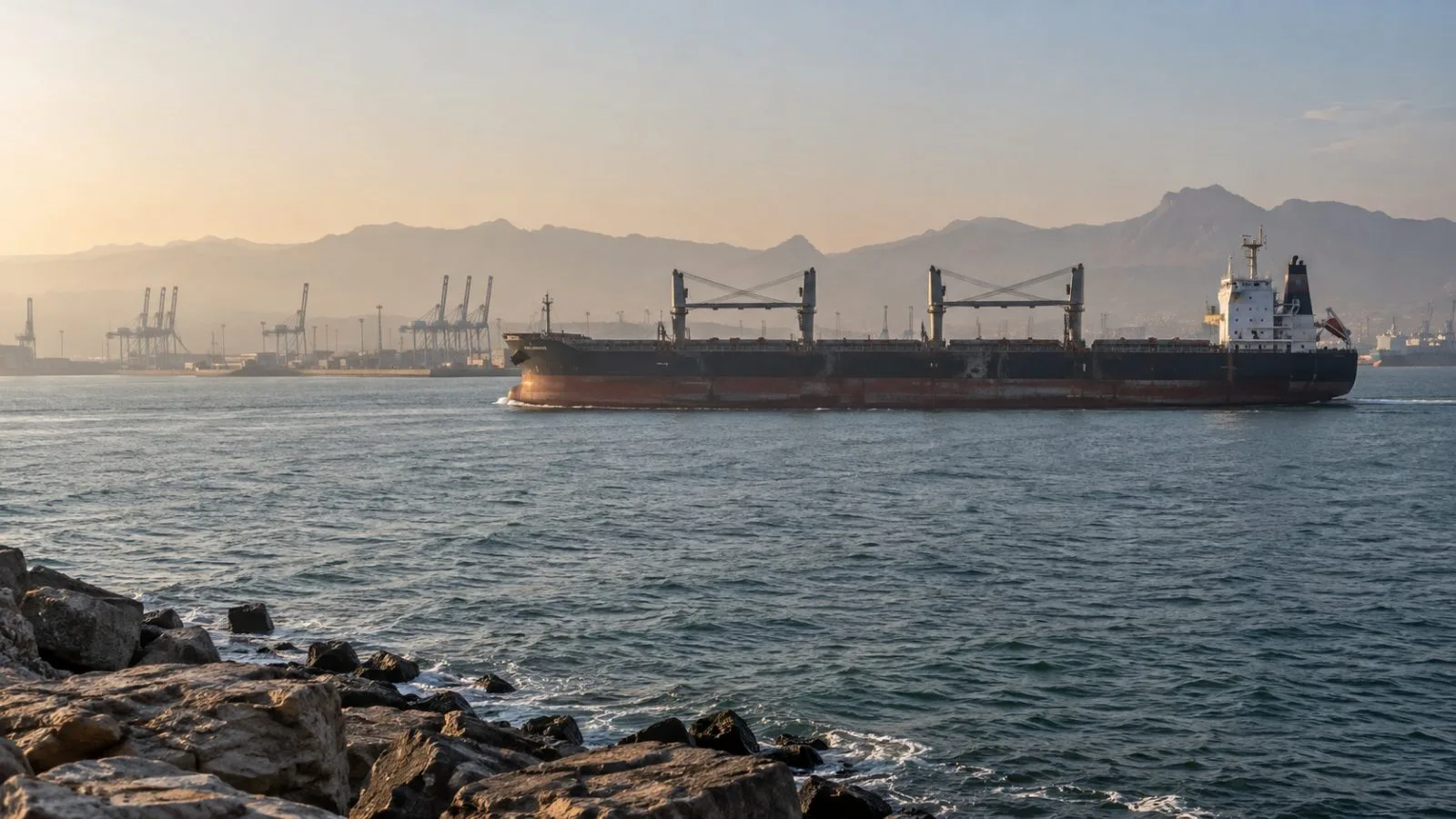
S&P Global warned that fertilizer and energy disruptions at the Strait of Hormuz could raise 2027 food security risks if they persist, as farmers face higher costs and El Niño strengthens.
S&P Global estimates that 29% of global urea trade, nearly half of sulfur trade and about 21% of merchant ammonia trade normally pass through Hormuz. UN Trade and Development (UNCTAD) estimates that roughly one-third of all seaborne fertilizer trade, or about 16 million metric tons, uses the strait.
Natural gas is a feedstock for nitrogen fertilizer, while diesel powers farm equipment and transport. S&P Global linked the timing to the crop cycle: growers make decisions on fertilizer use and planting before harvests reach buyers, so the effects of higher costs could appear in food markets in 2027. The company says farmers under cost pressure may use less fertilizer or plant less land. Its latest forecasts cut Brazil's corn and soybean estimates by 6 million metric tons each, to 137 million and 177 million metric tons, respectively. Those figures are projections, and S&P Global did not specify the crop seasons.
Oil prices remain elevated. The U.S. Energy Information Administration (EIA) estimated that Hormuz-related Middle Eastern crude production shut-ins averaged 4.8 million barrels per day in September and forecast Brent crude to average $105 per barrel in the fourth quarter. The Food and Agriculture Organization of the United Nations (FAO) said its Food Price Index rose 1.5% in September from August and was 5.8% above September 2025.
FAO still forecasts 2.979 billion metric tons of cereal production in 2026, 2.1% below 2025 but the second-largest harvest on record. The National Oceanic and Atmospheric Administration (NOAA) put the chance of a historically strong El Niño at 83% for October-December. NOAA defines that threshold as a three-month relative Oceanic Niño Index of at least +2.5°C and says associated weather effects are not guaranteed.
The World Bank says low-income countries that depend on food imports would be especially exposed to higher prices. It also says higher oil prices can make crop-based biofuels more attractive, strengthening demand for crops and oils used as feedstocks. The bank cites export restrictions during the 2008 and 2022 food price crises as factors that amplified price spikes.
FAO's next cereal outlook is scheduled for Nov. 6, followed by NOAA's next El Niño discussion on Nov. 12.