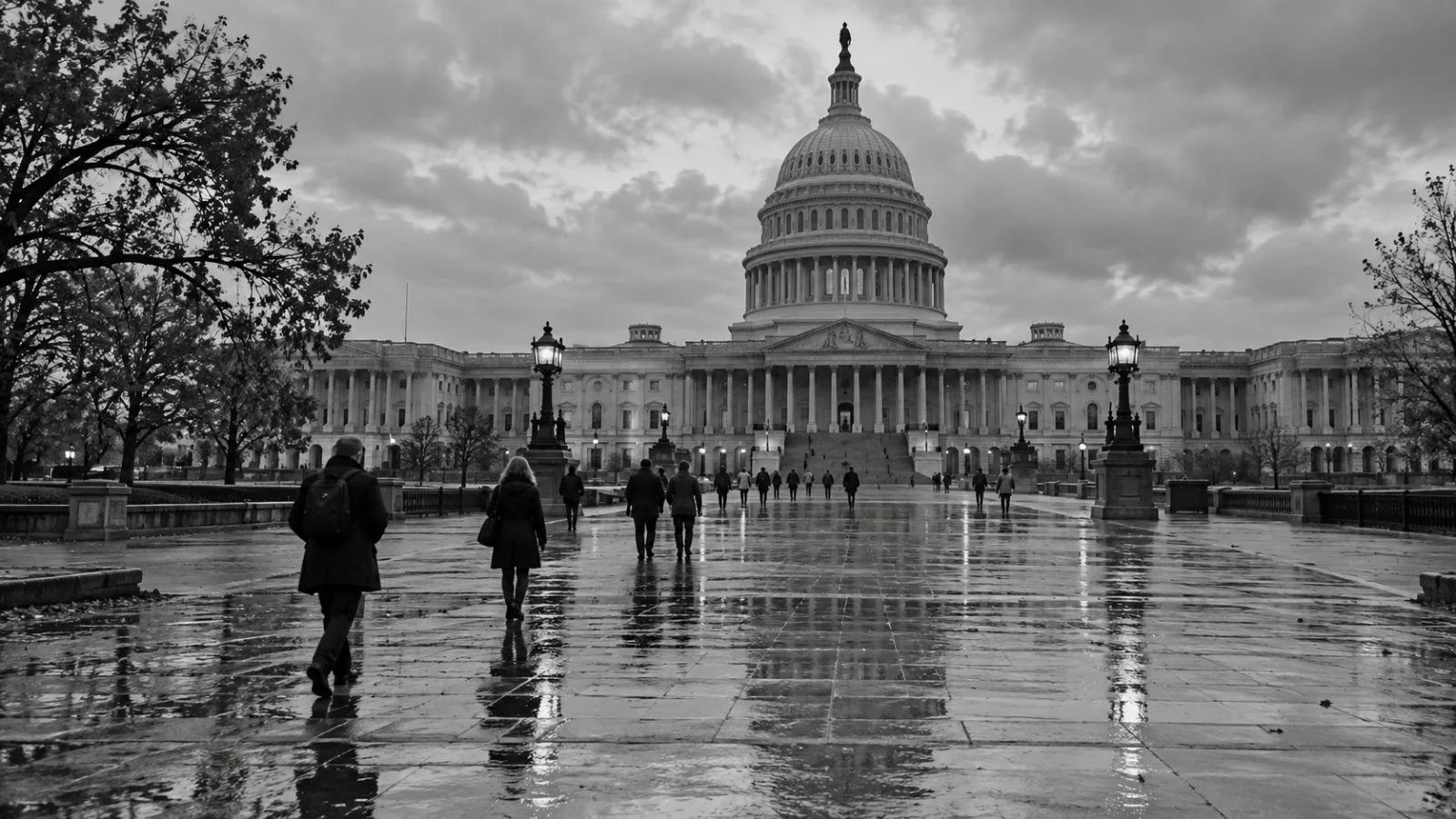
A House panel advanced legislation that could require Congress to approve D.C. tax and fee increases, potentially narrowing local budget options as D.C. Council member Janeese Lewis George campaigns on affordability.
Lewis George won the Democratic primary, but voters will choose the mayor Nov. 3. The District of Columbia Board of Elections certified her win. The general-election ballot also lists independent Rhonda Hamilton, Statehood Green candidate Robert L. Gross and a write-in option.
Metro DC DSA describes Lewis George as a longtime member and endorsed her campaign. Her platform emphasizes household expenses. Its child care plan would make every family eligible for assistance and limit each family’s share to 7% of household income. Housing and utility costs are also priorities.
Lewis George told The Washington Sun she supports a business activity tax as a way to close a loophole, calling it “smart policy and fair tax policy.” D.C. Council hearing materials for the fiscal 2028 budget included a BAT among draft revenue ideas. A Council member’s newsletter described a 1.4% proposal.
That rate is separate from an earlier estimate by the D.C. Fiscal Policy Institute (DCFPI). In its fiscal 2026 budget analysis, DCFPI projected that a 2% BAT scenario could raise $500 million a year, depending on changes to existing business taxes. Neither figure establishes an adopted rate or a final revenue estimate. The D.C. Chamber of Commerce warned that the broader tax package could weigh on efforts to revive the local economy.
U.S. Rep. James Comer introduced H.R. 9720, the D.C. Taxing Authority Review Act, on July 16. The proposal would add a required congressional approval step for District measures that create or raise taxes or fees. On July 22, the House Oversight Committee voted 23-18 to report the bill with amendments.
The Home Rule Act established local government in the District, while allowing Congress to review District laws. It also lets a president direct D.C. police to serve federal purposes during an emergency for up to 30 days unless Congress extends that period. President Donald Trump invoked the police authority in August 2025 and issued a separate National Guard mobilization memorandum.
The Council’s revenue hearing record remains open until 5 p.m. EDT Friday, Oct. 30. Voters will select a mayor Nov. 3.