Yinwang Intelligent Technologies Co., Ltd., backed by Huawei, and CATL agreed to link smart driving with battery swapping, advancing a plan for electric vehicles to locate stations and exchange batteries automatically.
The Oct. 19 agreement, signed in Ningde, China, also includes CATL’s wholly owned swapping subsidiary, Contemporary Amperex Energy Service Technology Limited (CAES). The three parties plan to develop compatible batteries and coordinate data and services among vehicles, swap stations and cloud systems.
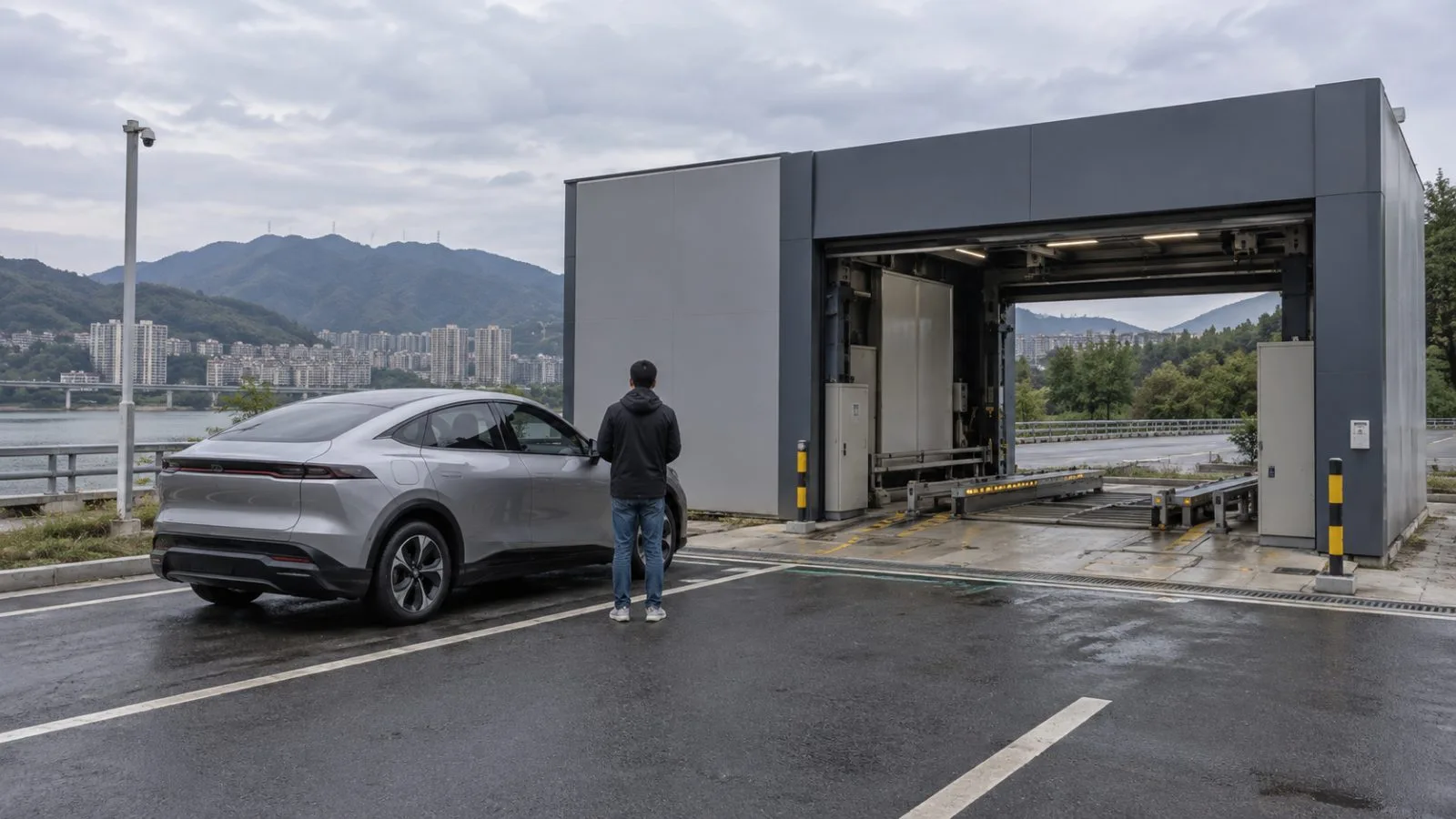
The proposed system would pair Huawei’s Qiankun smart-driving technology with CATL’s Choco-Swap network. The companies said a vehicle could detect a need for power, find and enter a station, then align itself for an automated exchange. The battery swap itself would take 99 seconds, they said.
The partners have not named a compatible vehicle or set a launch date. Their announcement describes the automated sequence as a plan, rather than a service already available to Yinwang-linked vehicles.
Choco-Swap said it had built more than 2,520 stations in 200 Chinese cities as of Sept. 29. That figure counts stations built across its network; the companies did not say how many, if any, could serve vehicles developed under the new agreement.
CATL introduced two standardized Choco-Swap battery models in December 2024. At the time, CATL founder, chairman and CEO Robin Zeng identified “the standardization of battery dimensions” as central to the effort. CATL said standardization was expected to lower development costs for compatible vehicles and shorten their development cycles by more than six months. Those were company projections for its broader swapping system, not measured results of the Yinwang agreement.
CATL also announced a battery-swapping agreement with Changan Auto in November 2024. The latest agreement gave no investment amount, service price or division of rollout costs among the three parties.