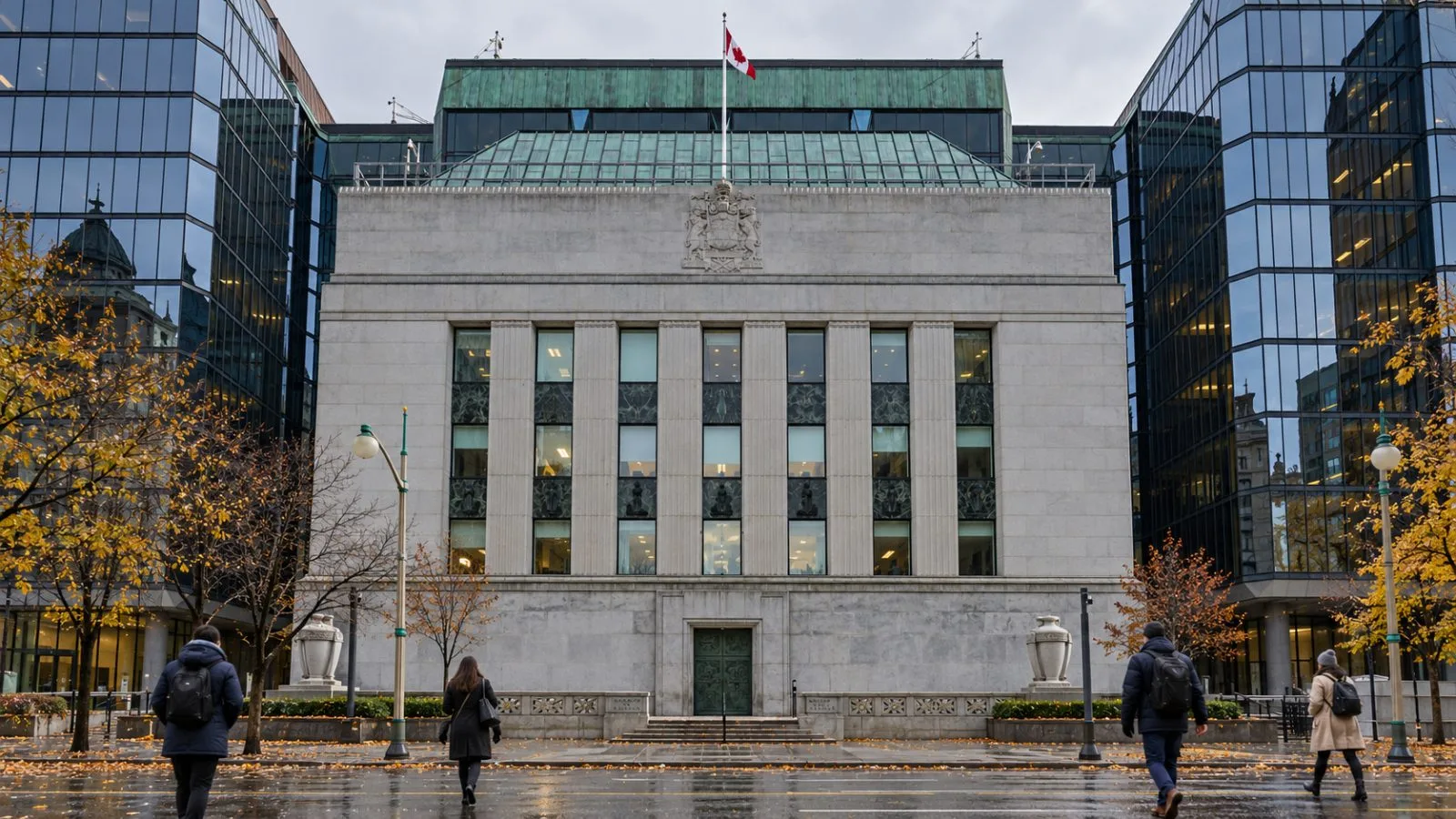
The Bank of Canada’s Oct. 28 rate increase leaves the Canadian dollar’s outlook tied to energy costs and U.S.-dollar moves, with ING analysts saying the policy shift alone offers little scope for gains.
The Bank raised its overnight-rate target by 25 basis points to 2.50%. It said consumer inflation had stayed near 3% since April and could reach about 3.5% by year-end as high energy prices add pressure. Inflation excluding gasoline was 2.2% in September.
High fuel prices are lifting production and transportation bills, the Bank said. Canadian businesses have so far taken on most of the higher input costs themselves, though central bank surveys suggest shoppers may see more of those expenses reflected in prices over the coming year. The Bank left open the possibility of further increases while saying uncertainty calls for caution.
For the broader economy, the Bank projected growth of 1% in 2026 and 2% in each of 2027 and 2028. It said activity could soften in the fourth quarter as new U.S. tariffs weigh on growth.
ING expects another 25-basis-point rise during the first quarter of 2027, with January more likely than March. The analysts also said a December move could come into play if energy prices remain elevated.
ING judged market pricing for about 90 basis points of tightening over the next year too aggressive. The firm cited 2.75% as the Bank’s central estimate of the neutral rate, which is the level that neither stimulates nor slows economic activity.
ING said lower energy prices could ease expectations for further tightening and reduce the likelihood of a December increase. Its analysts said domestic rate developments alone offer limited support for the Canadian dollar, while energy prices and moves in the U.S. dollar also shape its prospects. ING left its year-end USD/CAD view unchanged, while identifying some upside risk to 1.420.
EconoTimes previously covered the rate decision alongside a pre-decision MUFG view on the Canadian dollar.
The Bank’s next rate announcement is scheduled for Dec. 9.