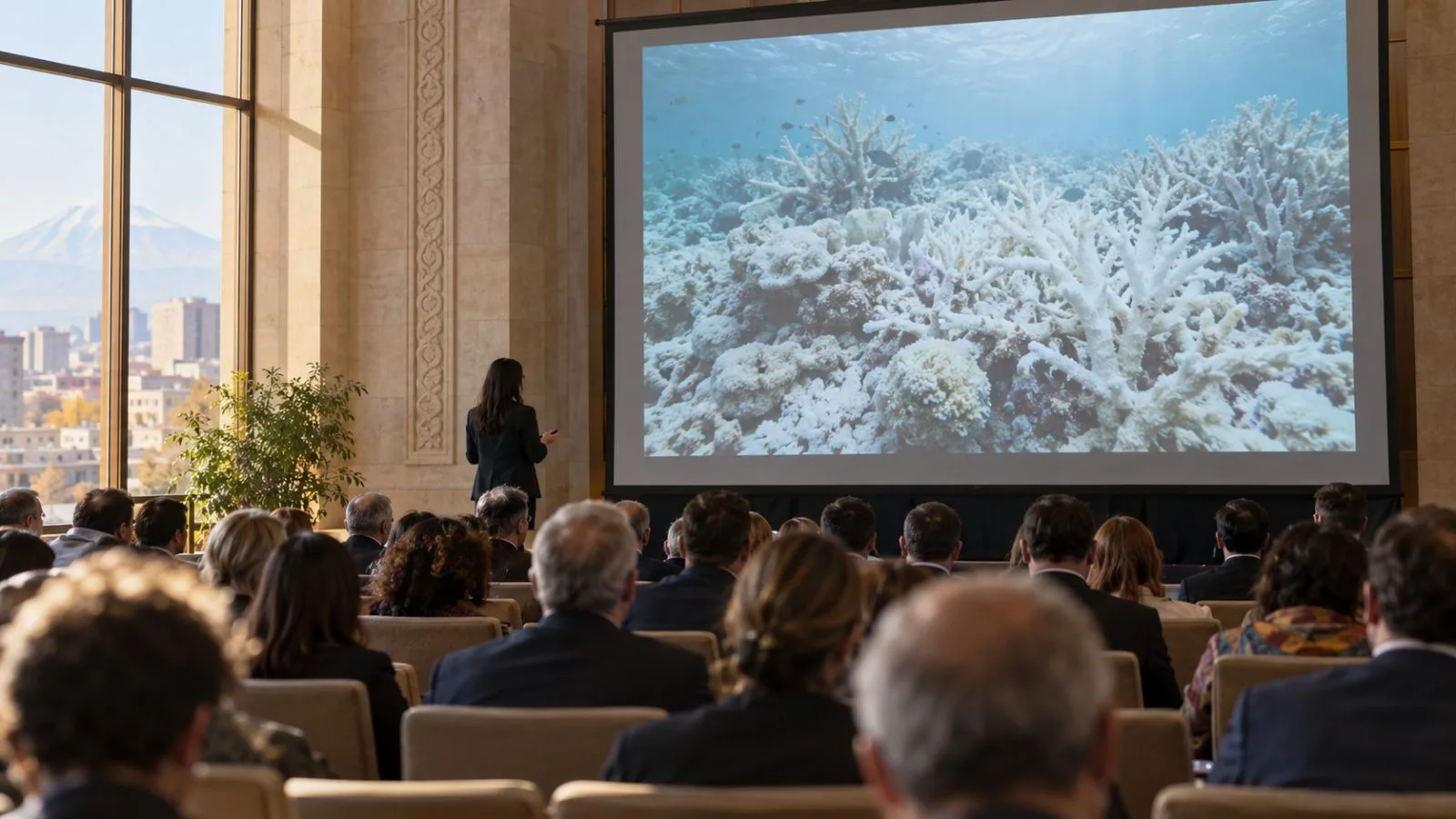
Including projected warming in its assessment puts nearly all of the world’s assessed shallow-water coral reef systems in the highest risk category, the International Union for Conservation of Nature (IUCN) said, warning of possible ecosystem collapse by 2075.
The IUCN reviewed 127 tropical and subtropical reef systems and classified 96% as Critically Endangered. It presented the assessment Oct. 22 at the United Nations’ COP17 biodiversity summit in Yerevan, Armenia. The finding continues EconoTimes’ earlier coverage of the IUCN reef assessment.
The share falls to 24% when the assessment considers observed changes over the past 50 years and leaves out future climate projections, the IUCN said. DW reported that the scenario used for the outlook was developed by the U.N. Intergovernmental Panel on Climate Change (IPCC) and projects warming of about 2.7 degrees Celsius above preindustrial levels by 2100.
The classification measures the risk of an ecosystem collapsing, rather than the extinction risk of an individual coral species. DW reported that as hard corals recede, algae, rubble and sponges can become more prevalent, leaving reef habitats that support fewer species. The outlet also reported that reef-dependent animals include fish, mussels, sea turtles and sharks.
The IUCN identified climate-driven heat stress as the most consistent threat to reefs. DW reported that warmer water can cause corals to shed symbiotic algae that provide nourishment, a process that can lead to bleaching and sometimes death. It also listed overfishing, coastal development, pollution, tourism and more severe storms among the pressures on reefs.
The effects reach beyond marine ecosystems: EconoTimes’ earlier reporting noted that reefs help provide food, livelihoods and coastal protection in more than 100 tropical countries. Mishal Gudka, scientific lead of the assessment, said actions in the coming years will influence whether reefs persist in their current form or shift into different ecosystems by the end of the century. IUCN Director General Grethel Aguilar called for emissions cuts, stronger reef protection and restoration, and investment in resilient coastal ecosystems and communities.