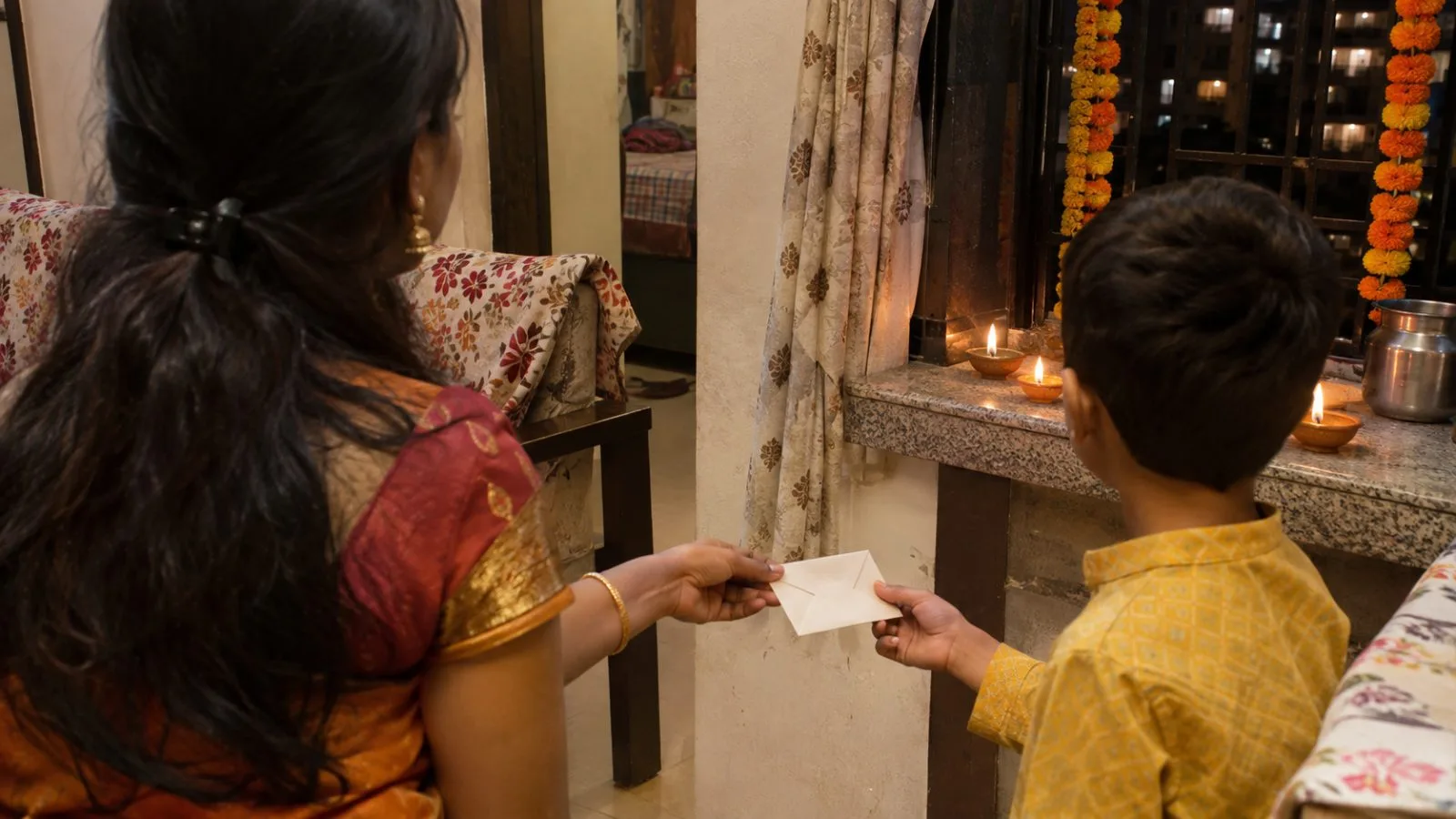
Families in India choosing a Diwali gift for a child face different trade-offs among cash, bank deposits and mutual funds, including how quickly money is available and whether its value can fall.
NDTV Profit’s Nov. 8 advisory described cash as immediately usable, fixed deposits as a more predictable option and mutual funds as a possibility for longer-term goals. It offered general categories rather than named products, current rates or return projections. The Securities and Exchange Board of India (SEBI) separately advises investors to consider goals, time horizon and risk tolerance alongside safety, returns and liquidity; it does not endorse one of these gifts.
An early withdrawal can reduce the value of a fixed deposit. The Reserve Bank of India (RBI) says customers may seek early repayment of a term deposit, with any penalty determined by the deposit terms and the bank’s policy. For eligible deposits at an insured bank, the Deposit Insurance and Credit Guarantee Corporation (DICGC) cap is ₹500,000 in principal and interest per depositor, aggregating balances held in the same right and capacity. Protection applies in specified circumstances, including a bank liquidation or license cancellation.
Mutual funds expose a gift’s value to changes in the securities they hold. The Association of Mutual Funds in India (AMFI) says returns are not assured; equity schemes can lose principal, and debt securities face issuer credit risk as well as market risk. Possible losses are part of the trade-off for investors choosing market-linked holdings.
Account rules can shape how a child receives and uses an investment. RBI rules allow banks to offer minors of any age deposit accounts operated by a natural or legal guardian; a bank may set the age for independent operation at 10 or older, subject to its terms. Under SEBI’s March 20, 2026, mutual fund circular, purchase money can come from the minor’s, a parent’s or legal guardian’s bank account, or a joint account held by the minor with a parent or legal guardian. After know-your-customer (KYC) checks, redemption proceeds must go to the minor’s verified bank account.
Neither the guidance nor the advisory identifies one best option for every household. The intended use date, need for access and tolerance for risk are relevant considerations when applying SEBI’s general framework to a child’s gift.