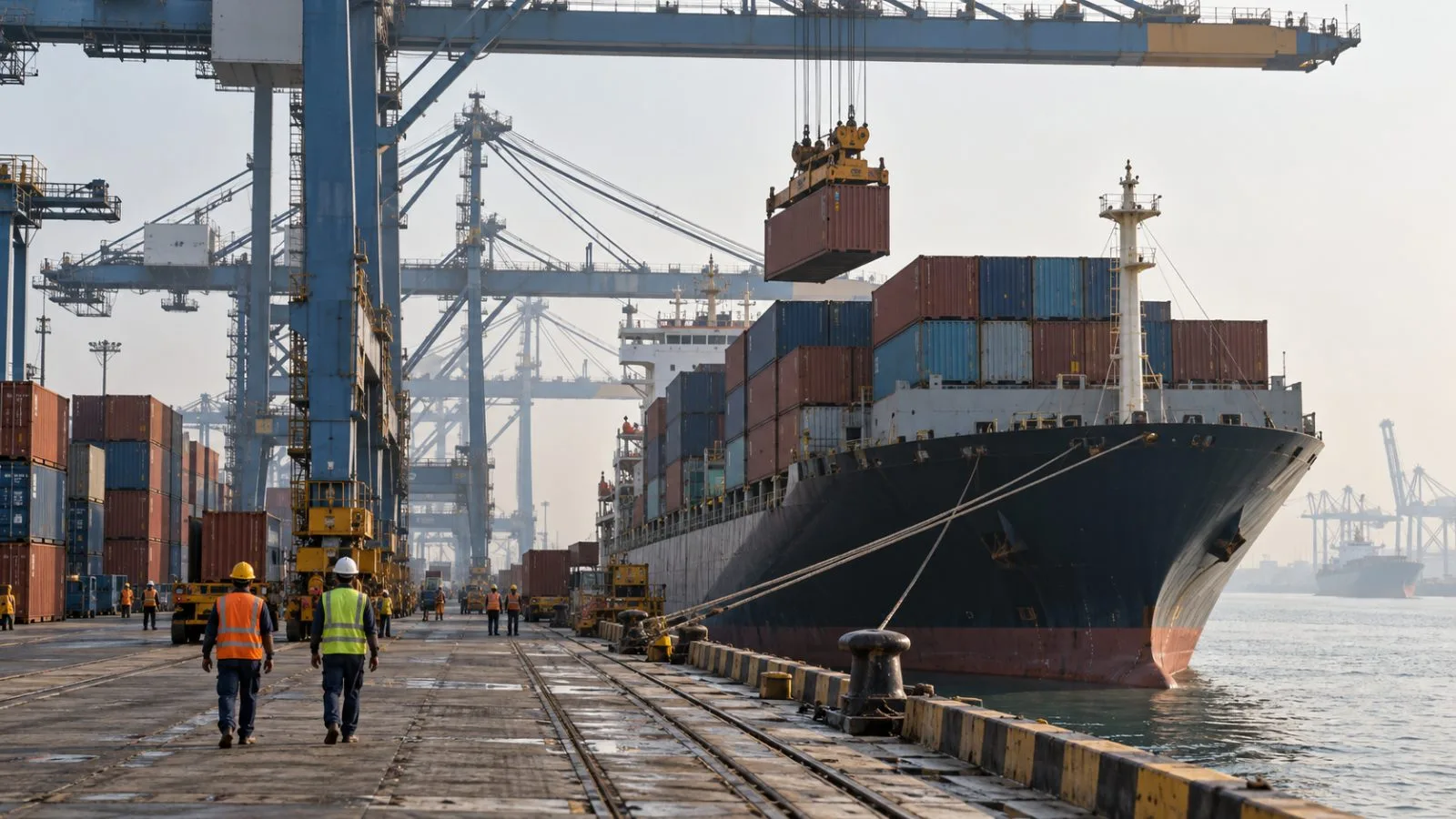
India’s major ports handled 12.65% more cargo in September than a year earlier, increasing physical throughput in a month when the country’s merchandise imports and exports also rose in value.
The Ministry of Ports, Shipping and Waterways put September cargo at 82.39 million metric tons, compared with 73.13 million metric tons a year earlier. The latest figure is an advance estimate; the year-earlier total is provisional.
Container cargo at the major ports reached 19.72 million metric tons, a 12.59% increase. Using twenty-foot equivalent units, a standard measure of container volume, throughput rose 20.81% to 1,447,954 units. Those figures measure cargo handled by weight and container volume, rather than shipping prices.
India’s merchandise imports reached $74.61 billion in September, up from $69.08 billion a year earlier, the Ministry of Commerce and Industry said. Exports climbed to $44.40 billion from $36.08 billion. Those figures measure the value of goods traded, not the cost of transporting them.
In a separate measure of shipping costs, Drewry’s World Container Index rose 3% from the preceding week to $4,485 per 40-foot container on Oct. 15. Drewry attributed most of the weekly gain to higher Asia-Europe rates, which rose after 13 consecutive weekly declines.
The index covers major global routes and does not show what importers paid to ship goods to India. The rise in port traffic and the index’s weekly increase therefore cannot establish a change in India-bound freight costs.
Freightos reported continued diversions of containers headed to the Gulf and higher fuel costs for ships. It said strong demand and fuel costs were keeping rates elevated, while congestion could add further upward pressure.
Drewry said renewed Suez Canal transits were adding capacity on the Asia-Europe route as carriers sought higher rates. It said the added capacity made the outcome of those efforts uncertain and warned shippers to expect volatility.