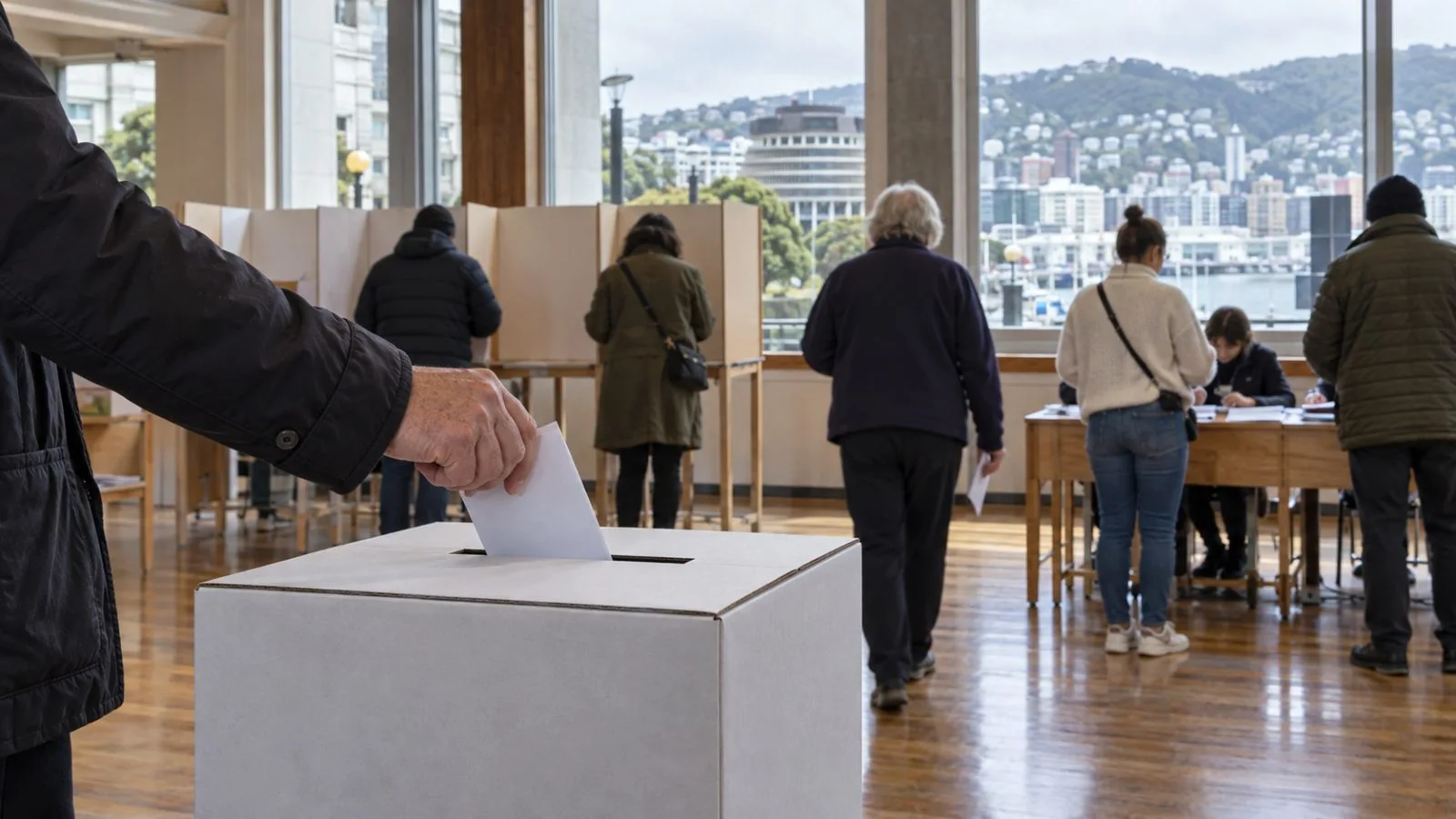
New Zealand’s general election on Saturday will test parties’ appeals on household costs, after inflation led voter concerns in an Ipsos poll and the Electoral Commission updated the provisional roll before voting.
The Commission said 3,790,946 people were provisionally enrolled as of Oct. 30, equal to 93.6% of eligible voters. On Nov. 4, it reported that about 6,300 eligible applicants had been added to the roll and about 1,200 people had been identified for removal before the official count.
In an October Ipsos New Zealand survey of 1,008 New Zealanders, 64% named inflation and the cost of living as a major concern. Health care and hospitals followed at 45%, while petrol and fuel prices ranked third at 31%. The fuel-cost reading was 14 percentage points higher than in September, Ipsos said, and its strongest result in the tracker. Ipsos also found that respondents viewed Labour as best able to address the five leading concerns. That reflects perceived party competence, not voting intention.
The Associated Press linked the cost pressures to international shocks affecting New Zealand’s trade-based economy and reported that high living costs send thousands of people to Australia each year. AP said a change in government after Prime Minister Christopher Luxon’s single term would have no recent precedent. Analysts cited by the outlet did not expect either the governing National-led coalition or the Labour-led opposition bloc to win an outright majority, potentially giving smaller parties influence in government talks.
New Zealand uses mixed-member proportional representation, or MMP. Voters choose a party and a local electorate candidate; the party vote largely determines each party’s share of parliamentary seats. A party needs at least 5% of the party vote or an electorate seat to enter Parliament. Advance voting began Oct. 26. The Electoral Commission plans to release preliminary results on election night Nov. 7 and declare official results Nov. 27.