
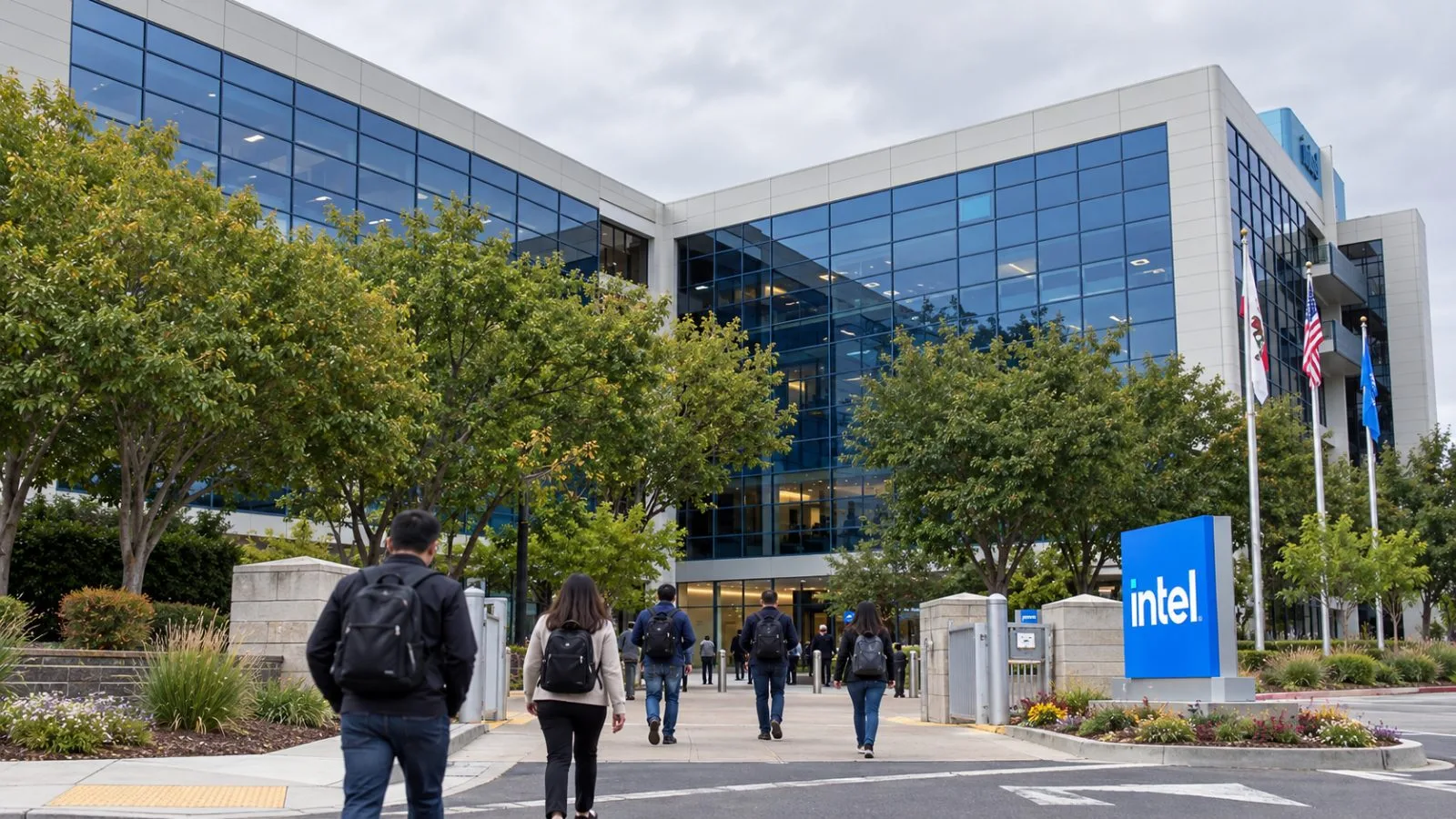
Intel reported third-quarter revenue of $16.5 billion, up 21% from a year earlier, while its client group shrank and Data Center and AI expanded, exposing a widening divide ahead of its fourth-quarter outlook.
Data Center and AI contributed $7.3 billion to Intel’s quarter, 78% above its year-earlier result, while the Client Computing and Physical AI Group generated $8.1 billion, down 5%. The client group remained larger in quarterly revenue despite contracting.
Adjusted earnings were 52 cents per diluted share, up from 23 cents in the year-earlier quarter. Intel’s fourth-quarter guidance calls for adjusted earnings of 25 cents per share, with revenue ranging from $15 billion to $16 billion. At the top of that range, projected revenue remains $500 million short of the third-quarter total. EconoTimes previously covered Intel’s fourth-quarter earnings outlook.
Intel’s outlook calls for the PC slowdown to persist into the first half of 2027. Intel CEO Lip-Bu Tan put the global PC market’s projected decline at 12% for 2026 and 10% for 2027. The forecast places Intel’s client-group decline alongside a projected market-wide contraction.
Citrini researcher Zephyr connects AMD’s chiplet approach with the need to serve varied workloads across PCs, servers and AI. Chiplet packages build processors from smaller dies, and each piece may use a different fabrication process. Smaller components may help manage production yield and cost when advanced manufacturing is expensive or capacity is tight.
That is a design claim, not evidence that AMD gained sales or market share. Intel’s figures show its client unit remained larger than Data Center and AI in revenue, even as the latter posted much faster growth.