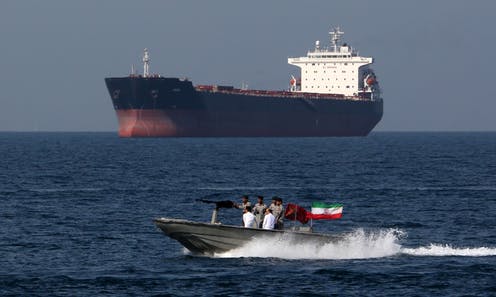
Iran will not compromise on its nuclear rights even if the United States accepts Tehran’s proposal for reopening the Strait of Hormuz, according to a senior Iranian official, underscoring major obstacles to ending the prolonged U.S.-Iran conflict.
The official said Friday that the strategic waterway would remain closed until Washington meets all of Tehran’s conditions. Iran’s demands include lifting the U.S. naval blockade on Iranian ports, releasing frozen Iranian assets, easing oil sanctions and ending hostilities across regional fronts.
Foreign Minister Abbas Araqchi said Thursday that Iran has offered a framework under which the Strait of Hormuz could reopen after the United States fulfills specified conditions. Tehran has made the vital shipping route a central bargaining point in negotiations as the conflict continues to disrupt Middle East trade and global energy markets. Iran recently conveyed conditions for reopening Hormuz that included lifting the naval blockade and releasing frozen assets.
Iranian President Masoud Pezeshkian has expressed hope that an agreement with Washington could be reached before the U.S. midterm elections on November 3.
However, Tehran maintains that detailed nuclear negotiations would begin only after its broader conditions are satisfied. The senior Iranian official said Iran would not surrender what it considers its right to enrich uranium or agree to ship its stockpile of highly enriched uranium abroad.
Iran’s uranium program remains one of the biggest barriers to a broader agreement. Western governments have raised concerns over Tehran enriching uranium to 60%, significantly above levels typically required for civilian nuclear energy and approaching weapons-grade levels. Iran has repeatedly denied seeking a nuclear weapon.
The International Atomic Energy Agency estimated that Iran possessed 440.9 kilograms of uranium enriched to 60% before U.S. and Israeli attacks on Iranian nuclear facilities in June 2025. The current size and condition of that stockpile remain unclear.
Iranian authorities have previously indicated they could consider diluting their most highly enriched uranium, while resisting demands to transfer the material outside the country.