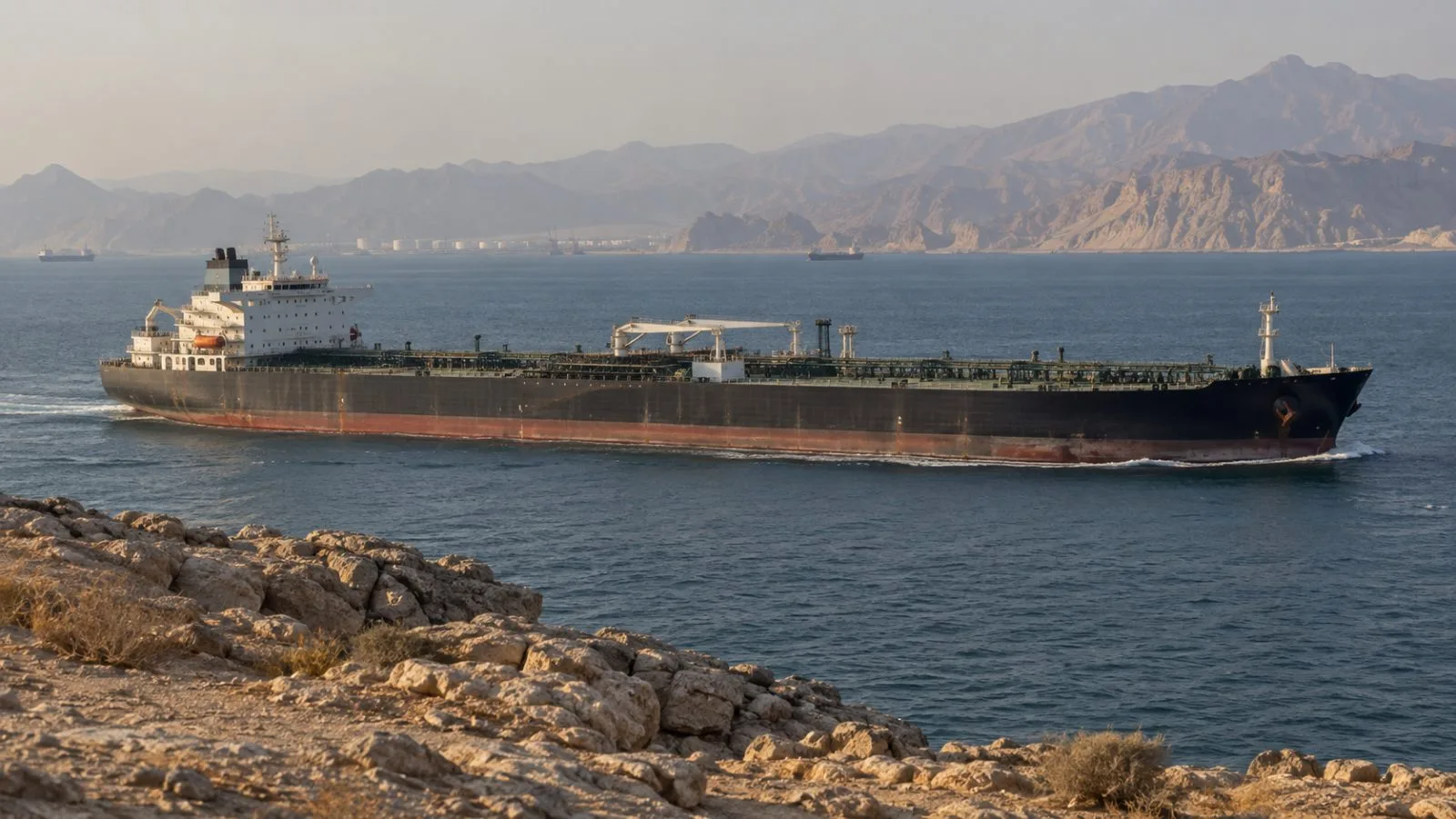
Iran’s Persian Gulf Strait Authority says it will pursue legal action against South Korean company Sinokor’s vessels starting Nov. 1. Iran’s transit restrictions and attacks have disrupted oil flows from Arab Gulf producers, particularly to customers in Asia.
The authority, which Tehran established to manage requests to pass through the Strait of Hormuz, announced the measure on X, Reuters reported Tuesday. On X, the authority alleged that Sinokor vessels accounted for the largest number of transit violations during the previous three months. It said measures had been taken against seven or more vessels, describing them as “appropriate.” Sinokor had not responded to the authority’s statement at the time of the report.
Iran’s August list of 45 tankers accused of violating Hormuz transit rules also included Sinokor vessels. Iran requires ships to seek permission before crossing the strait, and its Guards have warned of a forceful response to vessels with disabled navigation and identification systems, as described in the Guards’ warning about disabled ship systems.
Reuters reported that Tehran tightened passage restrictions to gain leverage over Washington and attacked shipping in the strait after the Feb. 28 U.S.-Israeli airstrikes on Iran. Iran’s restrictions and attacks disrupted oil flows from Arab Gulf producers, particularly to customers in Asia. Separately, Reuters said a U.S. naval blockade targeting ships linked to Iran in the strait had nearly halted Iranian exports.
Gulf producers have used “dark transits,” turning off tankers’ tracking systems to avoid detection and protect oil flows that support their economies, Reuters reported. The authority said legal action against Sinokor vessels would begin Nov. 1.