A 2011 study estimated adult oyster abundance in the upper Chesapeake Bay had fallen 99.7% from estimated virgin adult abundance by 2009; NPR reports a Kent Island resident is recruiting neighbors to grow oysters.
The study estimated median adult abundance at 851 million in 2009, compared with estimated virgin adult abundance of 311 billion. It also put suitable oyster habitat in the upper Bay at 31% of its 1980 level by 2009. The University of Maryland Center for Environmental Science cites overfishing, habitat loss and disease among the causes of the decline. It says Dermo and MSX diseases began spreading through the Bay in the late 1950s and early 1960s.
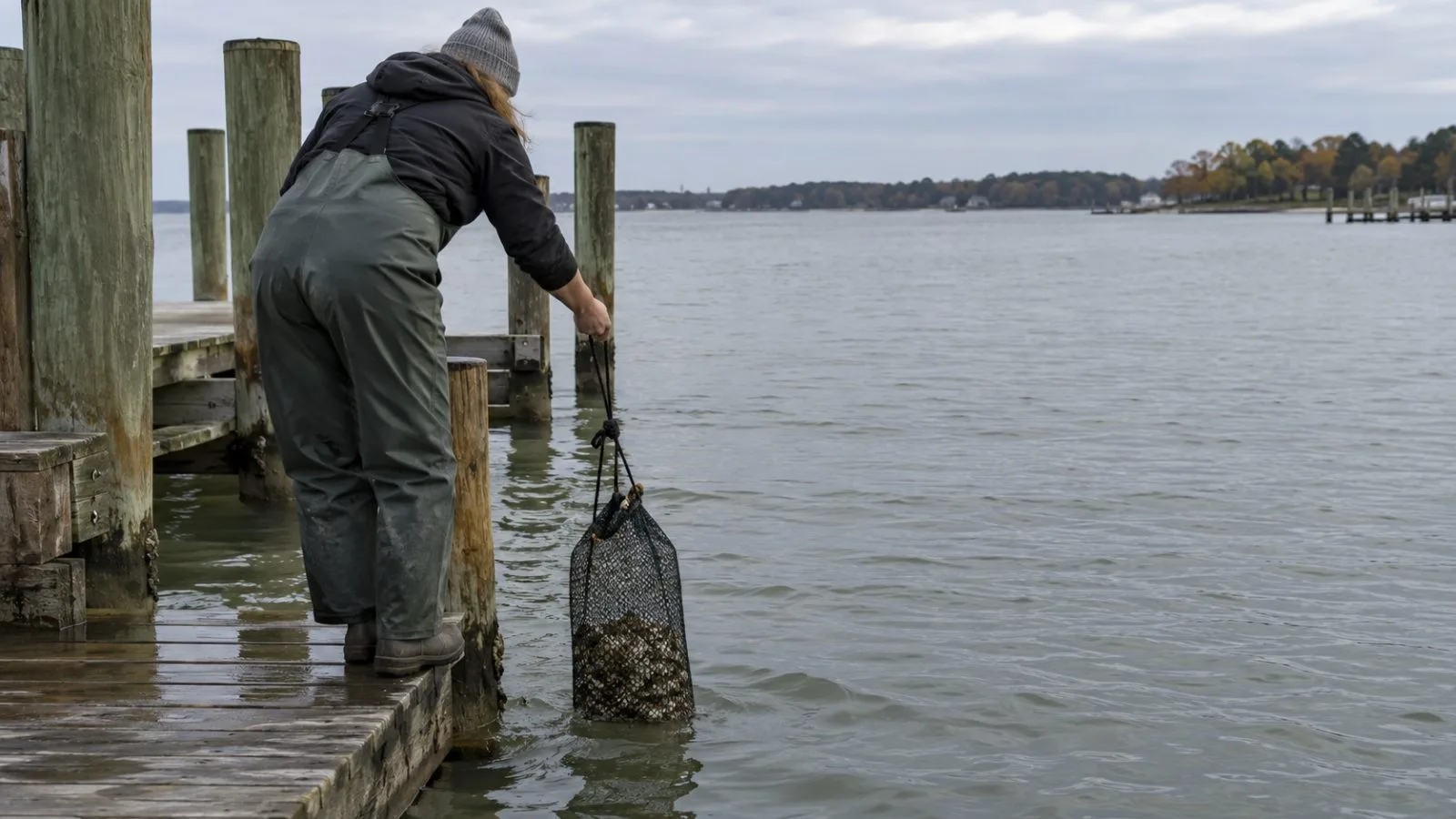
NPR identified the resident as John Consoli, a University of Maryland photographer who grows oysters in mesh bags off his pier and encourages neighbors to take part. The outlet reported that Consoli worked with Libbey’s Coastal Kitchen to place 1 million juvenile oysters around the restaurant’s dock pilings. Restaurant operator Andrew Westlin told NPR, “This was a no-brainer for us, honestly.” Maryland’s Department of Natural Resources says oysters raised through gardening at private piers are for ecological purposes and should be planted in Bay reefs, not eaten or sold.
Separately, the University of Maryland’s S3AM project combines underwater and surface robots with sonar, cameras and mapping software to gather information about oyster beds’ location, size and condition. NOAA says a University of Maryland robotics team has worked on tools for Chesapeake oyster growers since 2020. The system can collect oyster counts, size and distribution data, along with environmental readings such as salinity and dissolved oxygen. The information is intended to help guide planting and harvesting decisions. Mechanical engineer Miao Yu told NPR, “So our goal is to transform that guesswork into precision.” NPR also reported that the team is still refining its algorithms.
Separately, NOAA says Maryland growers harvested 94,286 bushels of farmed oysters in 2023, up from 3,340 in 2012, a 28-fold increase. Those figures track aquaculture production, not wild oyster abundance. NOAA says an oyster can filter up to 50 gallons of water per day, and oyster reefs provide habitat for other species.