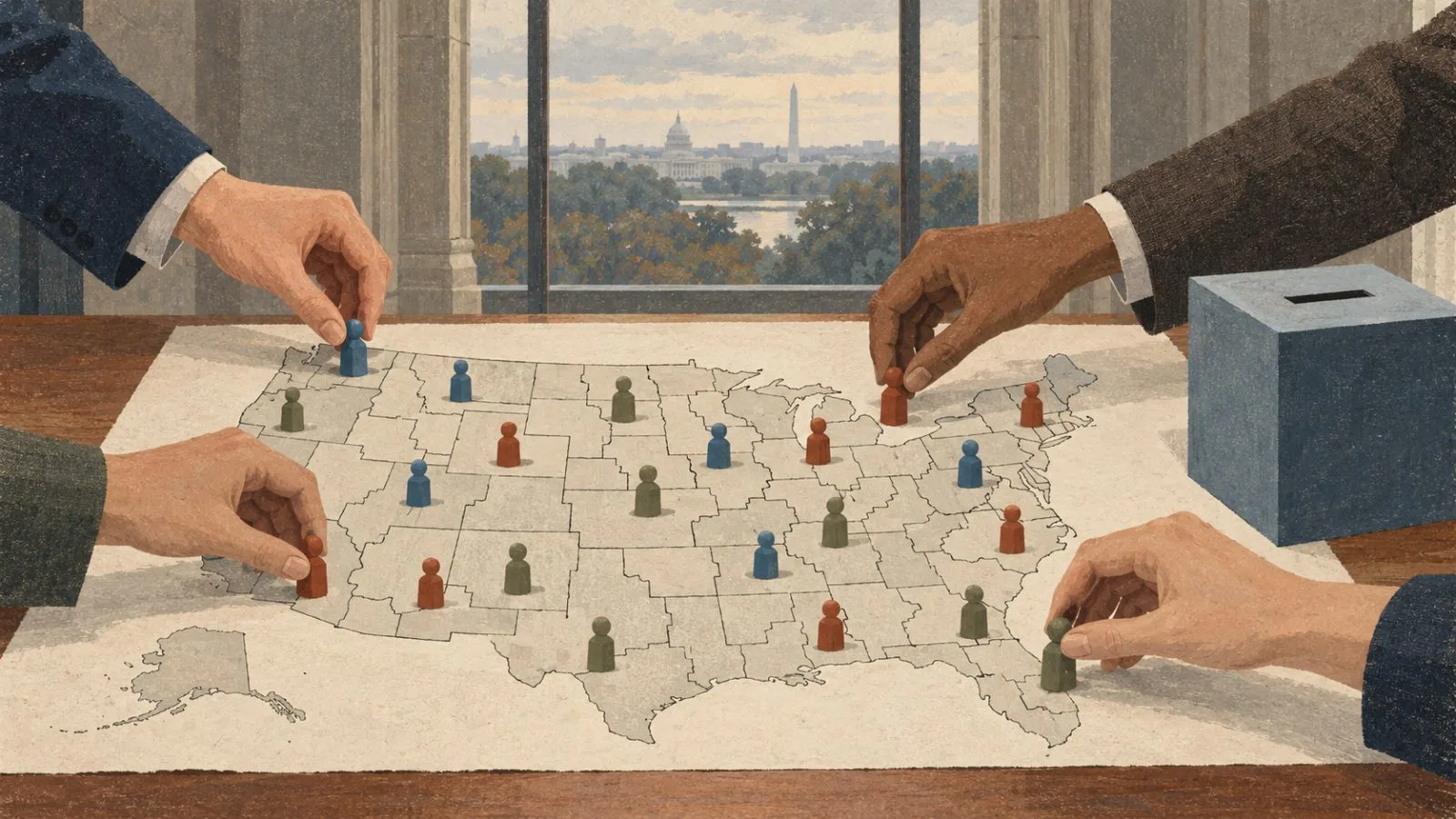
Joachim Klement says demographic forecasts can miss U.S. election outcomes because party support may shift, a warning he tied to Tuesday, Nov. 3, midterms without predicting the result.
In an Oct. 30 post on Klement on Investing, he cited a 2026 paper by Richard Calvo and collaborators that compared demographic projections with past election results. Klement said the authors tested projections based on demographic trends at the preceding election against actual results. He described little resemblance between the two, both for forecasts one election ahead and those looking three elections ahead. Klement argued that slow-moving population patterns can be overtaken by other forces in politics.
Klement also discussed a New York Times opinion essay by Thomas Edsall. As he summarized Edsall’s argument, Republicans could strengthen their Electoral College advantage between 2032 and 2040. The forecast centered on population changes reflected in the 2030 census: Texas and Florida could gain electoral votes while New York and California lose them. Klement put the potential Republican advantage at about 12 votes through the 2040 census.
That projection depends on more than where people live, Klement argued. It also assumes that voting patterns across demographic groups remain much as they are today. He recalled that white working-class voters were once an important part of the Democratic coalition and questioned whether current party loyalties will last. Klement also raised the possibility that Hispanic voters could move toward Republicans if Democratic policies alienate them.
Klement said the approaching midterms were not a basis for a prediction from him. His post focused on the limits of using population trends to anticipate voting behavior in future elections. The U.S. midterm vote is scheduled for Tuesday, Nov. 3.