Laplace Intelligence says it is combining NVIDIA’s Cosmos-Dreams video model with TeraSim traffic software in Laplace World, giving autonomous-vehicle developers a way to test hazardous driving situations before deployment.
Laplace co-founder and chief scientist Henry Liu said in a post that the tools handle different parts of a simulation. Cosmos-Dreams, formerly known as NVIDIA OmniDreams, generates video that changes in response to a vehicle’s actions. TeraSim models how surrounding traffic behaves, from routine movement to dangerous encounters.
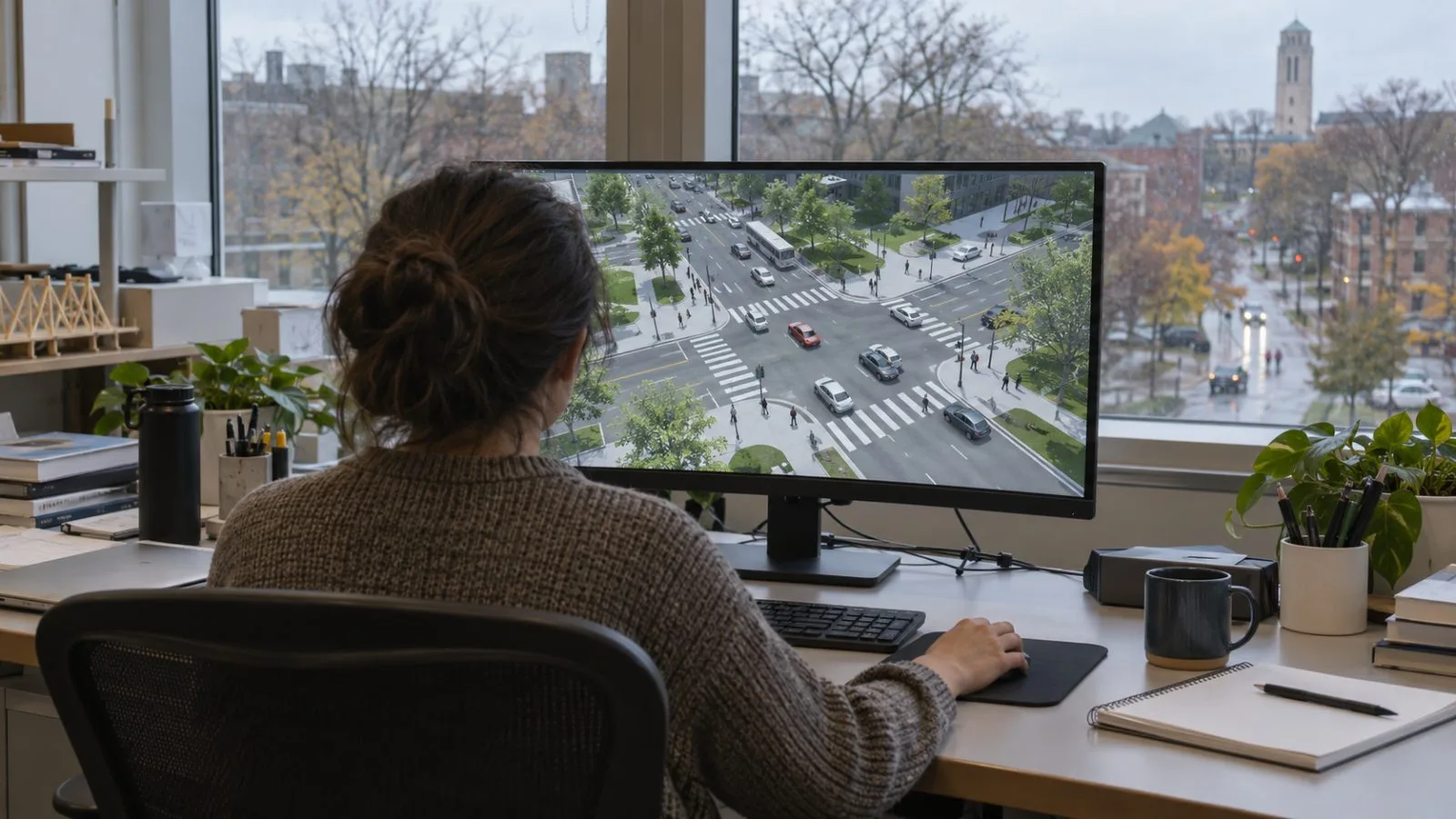
Laplace says camera views, LiDAR scans, satellite imagery and detailed maps can be used to reconstruct adjustable 3D scenes. Testers can change conditions and observe how a simulated vehicle interacts with other road users. Vehicle trajectories, pedestrian flows and robot routes can represent movement through those scenes, according to the company.
The approach addresses a challenge discussed in earlier research: dangerous traffic events are rare, and conventional vehicle safety validation takes time and money. Simulation gives developers a controlled setting in which to examine such events.
A 2023 study used augmented-reality trials involving a highly automated vehicle on urban and highway tracks to examine an AI tester focused on dangerous situations. Another paper published that year introduced NeuralNDE, a simulator designed to reproduce both ordinary traffic patterns and rare safety-critical interactions among road users. Those papers provide background on the methods, rather than evidence of Laplace World’s performance.
Laplace also describes potential uses for its simulation approach in cities, airports and warehouses, where tests may involve pedestrians and robots as well as vehicles. Laplace CEO and co-founder Howie Sun told TechCrunch that limited data on generalized robotics makes unusual real-world encounters difficult to anticipate.