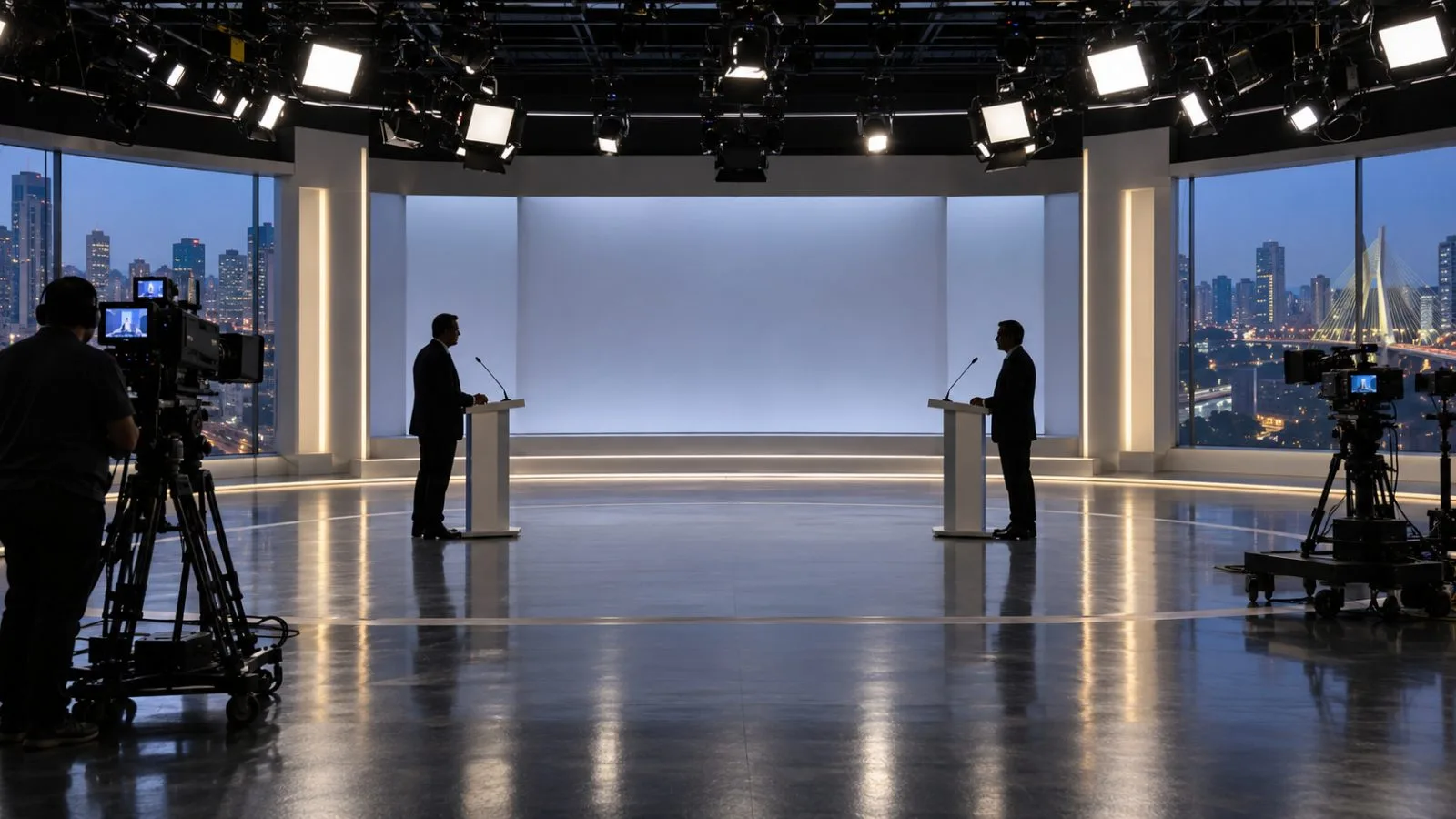
Brazil's presidential runoff rivals Luiz Inácio Lula da Silva and Flávio Bolsonaro used Sunday's first televised debate to dispute their records on security and health care, with voters set to choose on Oct. 25.
The debate, held in São Paulo, was the candidates' first in-person televised meeting of the runoff campaign, broadcaster Band said. Lula said Flávio had opposed a proposed constitutional amendment that would expand the federal government's role in public security. Lula also said state governments had failed to resolve security problems.
Flávio criticized spending on the Sistema Único de Saúde (SUS), Brazil's public health system, and proposed bringing it closer to private-hospital standards, citing Hospital Albert Einstein, Band reported. Lula asked whether Flávio wanted to privatize SUS. The exchange also touched on the cost of living, Band's coverage showed.
In an update early Oct. 5, the Superior Electoral Court (TSE) said 99.99% of ballot boxes in the Oct. 4 first round had been counted. Flávio received 56,104,268 votes, or 47.03% of valid votes, against Lula's 53,876,617 votes, or 45.16%.
Datafolha's poll of 2,520 people in 153 municipalities, conducted Oct. 13-14, showed Flávio with 47% and Lula with 45% in total vote intentions. Its estimate of valid votes was 51% to 49%, within a two-percentage-point margin of error. The interviews ended before Sunday's debate, so the poll does not measure any response to the candidates' exchanges.
After the debate, political scientist Fernando Schüler told Band that both candidates tried to make voting for the other side carry a higher political cost. Journalist Juliana Rosa said they could have put forward more concrete proposals, the broadcaster reported.
TV Globo has scheduled another debate for Oct. 23, with the runoff set for Oct. 25.