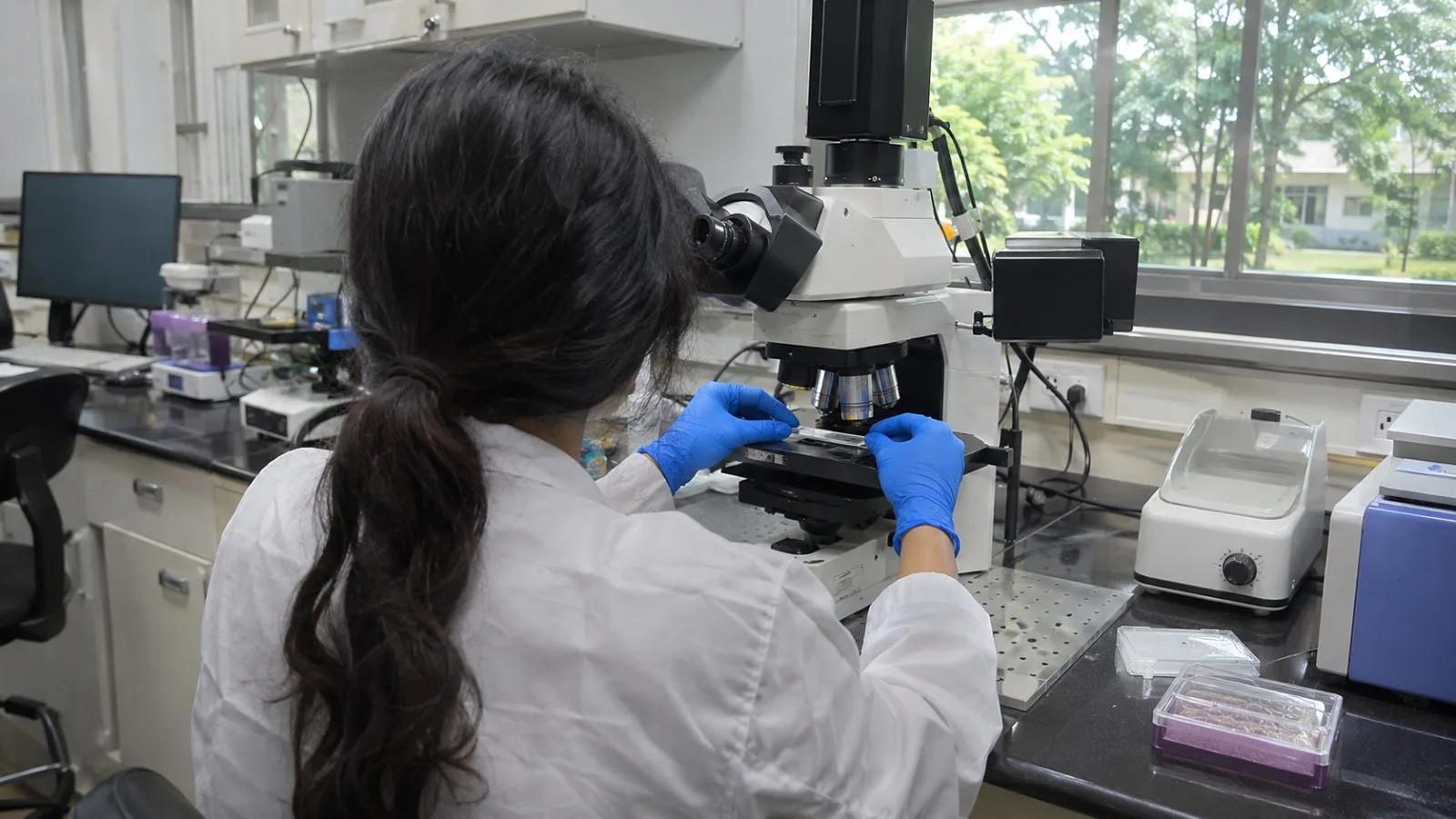
Indian Prime Minister Narendra Modi launched an Oct. 11 mission at the Indian Institute of Technology Madras (IIT Madras) to map more than 100 brains in three dimensions at cellular resolution for public research.
IIT Madras said the planned atlases will be made from whole post-mortem brains and span fetal development through old age, including brains affected by disease. The institute said researchers and medical professionals will be able to access the maps through its visualization and computing platform. Modi said data from 100 brains would be made available as an open-source resource for research, according to a Government of India transcript.
Separately, Modi released C-STROKE, an atlas of a brain affected by ischemic stroke. IIT Madras said it contains more than 1,000 annotated sections, linking MRI scans taken before death at millimeter scale with whole-brain tissue images at micron resolution. The institute said C-STROKE was generated using the Param Shakti supercomputer, with support from India’s Ministry of Electronics and Information Technology (MeitY). It also includes an open-access viewer and analysis tools, IIT Madras said.
IIT Madras said C-STROKE can help researchers examine stroke-related changes and investigate possible therapeutic targets. C-STROKE was released at the launch, while the broader mission aims to map more than 100 brains.
The Sudha Gopalakrishnan Brain Centre is leading the work. A Government of India release says it was established in March 2022 to support human-brain research and high-resolution imaging. Modi said industry, government, IIT alumni and academia contributed to establishing the centre, and cited organ donation as part of enabling the research.
The centre’s earlier projects include DHARANI, a fetal-brain dataset with 5,132 digitally captured sections released in December 2024, and ANCHOR, a brainstem atlas released in June 2026 that spans prenatal development through childhood and adulthood, IIT Madras says. Professor Mohanasankar Sivaprakasam, head of the Sudha Gopalakrishnan Brain Centre, said the work could influence future neuroscience and medical practice.