Yangon nonprofit Step-In Step-Up (SISU) pairs vocational training with reusable menstrual kits for communities across Myanmar as the country’s 2026 humanitarian plan estimates 16.2 million people will need assistance.
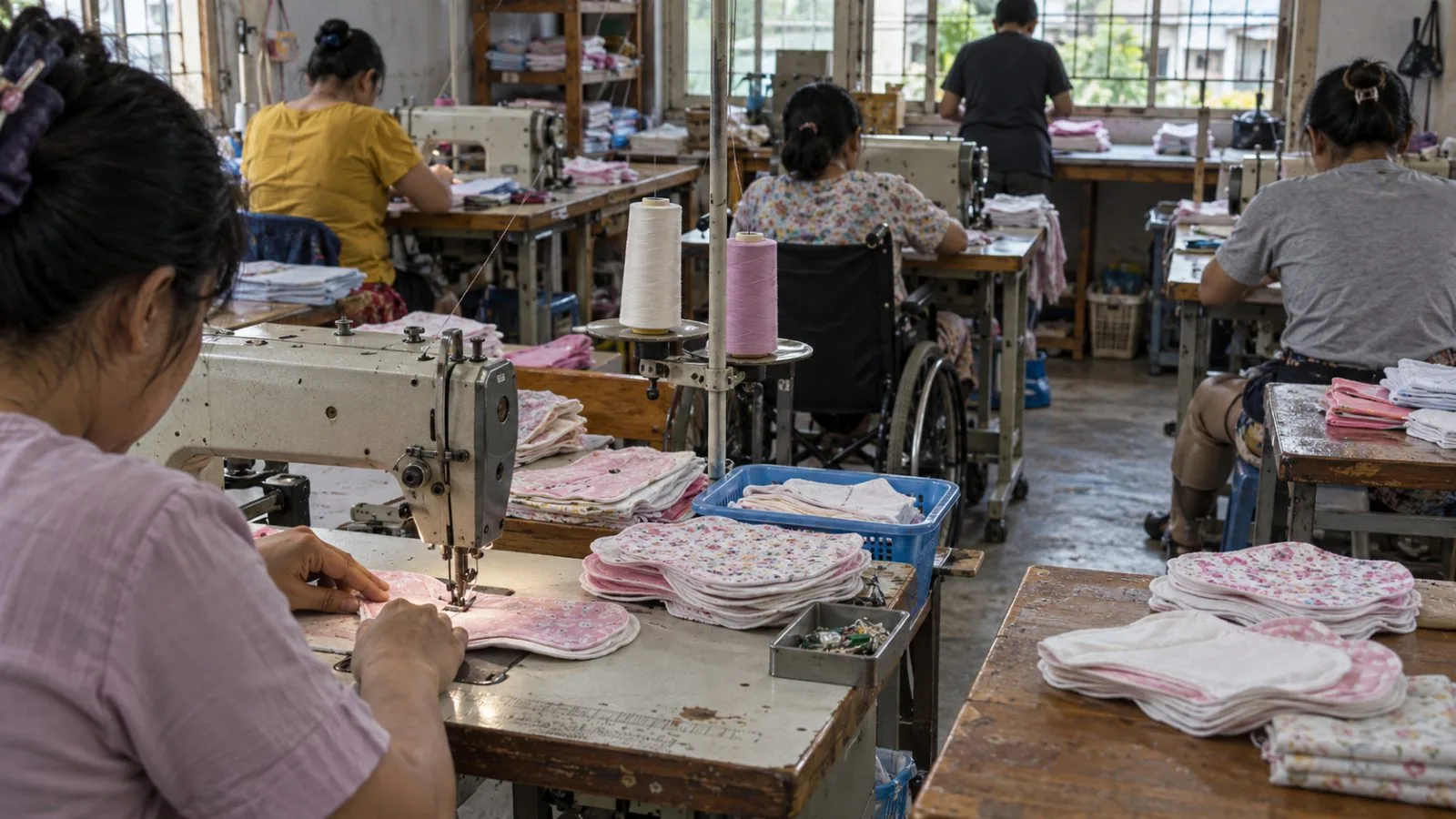
SISU says its SaniPad program teaches women and people with disabilities sewing and business skills. Participants make kits for girls and women, and SISU says it distributes them nationwide. The organization says it provides sewing machines, starter kits and materials to support production.
Channel NewsAsia reported that Médecins Sans Frontières, known internationally as Doctors Without Borders, ordered about 200 reusable pads for communities. The outlet also reported that SISU trains up to 250 people at a time.
The United Nations Office for the Coordination of Humanitarian Affairs (OCHA) puts the number of people in need at 16.2 million. Its 2026 plan targets 4.9 million for assistance, prioritizes 2.6 million and calls for US$890 million to reach the full target.
By June 30, 2026, humanitarian partners had assisted an estimated 3.1 million people, equal to 63% of the annual target, OCHA reported. OCHA said 1.6 million people in the hyper-prioritized caseload had received assistance, equal to 64% of those targeted. OCHA said the figures show how broadly aid has reached, but do not indicate whether individual recipients got enough support or received it continuously.
OCHA’s assessment covers 227 of Myanmar’s 330 townships, focusing on areas affected by conflict and the 2025 earthquake. Although the published estimate is lower than in 2025, OCHA said using its 2026 method to recalculate the 2025 figure would produce the same total: 16.2 million people in need. The difference reflects a narrower geographic scope and updated population calculations, rather than evidence of improved conditions. OCHA identifies armed conflict, recurring disasters and economic collapse as drivers of need; hostilities, movement restrictions and administrative requirements also hinder aid access.