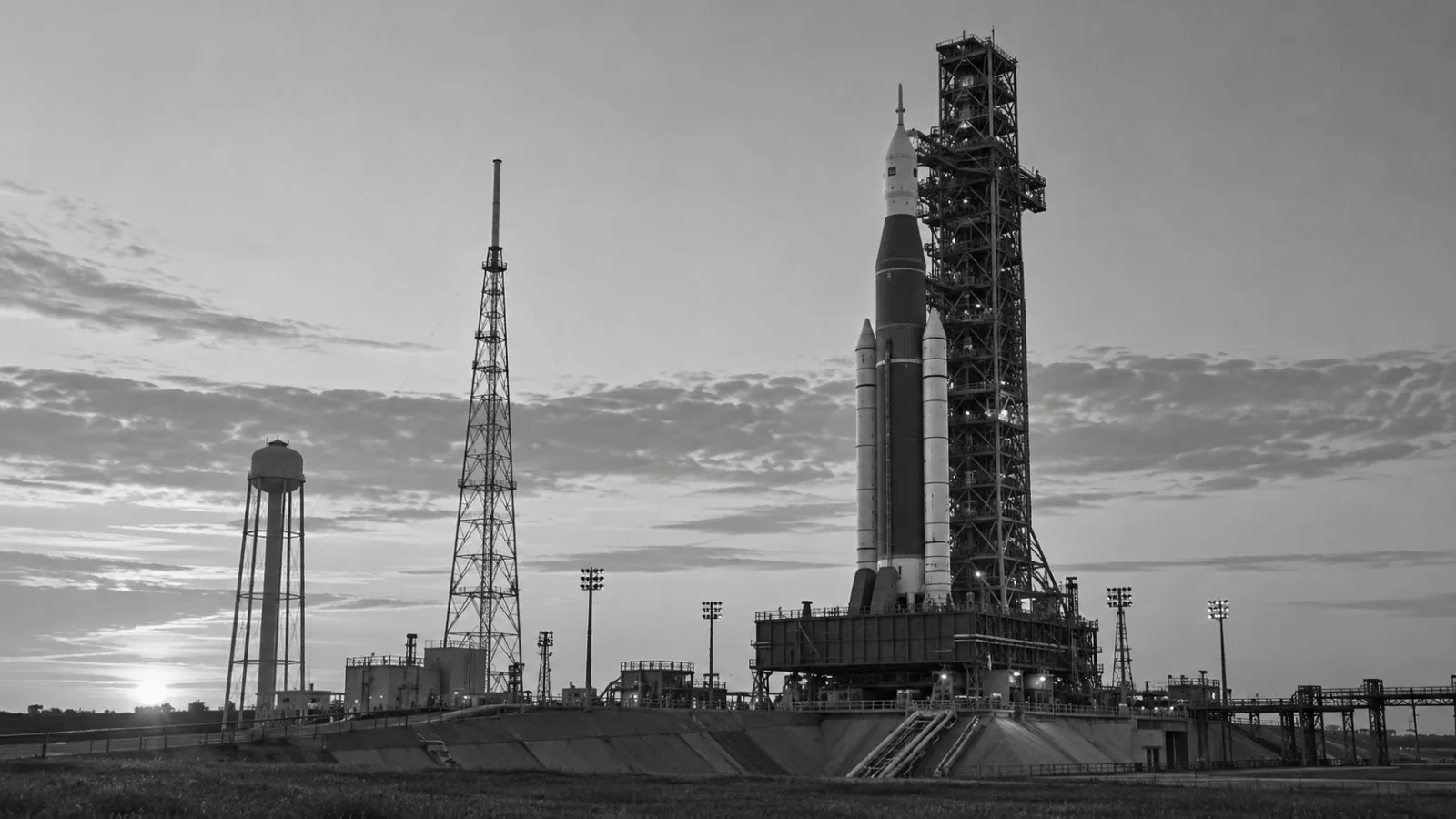
NASA plans to use a 2027 Earth-orbit mission to test Orion’s docking and crew operations with lander vehicles from Blue Origin and SpaceX, ahead of the planned first crewed Artemis landing in 2028.
In its Oct. 23 update, NASA described Artemis III as an orbital test, with Artemis IV remaining the target for the first crewed landing. The agency has not selected an Artemis IV lander provider. The sequence builds on an earlier NASA outline of the Artemis III demonstration and Artemis IV lander competition.
Blue Origin’s Blue Moon Mark 2 test article is scheduled to launch first on a New Glenn rocket. NASA plans for it to orbit about 237 nautical miles (273 miles) above Earth, where it can remain for up to 30 days. After confirming the vehicle is ready to operate alongside Orion, NASA plans to launch Orion and four astronauts aboard its Space Launch System (SLS) rocket days later.
The crew will include NASA astronauts Randy Bresnik, Frank Rubio and Andre Douglas, and European Space Agency (ESA) astronaut Luca Parmitano. During the planned 14-day mission, Orion is to dock with Blue Moon. The astronauts will spend about two days evaluating the lander’s cabin, controls and life-support systems.
Orion is then scheduled to dock with a SpaceX Starship Version 3 test article in an orbit 206 nautical miles above Earth. NASA expects that test to last up to two hours, with the crew staying aboard Orion. Jeremy Parsons, NASA’s Artemis program manager, said the orbital work is intended to “reduce risk” before astronauts return to the Moon.
NASA’s February 2026 revision moved the first crewed landing from Artemis III to Artemis IV and added an orbital test ahead of it. The agency said its previous sequence did not include a chance to rehearse crew and lander operations together in space before a surface mission. NASA has compared Artemis III’s role to Apollo 9 as a test before landing.
The two companies have proposed different approaches for Artemis IV. SpaceX’s concept involves transferring propellant among Starships in low Earth orbit before its lander carries Orion toward the Moon. Blue Origin’s plan uses three transfer stages with Blue Moon Mark 2. Under either plan, two astronauts would descend to the lunar surface while two remain aboard Orion.
NASA says readiness will determine the first provider. Both companies must complete uncrewed demonstrations, and NASA must certify the lander systems before crewed missions. The agency says a second crewed landing opportunity will follow but has not given a date for selecting the first provider.